Prequel
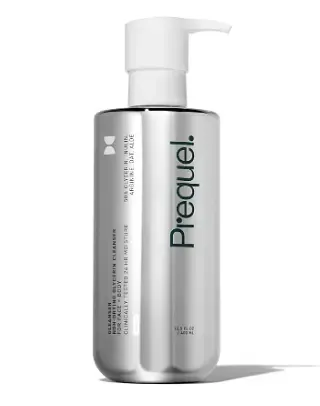
Prequel Gleanser Non-Drying Glycerin Cleanser For Face And Body
Low risk76/100

Serums
Higher-risk ingredients are flagged in this formula. Discuss alternatives with your healthcare professional.
34 of 34 ingredients rated
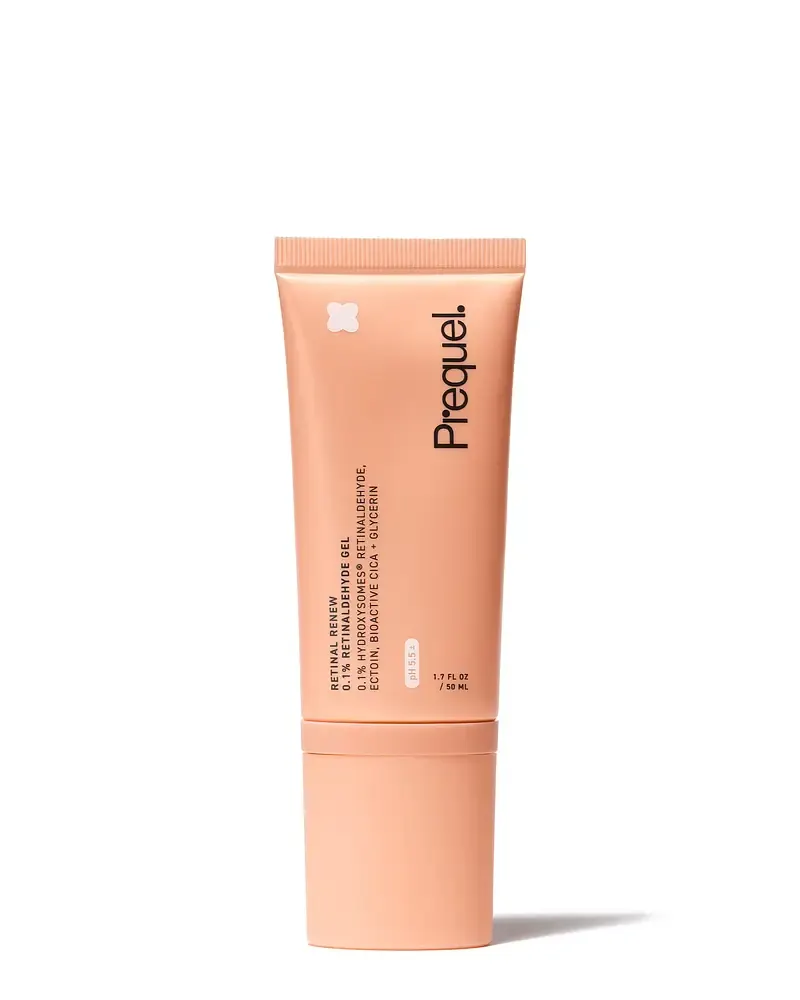
MamaSkin rates the recorded formula for Prequel Retinal Renew Retinaldehyde Gel as High risk (26/100). This is not a pregnancy-safe recommendation. Discuss alternatives with a qualified healthcare professional.
The recorded formula includes 3 ingredient entries with risk flags: retinal (High risk), dimethicone (Low risk), phenoxyethanol (Low risk). These are ingredient-level flags; they do not replace the stored product assessment or account for every formulation detail.
34 of 34 ingredient entries on this page have a recorded score, evidence summary and source text. That describes documentation coverage, not proof that the finished formula has been clinically tested during pregnancy.
How we assess productsThe recorded formula, with evidence behind each rating. Unmatched ingredients are marked Not assessed in grey.
Vitamin A derivative. Systemic retinoids are known teratogens, and topical retinoids are avoided during pregnancy due to class-wide risk and limited safety margins. Avoid use during pregnancy regardless of formulation.
Sources: EMA: Updated measures for pregnancy prevention during retinoid use https://www.ema.europa.eu/en/news/updated-measures-pregnancy-prevention-during-retinoid-use; FDA: Pregnancy and Lactation Labeling Rule https://www.fda.gov/drugs/labeling-information-drug-products/questions-and-answers-pregnancy-and-lactation-labeling-rule
Phenoxyethanol is a preservative permitted in EU cosmetics up to 1.0%. The SCCS concluded it is safe for cosmetic use at that level, including when considering higher cosmetic exposure scenarios in infants and young children. Main practical concern is irritation/stinging on very sensitive or compromised skin rather than a pregnancy- or breastfeeding-specific risk.
Sources: SCCS/1575/16: Phenoxyethanol opinion https://health.ec.europa.eu/publications/phenoxyethanol_en
Dimethicone is a silicone polymer used as a skin protectant and slip/conditioning agent. It is considered inert with minimal dermal absorption; the main practical issues are cosmetic (feel) and occasional irritation in very sensitive users. It is not a pregnancy-specific concern in topical cosmetic use.
Sources: CIR: Amended Safety Assessment of Dimethicone, Methicone, and Substituted-Methicone Polymers as Used in Cosmetics https://cir-safety.org/supplementaldoc/amended-safety-assessment-dimethicone-methicone-and-substituted-methicone-polymers-2
Polymer thickener used to stabilise emulsions. Large-molecule ingredient with low systemic absorption.
Sources: Cosmetic Ingredient Review (US); Scientific Committee on Consumer Safety (EU)
An inert inorganic powder used to improve slip, texture and soft focus in makeup. Cosmetic safety reviewers concluded that cosmetic-grade boron nitride is safe in current cosmetic use. No pregnancy-specific concern is identified for normal skin application; as with cosmetic powders generally, avoid deliberately inhaling airborne powder or airbrush spray.
Sources: CIR: Safety Assessment of Boron Nitride as Used in Cosmetics https://www.cir-safety.org/supplementaldoc/safety-assessment-boron-nitride-used-cosmetics-0
A purified hydrocarbon emollient or volatile carrier used for slip and light texture. Related cosmetic hydrocarbon and isoparaffin assessments support use in current practices. Normal dermal exposure is not associated with a pregnancy-specific signal; volatile products should be used with ordinary ventilation.
Sources: CIR: Isoparaffins safety assessment, IJT 31(Suppl. 3), 2012; CIR: hydrocarbon polymers and cosmetic hydrocarbon assessments; CIR December 2025 Quick Reference Table https://cir-safety.org/sites/default/files/QRT-Update-Dec2025.pdf
Common emollient derived from fatty acids and glycerin. Used to soften skin and improve texture without pregnancy-specific concerns.
Sources: Cosmetic Ingredient Review (US); Scientific Committee on Consumer Safety (EU)
Humectant and preservative booster used to support product stability. Low systemic exposure expected from topical cosmetic use.
Sources: Scientific Committee on Consumer Safety (EU); Cosmetic Ingredient Review (US)
Polymer thickener used to create gel textures. Large-molecule ingredient with negligible systemic absorption.
Sources: Cosmetic Ingredient Review (US); Scientific Committee on Consumer Safety (EU)
A high-molecular-weight polymer used for film formation, texture or stabilisation. Meaningful dermal absorption is expected to be limited and no reproductive or developmental concern was identified for normal topical use.
Sources: CIR safety framework for cosmetic polymers; European Commission CosIng.
A leaf extract used in soothing and skin-conditioning formulas. Cosmetic safety reviewers concluded that Centella asiatica leaf extract is safe at current cosmetic exposure when products are formulated to be non-sensitising. The assessment considered systemic and reproductive findings reported at substantially higher oral exposures; these did not establish a pregnancy-specific concern for ordinary topical cosmetic use. Centella constituents can still cause contact sensitivity in some people.
Sources: CIR: Safety Assessment of Centella asiatica-Derived Ingredients as Used in Cosmetics https://cir-safety.org/supplementaldoc/safety-assessment-centella-asiatica-derived-ingredients-used-cosmetics-1
Fatty alcohol used to improve texture and skin feel. Considered safe for cosmetic use without pregnancy-specific concerns.
Sources: Cosmetic Ingredient Review (US); Scientific Committee on Consumer Safety (EU)
pH adjuster used in small amounts to maintain product stability. Not associated with pregnancy-specific concerns.
Sources: Scientific Committee on Consumer Safety (EU); European cosmetics regulatory framework
Coconut-derived emollient ester used as a lightweight skin-conditioning ingredient. Reviewed cosmetic ingredient references do not identify a pregnancy- or breastfeeding-specific concern for normal topical use.
Sources: CIR cosmetic ingredient safety references for alkyl esters/emollient esters; EU CosIng / cosmetics regulatory inventory
A vitamin B ingredient or derivative used for skin or hair conditioning. These vitamins are normal nutrients and no pregnancy-specific concern was identified for the small topical exposure expected from a finished cosmetic. This assessment does not replace guidance about oral supplements or therapeutic doses.
Sources: NIH Office of Dietary Supplements vitamin fact sheets https://ods.od.nih.gov/factsheets/list-all/; CIR: Panthenol, Pantothenic Acid and Derivatives safety assessment https://www.cir-safety.org/supplementaldoc/safety-assessment-panthenol-pantothenic-acid-and-derivatives-used-cosmetics-1
dilinoleic acid/butanediol copolymer is a cosmetic polymer or polymeric formulation aid. The reviewed material is distinct from any free reactive monomers; systemic dermal absorption is expected to be limited by molecular size when manufactured with appropriate impurity controls. No pregnancy-specific concern was identified for normal cosmetic use, although products should be formulated to avoid irritation.
Sources: CIR polymer safety assessments and Quick Reference Table https://cir-safety.org/sites/default/files/QRT-Update-Dec2025.pdf; European Commission CosIng ingredient inventory
Dipropylene glycol is used as a solvent and carrier in cosmetics; topical exposure is low and it has no known pregnancy or breastfeeding concerns at cosmetic concentrations.
Sources: CIR; EU/UK Cosmetics Regulation
A small natural osmolyte used to support hydration and the skin barrier. A systematic review of topical ectoin formulations in adults and children reported very good tolerability. Pregnancy-specific topical studies were not identified, but no reproductive or pregnancy-specific signal was found for normal cosmetic exposure.
Sources: PubMed: Topical Ectoine Application in Children and Adults, systematic review https://pubmed.ncbi.nlm.nih.gov/35038127/
Glycerin is a widely used humectant that supports hydration and the skin barrier, with a long safety record and no known pregnancy or breastfeeding concerns in topical cosmetic use.
Sources: CIR; EU/UK Cosmetics Regulation
Emulsifier and emollient used to stabilise creams and lotions. Not associated with pregnancy-specific concerns at cosmetic exposure.
Sources: Cosmetic Ingredient Review (US); Scientific Committee on Consumer Safety (EU)
Emulsifier and emollient ester used to stabilise creams and improve skin feel. Reviewed cosmetic safety sources support topical cosmetic use; the relevant practical caveat is formulation irritation potential rather than a pregnancy-specific concern.
Sources: CIR: Safety Assessment of Glyceryl Diesters as Used in Cosmetics; CIR Quick Reference Table (Glyceryl Stearate Citrate); EU CosIng / cosmetics regulatory inventory
A sunflower-derived extract used for skin conditioning. No pregnancy- or breastfeeding-specific hazard was identified for normal topical cosmetic exposure. Direct ingredient-specific pregnancy studies were not identified, so this assessment does not extend to oral supplements or medicinal use.
Sources: CIR: Safety Assessment of Helianthus annuus (Sunflower)-Derived Ingredients as Used in Cosmetics https://www.cir-safety.org/supplementaldoc/safety-assessment-helianthus-annuus-sunflower-derived-ingredients-used-cosmetics-1
A mineral-derived colourant, absorbent or texture ingredient. Purity and avoiding respirable exposure from loose powders or sprays are the practical formulation considerations. Dermal absorption is expected to be limited, and no reproductive or developmental hazard was identified for normal non-inhaled topical cosmetic use.
Sources: European Commission CosIng ingredient inventory and cosmetic purity requirements; CIR safety assessments of mineral-derived ingredients, silicates and cosmetic colourants.
A rice-derived extract or wax used for skin conditioning, absorbency or texture. Cosmetic safety reviewers concluded that the assessed Oryza sativa-derived ingredients are safe in current cosmetic practices. Rice allergy remains possible in a susceptible person.
Sources: CIR: Rice-derived ingredients conclusions, IJT 25(Suppl. 2), 2006; December 2025 Quick Reference Table https://cir-safety.org/sites/default/files/QRT-Update-Dec2025.pdf
Solvent and humectant used to improve texture and ingredient solubility. Low systemic exposure expected from topical cosmetic use.
Sources: Cosmetic Ingredient Review (US); Scientific Committee on Consumer Safety (EU)
Plant extract used for antioxidant or soothing properties. Unlike essential oils, cosmetic extracts are not highly concentrated and are used at low levels. Safety concerns associated with essential oil use do not generally apply to cosmetic extracts.
Sources: General cosmetic safety references for botanical extracts and exposure route considerations; essential oil literature discusses concentrated volatile forms rather than dilute extracts.
Microbial polysaccharide thickener used to build viscosity and form a soft film on skin. Reviewed cosmetic safety sources support normal topical use, with no pregnancy- or breastfeeding-specific topical signal identified in the material reviewed.
Sources: CIR: Safety Assessment of Microbial Polysaccharide Gums as Used in Cosmetics; EU CosIng / cosmetics regulatory inventory
Plant-derived emollient oil used to soften skin and improve formula feel. Reviewed cosmetic safety sources support current cosmetic use, with no pregnancy- or breastfeeding-specific topical concern identified in the material reviewed.
Sources: CIR: Final Report on the Safety Assessment of Simmondsia Chinensis (Jojoba) Seed Oil and related jojoba-derived ingredients; EU CosIng / cosmetics regulatory inventory
pH adjuster used in very small quantities to balance formulations. Not associated with pregnancy-specific concerns.
Sources: Scientific Committee on Consumer Safety (EU); European cosmetics regulatory framework
Chelating agent used to improve formula stability. Used at low levels and not associated with pregnancy-specific concerns.
Sources: European cosmetics regulatory framework
Fatty alcohol used as an emollient and stabiliser. Not associated with pregnancy-specific concerns at cosmetic exposure.
Sources: Cosmetic Ingredient Review (US); Scientific Committee on Consumer Safety (EU)
Vitamin E antioxidant used to protect oils and support the skin barrier. Not associated with pregnancy-specific concerns at cosmetic exposure.
Sources: Cosmetic Ingredient Review (US); Scientific Committee on Consumer Safety (EU)
Water (Aqua) is the standard purified water used as a cosmetic solvent. It has no pregnancy-specific risk in normal topical use.
Sources: https://pubchem.ncbi.nlm.nih.gov/compound/Water, https://single-market-economy.ec.europa.eu/sectors/cosmetics/cosmetic-ingredient-database/cosing-glossary-ingredients_en
Natural polysaccharide thickener used for stability and texture. Not associated with pregnancy-specific concerns.
Sources: European cosmetics regulatory framework
ammonium acryloyldimethyltaurate/vp copolymer, boron nitride, c9-12 alkane, caprylic/capric triglyceride, caprylyl glycol, carbomer, castor oil/ipdi copolymer, centella asiatica leaf extract, cetyl alcohol, citric acid, coco-caprylate/caprate, cyanocobalamin, dilinoleic acid/butanediol copolymer, dimethicone, dipropylene glycol, ectoin, glycerin, glyceryl stearate, glyceryl stearate citrate, helianthus annuus extract, hydroxyapatite, oryza sativa bran extract, phenoxyethanol, propanediol, retinal, rosmarinus officinalis leaf extract, sclerotium gum, simmondsia chinensis seed oil, sodium hydroxide, sodium phytate, stearyl alcohol, tocopherol, water, xanthan gum
Ingredient ratings refreshed 13 October 2026. Formulas vary by market and can change. Always compare with your packaging.
The recorded formula includes 3 ingredient entries with risk flags: retinal (High risk), dimethicone (Low risk), phenoxyethanol (Low risk). These are ingredient-level flags; they do not replace the stored product assessment or account for every formulation detail. The product score is a stored assessment, not a clinical safety guarantee.
34 of 34 ingredient entries on this page have a recorded score, evidence summary and source text. That describes documentation coverage, not proof that the finished formula has been clinically tested during pregnancy.
Only if the ingredient list on your packaging matches the recorded formula shown here. Formulas can differ by market and change over time. Compare the full list, not just the product name; report a mismatch if it differs.
No. This page presents a pregnancy-focused product assessment. Do not infer a breastfeeding conclusion from its score or label; breastfeeding requires a separate assessment of the formula and how it is used.