
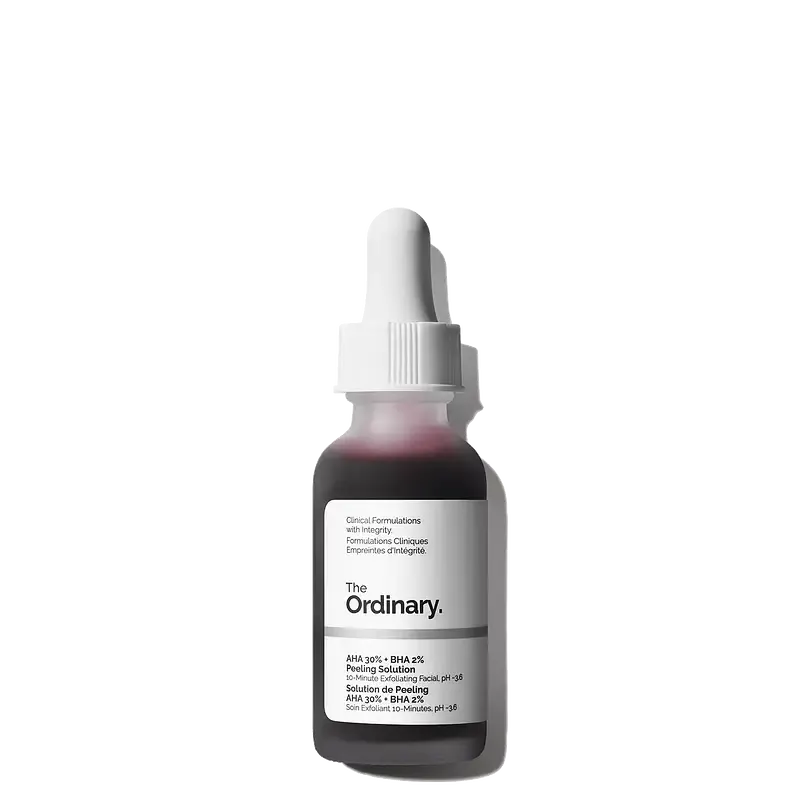
The Ordinary AHA 30% + BHA 2% Peeling Solution by The Ordinary
The Ordinary

The Ordinary AHA 30% + BHA 2% Peeling Solution

Exfoliatorsmasks

Safety score

Pregnancy-focused assessment

Medium Risk58/100
Higher concernLower concern

This formula contains an ingredient that needs extra caution in MamaSkin's pregnancy-focused assessment.

Formula and assessment check

Ingredient safety review updated 31 August 2026. Product formulas can change, so compare the ingredients shown here with the packaging you have.

Report a formula mismatch

Ingredient breakdown

See how the listed formula falls across MamaSkin's pregnancy-focused risk bands.

21

No known risks

3

Low risk

0

Medium risk

0

High risk

Ingredients

Ingredients with a higher risk flag appear first, followed by the rest of the formula.

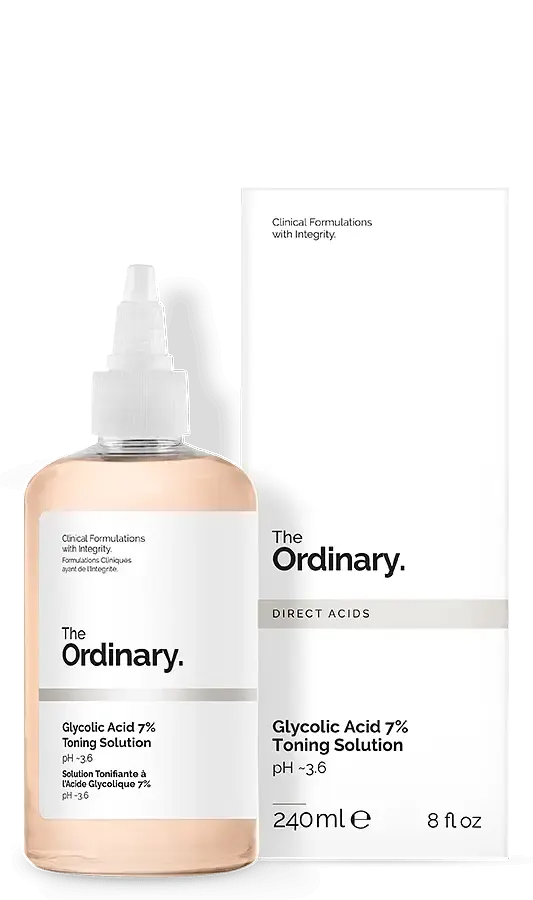
Glycolic Acid

Low Risk

Alpha-hydroxy acid exfoliant. Listed by MotherToBaby as a common OTC topical acne ingredient used during pregnancy; when used as directed, OTC topical acne treatments are not expected to increase pregnancy complications. For consumer cosmetics, safety guidance commonly frames AHAs as safe at ≤10% (with appropriate pH and daily sun protection). Avoid high-strength/professional peels during pregnancy.

Sources: MotherToBaby: Topical acne treatments in pregnancy and breastfeeding https://www.ncbi.nlm.nih.gov/books/NBK582985/
Salicylic Acid

Low Risk

Salicylic acid is a beta-hydroxy acid used for exfoliation and as a preservative. Exposure depends on concentration, product category, treated area, frequency, skin condition and inhalation or oral potential. Current SCCS assessments support specified cosmetic uses and restrictions; ordinary limited-area low-strength topical use is not equivalent to a professional peel, large-area leave-on treatment or oral salicylate exposure. MamaSkin retains Low Risk with those route and exposure qualifications.

Sources: SCCS/1646/22: Final Opinion on Salicylic Acid https://health.ec.europa.eu/latest-updates/sccs-final-opinion-salicylic-acid-2023-06-09_en; SCCS follow-up on children's exposure https://health.ec.europa.eu/publications/sccs-opinion-salicylic-acid-cas-no-69-72-7-ec-no-200-712-3-childrens-exposure_en

Lactic Acid

Low Risk

Endogenous alpha-hydroxy acid and humectant; at modest cosmetic concentrations (≈5% and below, and generally <10%) topical lactic acid is considered compatible with pregnancy. Main risks are local irritation and increased photosensitivity rather than systemic toxicity or fetal effects.

Sources: MotherToBaby: Topical acne treatments in pregnancy and breastfeeding https://www.ncbi.nlm.nih.gov/books/NBK582985/
Show all (24)

Water

No Known Risks

Aloe Barbadensis Leaf Water

No Known Risks

A botanical extract or plant water used for conditioning, soothing or antioxidant support. Direct pregnancy studies of this exact cosmetic material were not identified, but no reproductive or developmental hazard was identified for normal topical exposure. Oral herbal or medicinal use is outside this classification.

Sources: European Commission CosIng; CIR botanical safety framework and relevant plant-family assessments; no ingredient-specific human pregnancy study of normal topical cosmetic use was identified.

Sodium Hydroxide

No Known Risks

pH adjuster used in very small quantities to balance formulations. Not associated with pregnancy-specific concerns.

Sources: Scientific Committee on Consumer Safety (EU); European cosmetics regulatory framework

Daucus Carota Sativa Extract

No Known Risks

Propanediol

No Known Risks

Solvent and humectant used to improve texture and ingredient solubility. Low systemic exposure expected from topical cosmetic use.

Sources: Cosmetic Ingredient Review (US); Scientific Committee on Consumer Safety (EU)

Cocamidopropyl Dimethylamine

No Known Risks

A surfactant, emulsifier or conditioning ingredient used at controlled cosmetic concentrations. Local irritation in strong formulas is the practical concern; no pregnancy-specific systemic or developmental hazard was identified for normal topical or rinse-off exposure.

Sources: European Commission CosIng ingredient inventory; relevant CIR assessments of surfactants, ethoxylated ingredients and quaternary conditioning agents.

Tartaric Acid

No Known Risks

A naturally occurring hydroxy dicarboxylic acid used mainly to adjust pH, support exfoliation or condition skin. No pregnancy-specific systemic concern was identified for normal topical cosmetic exposure. At sufficiently high concentration or low pH, hydroxy acids can sting, irritate skin and increase sensitivity to other irritants; those local effects depend on the finished formulation rather than indicating reproductive toxicity.

Sources: CIR: Amended Safety Assessment of Malic Acid and Sodium Malate https://www.cir-safety.org/supplementaldoc/amended-safety-assessment-malic-acid-and-sodium-malate-used-cosmetics; CIR assessments of alpha-hydroxy acids as used in cosmetics; European Commission CosIng ingredient inventory for Malic Acid and Tartaric Acid.

Citric Acid

No Known Risks

pH adjuster used in small amounts to maintain product stability. Not associated with pregnancy-specific concerns.

Sources: Scientific Committee on Consumer Safety (EU); European cosmetics regulatory framework

Panthenol

No Known Risks

Panthenol (pro-vitamin B5) is used for soothing and barrier support and is generally well tolerated, with no known pregnancy or breastfeeding concerns in topical cosmetic use.

Sources: CIR; EU/UK Cosmetics Regulation

Sodium Hyaluronate Crosspolymer

No Known Risks

Crosslinked hyaluronate humectant used to support hydration at the skin surface. Reviewed cosmetic safety sources support normal topical use, with no pregnancy- or breastfeeding-specific topical signal identified.

Sources: CIR: Safety Assessment of Hyaluronates as Used in Cosmetics; EU CosIng / cosmetics regulatory inventory

Tasmannia Lanceolata Fruit/Leaf Extract

No Known Risks

Glycerin

No Known Risks

Glycerin is a widely used humectant that supports hydration and the skin barrier, with a long safety record and no known pregnancy or breastfeeding concerns in topical cosmetic use.

Sources: CIR; EU/UK Cosmetics Regulation

Pentylene Glycol

No Known Risks

Humectant and preservative booster. Considered safe for cosmetic use with low systemic exposure.

Sources: Cosmetic Ingredient Review (US); Scientific Committee on Consumer Safety (EU)

Xanthan Gum

No Known Risks

Natural polysaccharide thickener used for stability and texture. Not associated with pregnancy-specific concerns.

Sources: European cosmetics regulatory framework

Polysorbate 20

No Known Risks

Nonionic surfactant and solubiliser used to disperse oils and fragrance. Reviewed cosmetic safety sources support normal topical use, with no pregnancy- or breastfeeding-specific topical signal identified in the material reviewed.

Sources: CIR: Safety Assessment of Polysorbates as Used in Cosmetics; EU CosIng / cosmetics regulatory inventory

Trisodium Ethylenediamine Disuccinate

No Known Risks

Chelating ingredient used to improve formula stability by binding trace metals. Reviewed cosmetic ingredient references do not identify a pregnancy- or breastfeeding-specific concern for normal topical use.

Sources: CIR cosmetic ingredient safety references for chelating agents; EU CosIng / cosmetics regulatory inventory

Potassium Sorbate

No Known Risks

Preservative widely used in foods and cosmetics. Considered safe at regulated concentrations with low systemic exposure from topical use.

Sources: Scientific Committee on Consumer Safety (EU); European cosmetics regulatory framework

Sodium Benzoate

No Known Risks

Preservative widely used in foods and cosmetics. Considered safe at regulated concentrations with low systemic exposure from topical use.

Sources: Scientific Committee on Consumer Safety (EU); European cosmetics regulatory framework

Ethylhexylglycerin

No Known Risks

Preservative booster and skin-conditioning agent. Considered safe for cosmetic use with low systemic exposure when used as intended.

Sources: Scientific Committee on Consumer Safety (EU); Cosmetic Ingredient Review (US)

1,2-Hexanediol

No Known Risks

1,2-Hexanediol is commonly used as a solvent and preservative booster; topical exposure is low and it has no known pregnancy or breastfeeding concerns at cosmetic concentrations, though very sensitive skin may occasionally react.

Sources: CIR; EU/UK Cosmetics Regulation

Caprylyl Glycol

No Known Risks

Humectant and preservative booster used to support product stability. Low systemic exposure expected from topical cosmetic use.

Sources: Scientific Committee on Consumer Safety (EU); Cosmetic Ingredient Review (US)

Formulations can change without notice. For the most accurate result, compare this list with your packaging and scan the exact ingredient label in MamaSkin when you repurchase.

How to use this assessment

The risk band is the primary conclusion. The score adds detail within that band and should not be used to compare products as if a one-point difference were clinically meaningful.

MamaSkin provides pregnancy-focused information, not medical advice. Your midwife, GP, pharmacist or dermatologist should take priority when your circumstances differ from typical cosmetic use.

Read the full methodology