Vaseline
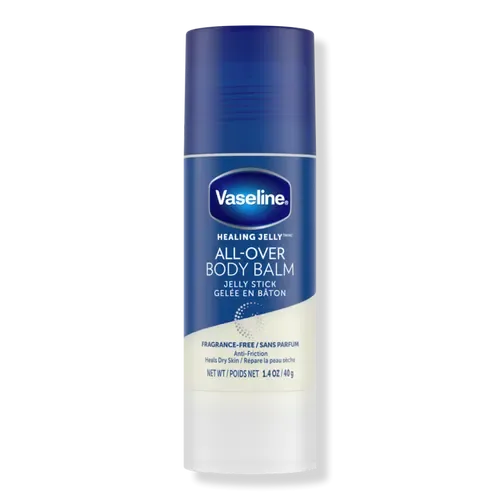
Vaseline Healing Jelly Stick - Unscented
No known risks99/100

Body Lotions
This formula needs extra consideration during pregnancy. Review the flagged ingredients with your healthcare professional.
29 of 29 ingredients rated
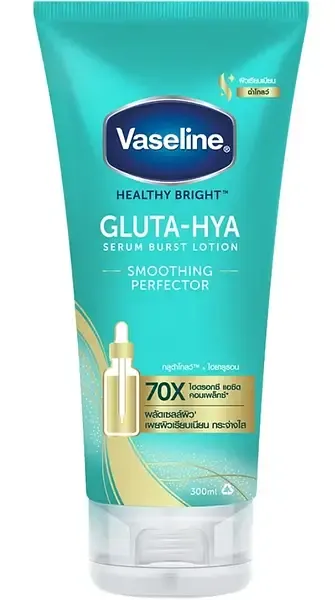
MamaSkin rates the recorded formula for Vaseline Gluta-Hya Serum Burst Lotion Smoothing Perfector as Medium risk (55/100). Discuss the flagged ingredients with a qualified healthcare professional before using this formula during pregnancy.
The recorded formula includes 8 ingredient entries with risk flags: Methylparaben (Medium risk), Dimethicone (Low risk), Lactic Acid (Low risk), plus others listed in the breakdown. These are ingredient-level flags; they do not replace the stored product assessment or account for every formulation detail.
29 of 29 ingredient entries on this page have a recorded score, evidence summary and source text. That describes documentation coverage, not proof that the finished formula has been clinically tested during pregnancy.
How we assess productsThe recorded formula, with evidence behind each rating. Unmatched ingredients are marked Not assessed in grey.
Methylparaben is a preservative with weak endocrine activity in some experimental systems. After reviewing the available endocrine and toxicology evidence, SCCS/1652/23 concluded that methylparaben is safe in cosmetics up to 0.4% as acid, including up to 0.4% within permitted ester mixtures whose total does not exceed 0.8%. Pregnancy-specific human outcome data for repeated topical exposure remain limited. MamaSkin retains Medium Risk as a deliberately conservative pregnancy policy, not because SCCS found compliant cosmetic use unsafe.
Sources: SCCS/1652/23: Opinion on Methylparaben, final 14 December 2023 with 2024 corrigendum https://health.ec.europa.eu/publications/methylparaben-cas-no-99-76-3-ec-no-202-785-7_en; CIR: Amended Safety Assessment of Parabens as Used in Cosmetics https://www.cir-safety.org/supplementaldoc/amended-safety-assessment-parabens-used-cosmetics-0
Phenoxyethanol is a preservative permitted in EU cosmetics up to 1.0%. The SCCS concluded it is safe for cosmetic use at that level, including when considering higher cosmetic exposure scenarios in infants and young children. Main practical concern is irritation/stinging on very sensitive or compromised skin rather than a pregnancy- or breastfeeding-specific risk.
Sources: SCCS/1575/16: Phenoxyethanol opinion https://health.ec.europa.eu/publications/phenoxyethanol_en
Umbrella term for an undisclosed fragrance blend. It’s not usually a pregnancy-specific concern at normal cosmetic use levels, but the exact components and concentrations aren’t fully disclosed on the label, so we score it more conservatively. If you prefer maximum transparency (or you’re sensitive to fragrance compounds), choose fragrance-free/unscented products.
Sources: SCCS: Fragrance allergens in cosmetic products https://health.ec.europa.eu/latest-updates/sccs-new-opinion-fragrance-allergens-cosmetic-products-2012-07-31_en
Dimethicone is a silicone polymer used as a skin protectant and slip/conditioning agent. It is considered inert with minimal dermal absorption; the main practical issues are cosmetic (feel) and occasional irritation in very sensitive users. It is not a pregnancy-specific concern in topical cosmetic use.
Sources: CIR: Amended Safety Assessment of Dimethicone, Methicone, and Substituted-Methicone Polymers as Used in Cosmetics https://cir-safety.org/supplementaldoc/amended-safety-assessment-dimethicone-methicone-and-substituted-methicone-polymers-2
Endogenous alpha-hydroxy acid and humectant; at modest cosmetic concentrations (≈5% and below, and generally <10%) topical lactic acid is considered compatible with pregnancy. Main risks are local irritation and increased photosensitivity rather than systemic toxicity or fetal effects.
Sources: MotherToBaby: Topical acne treatments in pregnancy and breastfeeding https://www.ncbi.nlm.nih.gov/books/NBK582985/
Salicylic acid is a beta-hydroxy acid (BHA) used for acne, exfoliation and preservation. Common over-the-counter acne strengths are 0.5-2%, including 0.5%, 1% and 2%; the FDA lists this acne-treatment range. Pregnancy guidance distinguishes these topical products from oral salicylates and strong peels. MotherToBaby reports that ACOG allows over-the-counter topical salicylic acid during pregnancy when needed. Only a small amount of topical acne treatment usually reaches the bloodstream through intact skin; exposure can increase with damaged skin, frequent use or treatment of large areas. Direct salicylic-acid-specific pregnancy data remain limited. MamaSkin's Low Risk rating is a dose-and-use precaution, not evidence that ordinary low-strength skincare causes fetal harm or a recommendation to avoid every BHA product. Use as directed on limited areas of intact skin. Discuss strengths above 2%, chemical peels, wart/corn removers, large-area treatment or use under occlusion with your clinician before use during pregnancy. The American Academy of Dermatology specifically advises discussing and limiting higher-strength salicylic acid above 2%. Percentage alone does not establish safety: formulation, area, frequency and skin condition also matter. General cosmetic-use limits are not pregnancy-specific safety thresholds.
Sources: https://mothertobaby.org/fact-sheets/topical-acne-treatments-pregnancy/; https://www.aad.org/public/everyday-care/skin-care-secrets/routine/pregnancy-skin-care; https://www.accessdata.fda.gov/drugsatfda_docs/omuf/monographs/OTC%20Monograph_M006-Topical%20Acne%20drug%20products%20for%20OTC%20Human%20Use%2011.23.2021.pdf; https://health.ec.europa.eu/publications/salicylic-acid-cas-no-69-72-7-ec-no-200-712-3_en; https://www.ncbi.nlm.nih.gov/books/NBK500675/
Polyhydroxy acid (PHA) used as a gentle exfoliant/humectant; generally less irritating than AHAs due to lower penetration. Considered safe as used in cosmetics, with no pregnancy-specific contraindications identified at topical cosmetic concentrations.
Sources: MotherToBaby: Topical acne treatments in pregnancy and breastfeeding https://www.ncbi.nlm.nih.gov/books/NBK582985/
Alpha-hydroxy acid exfoliant. Listed by MotherToBaby as a common OTC topical acne ingredient used during pregnancy; when used as directed, OTC topical acne treatments are not expected to increase pregnancy complications. For consumer cosmetics, safety guidance commonly frames AHAs as safe at ≤10% (with appropriate pH and daily sun protection). Avoid high-strength/professional peels during pregnancy.
Sources: MotherToBaby: Topical acne treatments in pregnancy and breastfeeding https://www.ncbi.nlm.nih.gov/books/NBK582985/
Water (Aqua) is the standard purified water used as a cosmetic solvent. It has no pregnancy-specific risk in normal topical use.
Sources: https://pubchem.ncbi.nlm.nih.gov/compound/Water, https://single-market-economy.ec.europa.eu/sectors/cosmetics/cosmetic-ingredient-database/cosing-glossary-ingredients_en
Niacinamide (vitamin B3) is widely used for barrier support and tone/texture benefits, and is generally considered safe in pregnancy and breastfeeding when used topically at cosmetic concentrations.
Sources: CIR; EU/UK Cosmetics Regulation
Low-viscosity isoparaffin emollient used for slip and lightweight texture. Reviewed cosmetic safety sources support normal topical use, with no pregnancy- or breastfeeding-specific topical signal identified in the material reviewed.
Sources: CIR: Safety Assessment of Isoparaffins as Used in Cosmetics / CIR Quick Reference Table (Isohexadecane); EU CosIng / cosmetics regulatory inventory
Glycerin is a widely used humectant that supports hydration and the skin barrier, with a long safety record and no known pregnancy or breastfeeding concerns in topical cosmetic use.
Sources: CIR; EU/UK Cosmetics Regulation
Polymer thickener used to create gel textures. Large-molecule ingredient with negligible systemic absorption.
Sources: Cosmetic Ingredient Review (US); Scientific Committee on Consumer Safety (EU)
Propylene glycol is a common solvent and humectant with a long history of use; it is not considered a pregnancy or breastfeeding concern in topical cosmetics, though some individuals may experience irritation in leave-on products.
Sources: CIR; EU/UK Cosmetics Regulation
A naturally occurring amino-acid dimer used for skin or hair conditioning. CIR included Cystine in the alpha-amino-acid safe-as-used conclusion. This entry does not classify separately modified cystine derivatives; no pregnancy-specific concern was identified for normal topical cosmetic exposure.
Sources: CIR: Safety Assessment of Alpha Amino Acids as Used in Cosmetics https://cir-reports.cir-safety.org/view-attachment/?id=5352d083-8e74-ec11-8943-0022482f06a6
Amino acid used as a humectant and skin/hair-conditioning support ingredient. Reviewed cosmetic safety sources support normal topical use, with no pregnancy- or breastfeeding-specific topical signal identified.
Sources: CIR: Safety Assessment of alpha-Amino Acids as Used in Cosmetics; EU CosIng / cosmetics regulatory inventory
Natural-moisturising-factor humectant that helps bind water in the stratum corneum. Reviewed cosmetic safety sources support normal topical use, with no pregnancy- or breastfeeding-specific topical signal identified in the material reviewed.
Sources: CIR: Safety Assessment of PCA and Its Salts as Used in Cosmetics; EU CosIng / cosmetics regulatory inventory
An antioxidant peptide naturally present in the body and used in topical products for skin conditioning and tone. Clinical studies and systematic reviews report generally good tolerance of topical glutathione, although evidence for cosmetic benefits remains limited. No pregnancy-specific topical signal was identified.
Sources: PubMed: Systematic Review of the Efficacy and Safety of Topical Glutathione in Dermatology https://pubmed.ncbi.nlm.nih.gov/41416233/; PubMed: topical oxidized glutathione clinical trial https://pubmed.ncbi.nlm.nih.gov/25378941/
Modified hyaluronate humectant and skin-conditioning ingredient. Reviewed cosmetic safety sources support topical hyaluronate ingredients, with no pregnancy- or breastfeeding-specific concern identified for normal cosmetic use.
Sources: CIR: Safety Assessment of Hyaluronates as Used in Cosmetics; EU CosIng / cosmetics regulatory inventory
Sodium hyaluronate (hyaluronic acid salt) is used for hydration and cushioning, with very low systemic absorption from topical use and no known pregnancy or breastfeeding concerns at cosmetic concentrations.
Sources: CIR; EU/UK Cosmetics Regulation
Crosslinked hyaluronate humectant used to support hydration at the skin surface. Reviewed cosmetic safety sources support normal topical use, with no pregnancy- or breastfeeding-specific topical signal identified.
Sources: CIR: Safety Assessment of Hyaluronates as Used in Cosmetics; EU CosIng / cosmetics regulatory inventory
Humectant and skin-conditioning ingredient in the hyaluronate family. Reviewed cosmetic safety sources support current cosmetic use, with no pregnancy- or breastfeeding-specific topical concern identified in the material reviewed.
Sources: CIR: Safety Assessment of Hyaluronates as Used in Cosmetics; EU CosIng / cosmetics regulatory inventory
Preservative booster and skin-conditioning agent. Considered safe for cosmetic use with low systemic exposure when used as intended.
Sources: Scientific Committee on Consumer Safety (EU); Cosmetic Ingredient Review (US)
Humectant and preservative booster. Considered safe for cosmetic use with low systemic exposure.
Sources: Cosmetic Ingredient Review (US); Scientific Committee on Consumer Safety (EU)
Highly refined petrolatum (petroleum jelly) is a skin protectant/occlusive with minimal dermal penetration; safety depends on refining/PAH impurity controls and cosmetic/medical grades meet established standards.
Sources: USP White Petrolatum monograph (2021); Petry et al., Food and Chemical Toxicology (2017); PubMed (dermatology review)
pH adjuster used in very small quantities to balance formulations. Not associated with pregnancy-specific concerns.
Sources: Scientific Committee on Consumer Safety (EU); European cosmetics regulatory framework
Inorganic mineral pigment and, in some products, a mineral UV filter. For typical topical use in creams, lotions and makeup, systemic absorption is expected to be very low. Most concerns discussed in the literature relate to ingestion (food additive E171) or inhalation exposure from fine powders/sprays, and to specific nanoparticle characterisation. For routine topical cosmetic use, it is generally considered acceptable in pregnancy and breastfeeding; if you prefer a cautious approach, avoid inhaling loose powders or sprays.
Sources: EFSA opinion on titanium dioxide as food additive E171 (ingestion context); SCCS opinions on titanium dioxide in cosmetics (including inhalation/nano considerations); general dermatology guidance on mineral sunscreens in pregnancy.
Polymer thickener and stabiliser used in creams and sunscreens. Low systemic exposure expected.
Sources: Cosmetic Ingredient Review (US); Scientific Committee on Consumer Safety (EU)
Disodium EDTA is a chelating agent used to improve formula stability and performance; it is considered low concern in topical cosmetic use, with no known pregnancy or breastfeeding risks at typical concentrations.
Sources: CIR; EU/UK Cosmetics Regulation
Water, Dimethicone, Niacinamide, Isohexadecane, Glycerin, Carbomer, Propylene Glycol, Lactic Acid, Salicylic Acid, Gluconolactone, Glycolic Acid, Cystine, Glycine, Sodium PCA, Glutathione, Sodium Acetylated Hyaluronate, Sodium Hyaluronate, Sodium Hyaluronate Crosspolymer, Hydrolyzed Sodium Hyaluronate, Ethylhexylglycerin, Pentylene Glycol, Petrolatum, Phenoxyethanol, Methylparaben, Parfum, Sodium Hydroxide, Titanium Dioxide, Acrylates/C10-30 Alkyl Acrylate Crosspolymer, Disodium EDTA
Ingredient ratings refreshed 1 October 2026. Formulas vary by market and can change. Always compare with your packaging.
The recorded formula includes 8 ingredient entries with risk flags: Methylparaben (Medium risk), Dimethicone (Low risk), Lactic Acid (Low risk), plus others listed in the breakdown. These are ingredient-level flags; they do not replace the stored product assessment or account for every formulation detail. The product score is a stored assessment, not a clinical safety guarantee.
No. Glycolic Acid appears in this recorded cosmetic formula. The score does not establish suitability for a stronger peel, a different concentration or a professional treatment. Concentration, formulation and how a product is used matter; compare your packaging with this full ingredient list and read the recorded Glycolic Acid evidence below.
29 of 29 ingredient entries on this page have a recorded score, evidence summary and source text. That describes documentation coverage, not proof that the finished formula has been clinically tested during pregnancy.
Only if the ingredient list on your packaging matches the recorded formula shown here. Formulas can differ by market and change over time. Compare the full list, not just the product name; report a mismatch if it differs.
No. This page presents a pregnancy-focused product assessment. Do not infer a breastfeeding conclusion from its score or label; breastfeeding requires a separate assessment of the formula and how it is used.