Vaseline
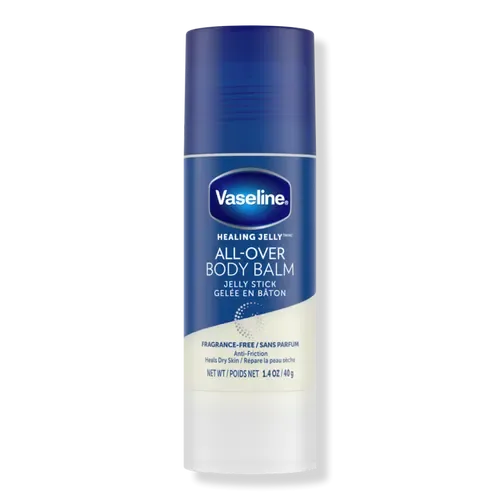
Vaseline Healing Jelly Stick - Unscented
No known risks99/100

Body Lotions
Higher-risk ingredients are flagged in this formula. Discuss alternatives with your healthcare professional.
45 of 45 ingredients rated
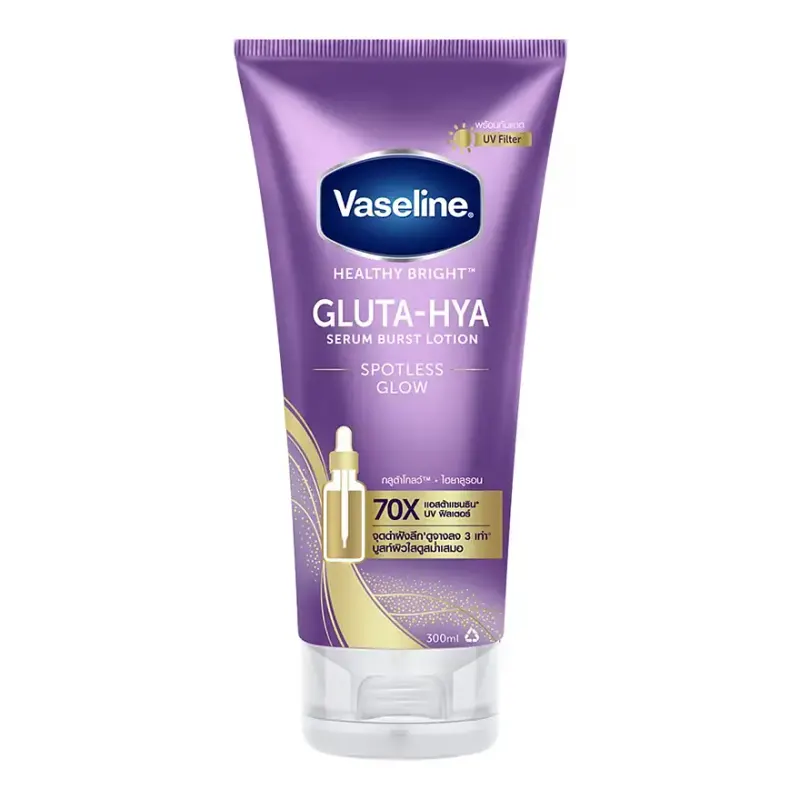
MamaSkin rates the recorded formula for Vaseline Healthy Bright Gluta Hya Serum Burst Lotion Spotless Glow as High risk (26/100). This is not a pregnancy-safe recommendation. Discuss alternatives with a qualified healthcare professional.
The recorded formula includes 10 ingredient entries with risk flags: Retinyl Palmitate (High risk), Ethylhexyl Methoxycinnamate (Medium risk), Butyl Methoxydibenzoylmethane (Medium risk), plus others listed in the breakdown. These are ingredient-level flags; they do not replace the stored product assessment or account for every formulation detail.
45 of 45 ingredient entries on this page have a recorded score, evidence summary and source text. That describes documentation coverage, not proof that the finished formula has been clinically tested during pregnancy.
How we assess productsThe recorded formula, with evidence behind each rating. Unmatched ingredients are marked Not assessed in grey.
Vitamin A derivative. While much weaker than Retinol and often used in low doses as an antioxidant (e.g., in body oils), medical guidelines generally advise avoiding all forms of Vitamin A during pregnancy due to class-wide risks. We flag this as High Risk to align with the strictest safety standards
Sources: EMA: Updated measures for pregnancy prevention during retinoid use https://www.ema.europa.eu/en/news/updated-measures-pregnancy-prevention-during-retinoid-use
Ethylhexyl methoxycinnamate (EHMC) is a UV-B filter (also called octinoxate/octyl methoxycinnamate). SCCS characterised EHMC as endocrine-active (oestrogenic activity and weak anti-androgenic activity in vitro and in vivo) and reviewed genotoxicity/reproductive toxicity datasets in its re-evaluation. Pregnancy-specific human outcome data for topical exposure are limited; the medium-risk signal is endocrine activity plus systemic exposure uncertainty with frequent, large-area use.
Sources: SCCS/1671/24: Ethylhexyl methoxycinnamate https://health.ec.europa.eu/publications/sccs-opinion-ethylhexyl-methoxycinnamate-ehmc-cas-no-5466-77-383834-59-7-ec-no-226-775-7629-661-9_en
Butyl methoxydibenzoylmethane (avobenzone) is a UVA filter used in sunscreens. Reviews note potential endocrine-related signals for several organic UV filters, but data are often not sufficient to establish endocrine disruption, and systemic exposure depends on formulation and use pattern. Pregnancy-specific human outcome data for topical exposure are limited; the key signal is uncertainty around systemic/endocrine effects rather than a well-defined pregnancy outcome dataset.
Sources: TGA: Safety review of seven active sunscreen ingredients https://www.tga.gov.au/resources/publication/corporate-reports/safety-review-seven-active-sunscreen-ingredients
Methylparaben is a preservative with weak endocrine activity in some experimental systems. After reviewing the available endocrine and toxicology evidence, SCCS/1652/23 concluded that methylparaben is safe in cosmetics up to 0.4% as acid, including up to 0.4% within permitted ester mixtures whose total does not exceed 0.8%. Pregnancy-specific human outcome data for repeated topical exposure remain limited. MamaSkin retains Medium Risk as a deliberately conservative pregnancy policy, not because SCCS found compliant cosmetic use unsafe.
Sources: SCCS/1652/23: Opinion on Methylparaben, final 14 December 2023 with 2024 corrigendum https://health.ec.europa.eu/publications/methylparaben-cas-no-99-76-3-ec-no-202-785-7_en; CIR: Amended Safety Assessment of Parabens as Used in Cosmetics https://www.cir-safety.org/supplementaldoc/amended-safety-assessment-parabens-used-cosmetics-0
Propylparaben is a preservative in the paraben family. The main concern is endocrine activity signals (oestrogenic activity in some assays) and conservative risk management around aggregate exposure; pregnancy-specific outcome data for topical cosmetic exposure are limited. The medium-risk signal is endocrine-related uncertainty and limited pregnancy-specific evidence rather than a confirmed pregnancy-specific toxicity endpoint.
Sources: CIR: Amended safety assessment of parabens in cosmetics https://www.cir-safety.org/supplementaldoc/amended-safety-assessment-parabens-used-cosmetics-0
BHT (butylated hydroxytoluene) is a lipophilic antioxidant used to protect oils from oxidation. Animal studies at high (primarily oral) doses show liver enzyme induction and related biochemical changes; endocrine-screening lines of evidence have also been evaluated in regulatory reviews. Pregnancy-specific human outcome data for topical cosmetic exposure are limited; the key signal is systemic toxicology at higher exposures and uncertainty for pregnancy-specific outcomes.
Sources: SCCS/1636/21: Butylated hydroxytoluene https://health.ec.europa.eu/publications/butylated-hydroxytoluene-bht_en
Phenoxyethanol is a preservative permitted in EU cosmetics up to 1.0%. The SCCS concluded it is safe for cosmetic use at that level, including when considering higher cosmetic exposure scenarios in infants and young children. Main practical concern is irritation/stinging on very sensitive or compromised skin rather than a pregnancy- or breastfeeding-specific risk.
Sources: SCCS/1575/16: Phenoxyethanol opinion https://health.ec.europa.eu/publications/phenoxyethanol_en
Triethanolamine (TEA) is an alkanolamine used as a pH adjuster and surfactant in cosmetics. The main practical concerns are skin/eye irritation at higher concentrations and the potential formation of nitrosamines if formulated with nitrosating agents (a formulation/impurity-control issue). It is not a typical pregnancy-specific concern at cosmetic use levels; overall risk is primarily local irritation/sensitisation in susceptible users.
Sources: CIR: Triethanolamine ingredient safety information https://www.cir-safety.org/ingredient/triethanolamine
Umbrella term for an undisclosed fragrance blend. It’s not usually a pregnancy-specific concern at normal cosmetic use levels, but the exact components and concentrations aren’t fully disclosed on the label, so we score it more conservatively. If you prefer maximum transparency (or you’re sensitive to fragrance compounds), choose fragrance-free/unscented products.
Sources: SCCS: Fragrance allergens in cosmetic products https://health.ec.europa.eu/latest-updates/sccs-new-opinion-fragrance-allergens-cosmetic-products-2012-07-31_en
Dimethicone is a silicone polymer used as a skin protectant and slip/conditioning agent. It is considered inert with minimal dermal absorption; the main practical issues are cosmetic (feel) and occasional irritation in very sensitive users. It is not a pregnancy-specific concern in topical cosmetic use.
Sources: CIR: Amended Safety Assessment of Dimethicone, Methicone, and Substituted-Methicone Polymers as Used in Cosmetics https://cir-safety.org/supplementaldoc/amended-safety-assessment-dimethicone-methicone-and-substituted-methicone-polymers-2
Water (Aqua) is the standard purified water used as a cosmetic solvent. It has no pregnancy-specific risk in normal topical use.
Sources: https://pubchem.ncbi.nlm.nih.gov/compound/Water, https://single-market-economy.ec.europa.eu/sectors/cosmetics/cosmetic-ingredient-database/cosing-glossary-ingredients_en
Niacinamide (vitamin B3) is widely used for barrier support and tone/texture benefits, and is generally considered safe in pregnancy and breastfeeding when used topically at cosmetic concentrations.
Sources: CIR; EU/UK Cosmetics Regulation
Glycerin is a widely used humectant that supports hydration and the skin barrier, with a long safety record and no known pregnancy or breastfeeding concerns in topical cosmetic use.
Sources: CIR; EU/UK Cosmetics Regulation
A carotenoid antioxidant used for colour and skin-conditioning support. Topical cosmetic exposure is expected to be much lower than dietary or supplemental exposure. No pregnancy-specific hazard was identified for normal topical use.
Sources: European Commission CosIng ingredient inventory; PubMed toxicology and topical cosmetic literature for astaxanthin. No ingredient-specific human pregnancy study of topical cosmetic use was identified.
An algae- or seaweed-derived ingredient used for skin conditioning, moisturising or texture support. Composition and trace mineral content vary by source. No pregnancy-specific hazard was identified for normal topical cosmetic exposure; this does not assess oral seaweed supplements.
Sources: CIR: Safety Assessment of Brown Algae-Derived Ingredients as Used in Cosmetics; European Commission CosIng ingredient inventory; relevant algal cosmetic-ingredient literature.
Modified hyaluronate humectant and skin-conditioning ingredient. Reviewed cosmetic safety sources support topical hyaluronate ingredients, with no pregnancy- or breastfeeding-specific concern identified for normal cosmetic use.
Sources: CIR: Safety Assessment of Hyaluronates as Used in Cosmetics; EU CosIng / cosmetics regulatory inventory
Sodium hyaluronate (hyaluronic acid salt) is used for hydration and cushioning, with very low systemic absorption from topical use and no known pregnancy or breastfeeding concerns at cosmetic concentrations.
Sources: CIR; EU/UK Cosmetics Regulation
Crosslinked hyaluronate humectant used to support hydration at the skin surface. Reviewed cosmetic safety sources support normal topical use, with no pregnancy- or breastfeeding-specific topical signal identified.
Sources: CIR: Safety Assessment of Hyaluronates as Used in Cosmetics; EU CosIng / cosmetics regulatory inventory
Humectant and skin-conditioning ingredient in the hyaluronate family. Reviewed cosmetic safety sources support current cosmetic use, with no pregnancy- or breastfeeding-specific topical concern identified in the material reviewed.
Sources: CIR: Safety Assessment of Hyaluronates as Used in Cosmetics; EU CosIng / cosmetics regulatory inventory
Helianthus annuus (sunflower) seed oil is a common emollient rich in fatty acids and is generally well tolerated, with no known pregnancy or breastfeeding concerns in topical cosmetic use.
Sources: CIR; EU/UK Cosmetics Regulation
A naturally occurring amino-acid dimer used for skin or hair conditioning. CIR included Cystine in the alpha-amino-acid safe-as-used conclusion. This entry does not classify separately modified cystine derivatives; no pregnancy-specific concern was identified for normal topical cosmetic exposure.
Sources: CIR: Safety Assessment of Alpha Amino Acids as Used in Cosmetics https://cir-reports.cir-safety.org/view-attachment/?id=5352d083-8e74-ec11-8943-0022482f06a6
Amino acid used as a humectant and skin/hair-conditioning support ingredient. Reviewed cosmetic safety sources support normal topical use, with no pregnancy- or breastfeeding-specific topical signal identified.
Sources: CIR: Safety Assessment of alpha-Amino Acids as Used in Cosmetics; EU CosIng / cosmetics regulatory inventory
Natural-moisturising-factor humectant that helps bind water in the stratum corneum. Reviewed cosmetic safety sources support normal topical use, with no pregnancy- or breastfeeding-specific topical signal identified in the material reviewed.
Sources: CIR: Safety Assessment of PCA and Its Salts as Used in Cosmetics; EU CosIng / cosmetics regulatory inventory
An antioxidant peptide naturally present in the body and used in topical products for skin conditioning and tone. Clinical studies and systematic reviews report generally good tolerance of topical glutathione, although evidence for cosmetic benefits remains limited. No pregnancy-specific topical signal was identified.
Sources: PubMed: Systematic Review of the Efficacy and Safety of Topical Glutathione in Dermatology https://pubmed.ncbi.nlm.nih.gov/41416233/; PubMed: topical oxidized glutathione clinical trial https://pubmed.ncbi.nlm.nih.gov/25378941/
Protein-derived skin- and hair-conditioning ingredient used to support feel and hydration at the surface. Reviewed cosmetic ingredient references do not identify a pregnancy- or breastfeeding-specific concern for normal topical use.
Sources: CIR cosmetic ingredient safety references for protein hydrolysates; EU CosIng / cosmetics regulatory inventory
Highly refined petrolatum (petroleum jelly) is a skin protectant/occlusive with minimal dermal penetration; safety depends on refining/PAH impurity controls and cosmetic/medical grades meet established standards.
Sources: USP White Petrolatum monograph (2021); Petry et al., Food and Chemical Toxicology (2017); PubMed (dermatology review)
Silicone emollient and solvent used to improve slip and spreadability. No known pregnancy- or breastfeeding-specific concern in normal topical cosmetic use based on reviewed cosmetic safety sources. Spray or aerosol formats may warrant extra caution because inhalation/local lung exposure concerns have been raised for those uses.
Sources: SCCS: Cyclopentasiloxane (D5) in cosmetic products; EU CosIng / cosmetics regulatory inventory
Polymer thickener and stabiliser used in creams and sunscreens. Low systemic exposure expected.
Sources: Cosmetic Ingredient Review (US); Scientific Committee on Consumer Safety (EU)
A strongly alkaline raw material used mainly in small amounts to adjust pH or during soap manufacture. Concentrated potassium hydroxide is corrosive, but that raw-material hazard is not representative of a correctly formulated finished cosmetic. Cosmetic safety reviewers concluded that inorganic hydroxides are safe in current cosmetic uses when products are formulated to be non-irritating, with special handling conditions for depilatories and hair straighteners. No pregnancy-specific concern is identified for normal use of a compliant finished product.
Sources: CIR: Safety Assessment of Inorganic Hydroxides as Used in Cosmetics https://www.cir-safety.org/supplementaldoc/safety-assessment-inorganic-hydroxides-used-cosmetics-0
A high-molecular-weight acrylate polymer used for film formation, texture or suspension. Cosmetic safety reviewers concluded that the assessed acrylates copolymers are safe in current practices when formulated to be non-irritating. Finished-polymer absorption is expected to be limited, and residual monomers should be controlled during manufacture.
Sources: CIR: Safety Assessment of Acrylates Copolymers as Used in Cosmetics https://cir-safety.org/supplementaldoc/safety-assessment-acrylates-copolymers-used-cosmetics
Disodium EDTA is a chelating agent used to improve formula stability and performance; it is considered low concern in topical cosmetic use, with no known pregnancy or breastfeeding risks at typical concentrations.
Sources: CIR; EU/UK Cosmetics Regulation
This glucose-derived nonionic surfactant or emulsifier is used in cleansers and emulsions. The Cosmetic Ingredient Review concluded that alkyl glucosides are safe in current cosmetic use when formulated to be non-irritating; sensitive skin can still react to surfactants.
Sources: CIR: Safety Assessment of Decyl Glucoside and Other Alkyl Glucosides as Used in Cosmetics https://cir-reports.cir-safety.org/view-attachment/?id=9810a771-8e74-ec11-8943-0022482f06a6
Preservative acid used to help control microbial growth and support formula stability. Reviewed cosmetic safety sources support current cosmetic use, with no pregnancy- or breastfeeding-specific topical concern identified in the material reviewed; some users may still notice local irritation or stinging, especially on compromised skin.
Sources: CIR: Safety Assessment of Benzoic Acid and Sodium Benzoate as Used in Cosmetics; EU CosIng / cosmetics regulatory inventory
pH adjuster used in small amounts to maintain product stability. Not associated with pregnancy-specific concerns.
Sources: Scientific Committee on Consumer Safety (EU); European cosmetics regulatory framework
Synthetic peptide used as a skin-conditioning ingredient. Reviewed cosmetic safety sources do not indicate a known pregnancy- or breastfeeding-specific concern in normal topical cosmetic use. The available cosmetic safety assessment concluded this ingredient is safe in cosmetics at concentrations up to 0.005%; safety above that concentration was not established in the reviewed report.
Sources: CIR Expert Panel, Safety Assessment of Acetyl Hexapeptide-8 Amide as Used in Cosmetics, final report, 2021
Common emollient derived from fatty acids and glycerin. Used to soften skin and improve texture without pregnancy-specific concerns.
Sources: Cosmetic Ingredient Review (US); Scientific Committee on Consumer Safety (EU)
Vitamin E antioxidant used to protect oils and support the skin barrier. Not associated with pregnancy-specific concerns at cosmetic exposure.
Sources: Cosmetic Ingredient Review (US); Scientific Committee on Consumer Safety (EU)
Preservative booster and skin-conditioning agent. Considered safe for cosmetic use with low systemic exposure when used as intended.
Sources: Scientific Committee on Consumer Safety (EU); Cosmetic Ingredient Review (US)
A plant-derived carbohydrate polymer or modified starch used to thicken, stabilise or condition a formula. Cosmetic safety reviewers concluded that the supported plant polysaccharide gums and derivatives are safe in current practices of use and concentration. Loose powders should still be used without deliberately inhaling airborne particles.
Sources: CIR: Safety Assessment of Plant Polysaccharide Gums as Used in Cosmetics https://www.cir-safety.org/panelbook/safety-assessment-plant-polysaccharide-gums-used-cosmetics
Humectant and preservative booster. Considered safe for cosmetic use with low systemic exposure.
Sources: Cosmetic Ingredient Review (US); Scientific Committee on Consumer Safety (EU)
Potassium Carbonate: An assessed inorganic carbonate salt. Use finished products formulated to be non-irritating; concentrated raw material can be strongly alkaline. This is not oral mineral-dose advice. No pregnancy-specific harm has been identified for ordinary topical cosmetic use; direct human pregnancy data are limited. This assessment excludes ingestion, medicinal doses and deliberate inhalation.
Sources: https://pubmed.ncbi.nlm.nih.gov/35531773/,https://www.cir-safety.org/sites/default/files/QRT-Update-Dec2025.pdf
A common inorganic electrolyte used to control viscosity, stabilise a formula or condition skin. At cosmetic concentrations these salts do not present a pregnancy-specific concern; concentrated formulas can still sting damaged or very sensitive skin.
Sources: European Commission CosIng ingredient inventory; PubChem compound records for potassium chloride, magnesium chloride and calcium chloride; established pharmaceutical and food use of these electrolytes.
Preservative widely used in foods and cosmetics. Considered safe at regulated concentrations with low systemic exposure from topical use.
Sources: Scientific Committee on Consumer Safety (EU); European cosmetics regulatory framework
Humectant and preservative booster used to support product stability. Low systemic exposure expected from topical cosmetic use.
Sources: Scientific Committee on Consumer Safety (EU); Cosmetic Ingredient Review (US)
An iron-oxide mineral pigment used for cosmetic colour. It is distinct from a soluble iron supplement. Low expected systemic exposure from ordinary topical pigment use and existing iron-oxide guidance support No Known Risks; direct pregnancy studies of this exact colour-index identity are limited. Use cosmetic-grade pigment with appropriate impurity controls. This assessment does not cover inhaling loose powders or airbrush aerosols.
Sources: https://www.fda.gov.tw/tc/includes/GetFile.ashx?id=f636797749986401204, https://hfpappexternal.fda.gov/scripts/fdcc/index.cfm?id=IronOxideSynthetic&set=ColorAdditives
Water, Ethylhexyl Methoxycinnamate, Niacinamide, Glycerin, Astaxanthin, Haematococcus Pluvialis Extract, Sodium Acetylated Hyaluronate, Sodium Hyaluronate, Sodium Hyaluronate Crosspolymer, Hydrolyzed Sodium Hyaluronate, Butyl Methoxydibenzoylmethane, Retinyl Palmitate, Helianthus Annuus Seed Oil, Cystine, Glycine, Sodium PCA, Glutathione, Hydrolyzed Collagen, Petrolatum, Dimethicone, Cyclopentasiloxane, Acrylates/C10-30 Alkyl Acrylate Crosspolymer, Phenoxyethanol, Triethanolamine, Methylparaben, Propylparaben, Parfum, Potassium Hydroxide, Styrene/Acrylates Copolymer, Disodium EDTA, Coco-Glucoside, Benzoic Acid, Citric Acid, Acetyl Hexapeptide-8, Caprylic/Capric Triglyceride, Tocopherol, BHT, Ethylhexylglycerin, Cyclodextrin, Pentylene Glycol, Potassium Carbonate, Potassium Chloride, Sodium Benzoate, Caprylyl Glycol, CI 77489
Ingredient ratings refreshed 1 October 2026. Formulas vary by market and can change. Always compare with your packaging.
The recorded formula includes 10 ingredient entries with risk flags: Retinyl Palmitate (High risk), Ethylhexyl Methoxycinnamate (Medium risk), Butyl Methoxydibenzoylmethane (Medium risk), plus others listed in the breakdown. These are ingredient-level flags; they do not replace the stored product assessment or account for every formulation detail. The product score is a stored assessment, not a clinical safety guarantee.
No. Niacinamide appears in the recorded formula, but its individual rating applies to that ingredient, not automatically to the whole product. Check the other ingredient ratings, any grey Not assessed entries and the stored product assessment. A niacinamide percentage or a product name is not a substitute for checking the full list.
45 of 45 ingredient entries on this page have a recorded score, evidence summary and source text. That describes documentation coverage, not proof that the finished formula has been clinically tested during pregnancy.
Only if the ingredient list on your packaging matches the recorded formula shown here. Formulas can differ by market and change over time. Compare the full list, not just the product name; report a mismatch if it differs.
No. This page presents a pregnancy-focused product assessment. Do not infer a breastfeeding conclusion from its score or label; breastfeeding requires a separate assessment of the formula and how it is used.