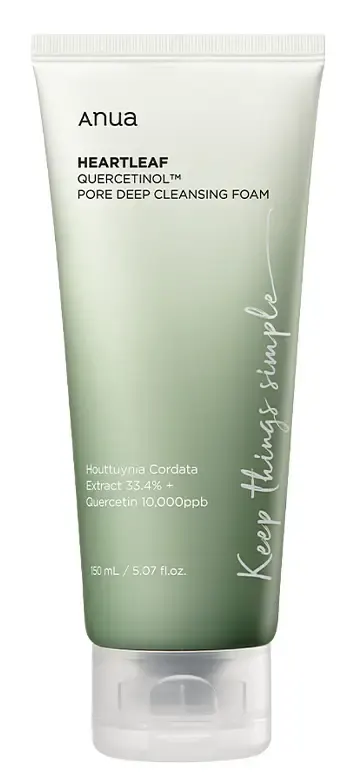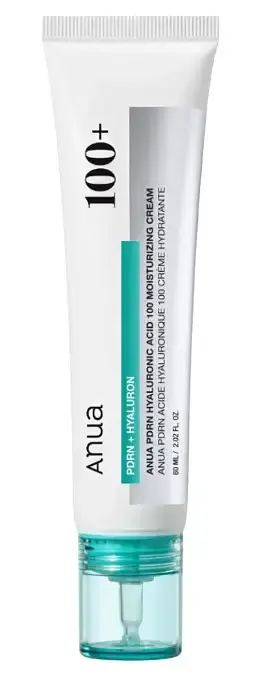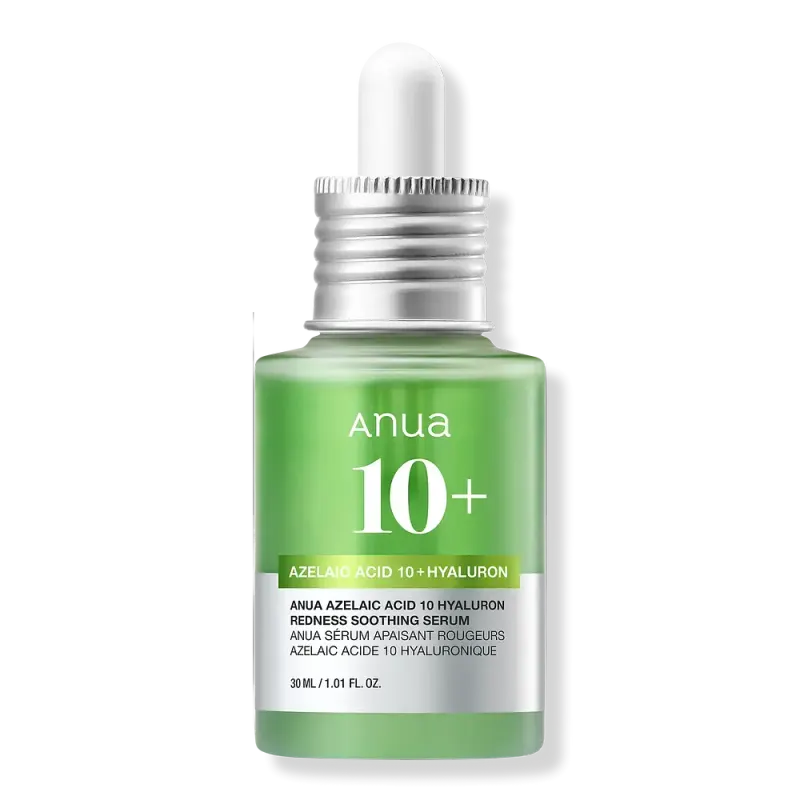
Anua
Anua Azelaic Acid 10 Hyaluron Redness Soothing Serum
Low risk78/100

No higher-risk flags in the assessed ingredients. This is a screening result, not a guarantee of pregnancy safety.
32 of 32 ingredients rated
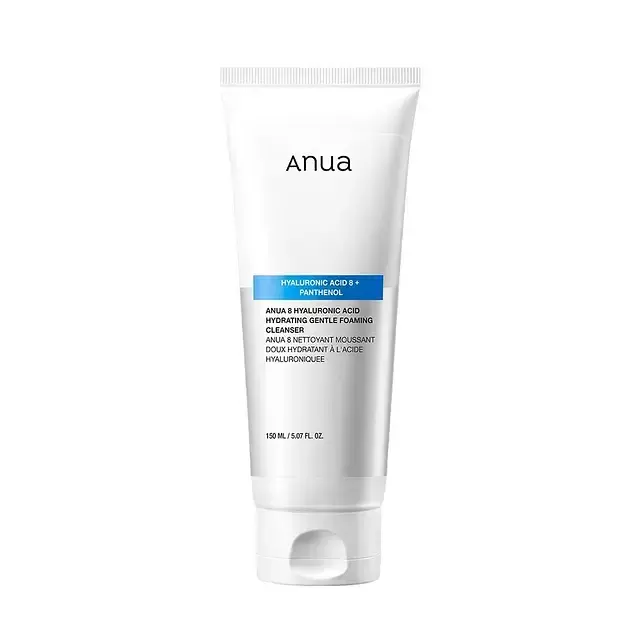
MamaSkin rates the recorded formula for Anua 8 Hyaluronic Acid Hydrating Gentle Foaming Cleanser as No known risks (99/100). This screening result is not a guarantee of safety for every pregnancy.
No higher-risk ingredient flags are shown in the assessed entries. Ingredients without a matched rating are marked Not assessed, not No known risks.
32 of 32 ingredient entries on this page have a recorded score, evidence summary and source text. That describes documentation coverage, not proof that the finished formula has been clinically tested during pregnancy.
How we assess productsThe recorded formula, with evidence behind each rating. Unmatched ingredients are marked Not assessed in grey.
Water (Aqua) is the standard purified water used as a cosmetic solvent. It has no pregnancy-specific risk in normal topical use.
Sources: https://pubchem.ncbi.nlm.nih.gov/compound/Water, https://single-market-economy.ec.europa.eu/sectors/cosmetics/cosmetic-ingredient-database/cosing-glossary-ingredients_en
Glycerin is a widely used humectant that supports hydration and the skin barrier, with a long safety record and no known pregnancy or breastfeeding concerns in topical cosmetic use.
Sources: CIR; EU/UK Cosmetics Regulation
An amino-acid-derived surfactant or conditioning ingredient. Cosmetic safety reviewers concluded that amino acid alkyl amides are safe in current cosmetic practices when formulated to be non-irritating. Manufacturing and formulation should control nitrosamine formation where relevant.
Sources: CIR: Safety Assessment of Amino Acid Alkyl Amides as Used in Cosmetics https://www.cir-safety.org/supplementaldoc/safety-assessment-amino-acid-alkyl-amides-used-cosmetics-0
An amphoteric surfactant used for mild cleansing and foam support. Cosmetic safety reviewers concluded that sultaines, including lauryl hydroxysultaine, are safe in current practices when formulated to be non-irritating and when impurities are controlled. Rare contact allergy remains possible.
Sources: CIR: Safety Assessment of Sultaines as Used in Cosmetics, IJT 43(Suppl. 1), 2024; December 2025 Quick Reference Table https://cir-safety.org/sites/default/files/QRT-Update-Dec2025.pdf
This glucose-derived nonionic surfactant or emulsifier is used in cleansers and emulsions. The Cosmetic Ingredient Review concluded that alkyl glucosides are safe in current cosmetic use when formulated to be non-irritating; sensitive skin can still react to surfactants.
Sources: CIR: Safety Assessment of Decyl Glucoside and Other Alkyl Glucosides as Used in Cosmetics https://cir-reports.cir-safety.org/view-attachment/?id=9810a771-8e74-ec11-8943-0022482f06a6
An amino-acid-derived surfactant or conditioning ingredient. Cosmetic safety reviewers concluded that amino acid alkyl amides are safe in current cosmetic practices when formulated to be non-irritating. Manufacturing and formulation should control nitrosamine formation where relevant.
Sources: CIR: Safety Assessment of Amino Acid Alkyl Amides as Used in Cosmetics https://www.cir-safety.org/supplementaldoc/safety-assessment-amino-acid-alkyl-amides-used-cosmetics-0
A botanical extract, plant water or plant juice used for conditioning, soothing or antioxidant support. Direct pregnancy studies of this exact cosmetic material were not identified, but no reproductive or developmental hazard was identified for normal topical exposure. Oral herbal or medicinal use is outside this classification.
Sources: European Commission CosIng ingredient inventory; CIR botanical safety framework and relevant plant-derived ingredient assessments; no ingredient-specific human pregnancy study of normal topical cosmetic use was identified.
A plant-derived protein or peptide mixture used mainly for hair and skin conditioning. Cosmetic safety reviewers concluded that the assessed plant-derived proteins and peptides are safe in current practices. Protein allergy remains possible in susceptible people.
Sources: CIR: Safety Assessment of Plant-Derived Proteins and Peptides as Used in Cosmetics https://www.cir-safety.org/supplementaldoc/safety-assessment-plant-derived-proteins-and-peptides-used-cosmetics-0
Cationic hyaluronate derivative used as a humectant and conditioning ingredient. Reviewed topical hyaluronate safety sources support cosmetic use, with no pregnancy- or breastfeeding-specific concern identified.
Sources: CIR: Safety Assessment of Hyaluronates as Used in Cosmetics; EU CosIng / cosmetics regulatory inventory
Sodium hyaluronate (hyaluronic acid salt) is used for hydration and cushioning, with very low systemic absorption from topical use and no known pregnancy or breastfeeding concerns at cosmetic concentrations.
Sources: CIR; EU/UK Cosmetics Regulation
Humectant and skin-conditioning ingredient in the hyaluronate family. Reviewed cosmetic safety sources support current cosmetic use, with no pregnancy- or breastfeeding-specific topical concern identified in the material reviewed.
Sources: CIR: Safety Assessment of Hyaluronates as Used in Cosmetics; EU CosIng / cosmetics regulatory inventory
Modified hyaluronate humectant and skin-conditioning ingredient. Reviewed cosmetic safety sources support topical hyaluronate ingredients, with no pregnancy- or breastfeeding-specific concern identified for normal cosmetic use.
Sources: CIR: Safety Assessment of Hyaluronates as Used in Cosmetics; EU CosIng / cosmetics regulatory inventory
High-water-binding humectant used to support hydration at the skin surface. Reviewed cosmetic safety sources support normal topical use, with no pregnancy- or breastfeeding-specific topical signal identified in the material reviewed.
Sources: CIR: Safety Assessment of Hyaluronates as Used in Cosmetics; EU CosIng / cosmetics regulatory inventory
Humectant and skin-conditioning ingredient in the hyaluronate family. Reviewed cosmetic safety sources support current cosmetic use, with no pregnancy- or breastfeeding-specific topical concern identified in the material reviewed.
Sources: CIR: Safety Assessment of Hyaluronates as Used in Cosmetics; EU CosIng / cosmetics regulatory inventory
Crosslinked hyaluronate humectant used to support hydration at the skin surface. Reviewed cosmetic safety sources support normal topical use, with no pregnancy- or breastfeeding-specific topical signal identified.
Sources: CIR: Safety Assessment of Hyaluronates as Used in Cosmetics; EU CosIng / cosmetics regulatory inventory
Potassium hyaluronate is a salt of hyaluronic acid used as a surface humectant and skin conditioner. The Cosmetic Ingredient Review concluded that reviewed hyaluronates are safe in current cosmetic use, with no pregnancy- or breastfeeding-specific concern identified for normal topical exposure.
Sources: CIR: Safety Assessment of Hyaluronates as Used in Cosmetics https://www.cir-safety.org/supplementaldoc/safety-assessment-hyaluronates-used-cosmetics
Panthenol (pro-vitamin B5) is used for soothing and barrier support and is generally well tolerated, with no known pregnancy or breastfeeding concerns in topical cosmetic use.
Sources: CIR; EU/UK Cosmetics Regulation
A zinc salt of pyrrolidone carboxylic acid used for skin conditioning, oil-control and antimicrobial support. Cosmetic safety reviewers concluded that the assessed zinc salts are safe in current cosmetic practices of use and concentration when formulated to be non-irritating. Zinc is an essential nutrient, but this entry assesses the low topical exposure from a finished cosmetic rather than supplements or medicinal doses. No pregnancy-specific topical concern was identified.
Sources: CIR: Safety Assessment of Zinc Salts as Used in Cosmetics https://www.cir-safety.org/supplementaldoc/safety-assessment-zinc-salts-used-cosmetics-1; CIR 146th Expert Panel Meeting final report record https://www.cir-safety.org/meeting/146th-cir-expert-panel-meeting
Mild nonionic surfactant used in cleansers and emulsions. Reviewed cosmetic ingredient references support normal topical rinse-off and leave-on use, with no pregnancy- or breastfeeding-specific concern identified; sensitive skin may still react to surfactants.
Sources: CIR: Safety Assessment of Alkyl Glucosides as Used in Cosmetics; EU CosIng / cosmetics regulatory inventory
A naturally sourced clay used as an absorbent, bulking agent or texture aid. CIR concluded that Hectorite, Illite and Montmorillonite are safe in current cosmetic practices, except that available data are insufficient for products that may be incidentally inhaled. No pregnancy-specific systemic concern was identified for topical use; cosmetic-grade sourcing should control crystalline silica, heavy metals and microbial contamination.
Sources: CIR: Amended Safety Assessment of Naturally-Sourced Clays https://cir-reports.cir-safety.org/view-attachment/?id=d5fd5bfa-685d-6aab-94d5-67acbc8713fb; CIR Final Amended Report https://cir-safety.org/sites/default/files/FAR_Clays_032023.pdf.
Humectant and preservative booster. Considered safe for cosmetic use with low systemic exposure.
Sources: Cosmetic Ingredient Review (US); Scientific Committee on Consumer Safety (EU)
Humectant and preservative booster used to support product stability. Low systemic exposure expected from topical cosmetic use.
Sources: Scientific Committee on Consumer Safety (EU); Cosmetic Ingredient Review (US)
A modified starch used mainly to thicken and stabilize cosmetic formulas. Cosmetic safety reviewers concluded that starch phosphates, including hydroxypropyl starch phosphate, are safe in current cosmetic use. No pregnancy- or breastfeeding-specific concern is identified for normal topical exposure.
Sources: CIR: Safety Assessment of Starch Phosphates https://cir-safety.org/sites/default/files/FR_StarchPhosphates_092022.pdf
1,2-Hexanediol is commonly used as a solvent and preservative booster; topical exposure is low and it has no known pregnancy or breastfeeding concerns at cosmetic concentrations, though very sensitive skin may occasionally react.
Sources: CIR; EU/UK Cosmetics Regulation
Betaine is a humectant/osmolyte used to support hydration and reduce irritation potential in formulas; it is considered low concern with no known pregnancy or breastfeeding risks in topical cosmetic use.
Sources: CIR; EU/UK Cosmetics Regulation
A numbered cationic polymer used for hair conditioning, antistatic effects, film formation or formula texture. The Polyquaternium number identifies a distinct polymer, so evidence from one number is not treated as proof for every other number. For this ingredient, no pregnancy, reproductive or breastfeeding hazard signal was identified in the cosmetic-use and substance information reviewed. Its polymeric size makes meaningful absorption through intact skin unlikely; local irritation and control of residual monomers remain formulation-quality considerations.
Sources: European Commission CosIng ingredient inventory; CIR safety assessments and December 2025 Quick Reference Table for structurally and functionally related polyquaternium cosmetic polymers https://cir-safety.org/sites/default/files/QRT-Update-Dec2025.pdf; publicly available supplier safety data and ECHA substance information where available for the named polymer. No ingredient-specific pregnancy studies were identified.
Polymer thickener and stabiliser used in creams and sunscreens. Low systemic exposure expected.
Sources: Cosmetic Ingredient Review (US); Scientific Committee on Consumer Safety (EU)
pH adjuster used in small amounts to maintain product stability. Not associated with pregnancy-specific concerns.
Sources: Scientific Committee on Consumer Safety (EU); European cosmetics regulatory framework
Sodium chloride is used to adjust viscosity and texture in formulations; topical cosmetic use is considered low concern with no known pregnancy or breastfeeding risks.
Sources: CIR; EU/UK Cosmetics Regulation
Chelating agent used to improve formula stability. Used at low levels and not associated with pregnancy-specific concerns.
Sources: European cosmetics regulatory framework
Sodium cocoyl isethionate is a cleansing surfactant. The Cosmetic Ingredient Review concluded that isethionate salts are safe in current cosmetic use when formulated to be non-irritating, and reviewed reproductive and developmental data did not identify a pregnancy-specific signal.
Sources: CIR: Amended Safety Assessment of Isethionate Salts as Used in Cosmetics https://cir-safety.org/supplementaldoc/amended-safety-assessment-isethionate-salts-used-cosmetics-0
Polysaccharide carrier and bulking agent used for texture and delivery support. Reviewed cosmetic safety sources support normal topical use, with no pregnancy- or breastfeeding-specific topical signal identified in the material reviewed.
Sources: CIR: Safety Assessment of Polysaccharide Gums as Used in Cosmetics; EU CosIng / cosmetics regulatory inventory
Water, Glycerin, Sodium Cocoyl Glycinate, Lauryl Hydroxysultaine, Coco-Glucoside, Sodium Lauroyl Glutamate, Quillaja Saponaria Bark Extract, Hydrolyzed Vegetable Protein, Hydroxypropyltrimonium Hyaluronate, Sodium Hyaluronate, Hydrolyzed Hyaluronic Acid, Sodium Acetylated Hyaluronate, Hyaluronic Acid, Hydrolyzed Sodium Hyaluronate, Sodium Hyaluronate Crosspolymer, Potassium Hyaluronate, Panthenol, Zinc PCA, Decyl Glucoside, Hectorite, Pentylene Glycol, Caprylyl Glycol, Hydroxypropyl Starch Phosphate, 1,2-Hexanediol, Betaine, Polyquaternium-67, Acrylates/C10-30 Alkyl Acrylate Crosspolymer, Citric Acid, Sodium Chloride, Sodium Phytate, Sodium Cocoyl Isethionate, Maltodextrin
Ingredient ratings refreshed 1 October 2026. Formulas vary by market and can change. Always compare with your packaging.
No higher-risk ingredient flags are shown in the assessed entries. Ingredients without a matched rating are marked Not assessed, not No known risks. The product score is a stored assessment, not a clinical safety guarantee.
No. This recorded formula contains Panthenol or Madecassoside, but a barrier-care claim does not establish the assessment of all its other ingredients. Read the individual ingredient evidence and any manual-review explanation, and compare the recorded list with your packaging.
32 of 32 ingredient entries on this page have a recorded score, evidence summary and source text. That describes documentation coverage, not proof that the finished formula has been clinically tested during pregnancy.
Only if the ingredient list on your packaging matches the recorded formula shown here. Formulas can differ by market and change over time. Compare the full list, not just the product name; report a mismatch if it differs.
No. This page presents a pregnancy-focused product assessment. Do not infer a breastfeeding conclusion from its score or label; breastfeeding requires a separate assessment of the formula and how it is used.