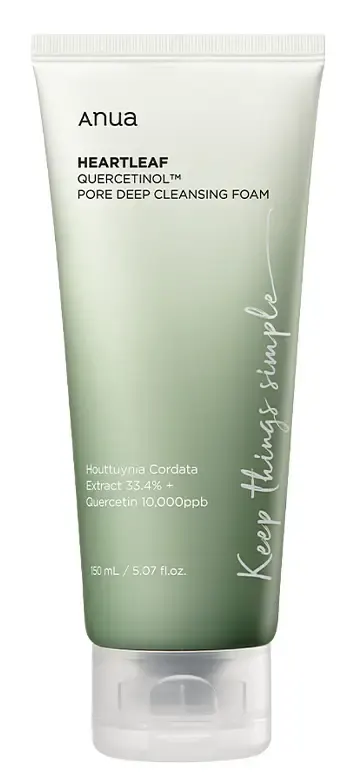
Anua Heartleaf Quercetinol Pore Deep Cleansing Foam by Anua
Anua

Anua Heartleaf Quercetinol Pore Deep Cleansing Foam

Face Cleanserscleansers

Safety score

Pregnancy-focused assessment

Low Risk78/100
Higher concernLower concern

One or more ingredients have a low-risk flag in MamaSkin's current assessment. Review the notes and your own circumstances.

Ingredient safety review updated 7 January 2026.

Check the current formula in MamaSkin

Copy the product name, download MamaSkin and search it for free. You can also scan the ingredient label on the product you own.

Download MamaSkin on the App StoreGet MamaSkin on Google Play

Ingredient breakdown

See how the listed formula falls across MamaSkin's pregnancy-focused risk bands.

38

No known risks

2

Low risk

0

Medium risk

0

High risk

Ingredients

Ingredients with a higher risk flag appear first, followed by the rest of the formula.

Betaine Salicylate

Low Risk

Ester form of salicylic acid; hydrolyses to SA, low-strength topical use shows negligible systemic absorption - chemical peels ≥30 % should be avoided.

Sources: PubMed, U.S. National Library of Medicine (NLM), NHS, MotherToBaby (OTIS), UKTIS (BUMPS)

Capryloyl Salicylic Acid

Low Risk

Salicylate derivative used in cosmetics; low-strength topical use has low systemic absorption and is generally considered low risk in pregnancy. Avoid high-strength peels/large-area use.

Sources: PubMed, U.S. National Library of Medicine (NLM), NHS, MotherToBaby (OTIS), UKTIS (BUMPS)

1,2-Hexanediol

No Known Risks

1,2-Hexanediol is commonly used as a solvent and preservative booster; topical exposure is low and it has no known pregnancy or breastfeeding concerns at cosmetic concentrations, though very sensitive skin may occasionally react.

Sources: CIR; EU/UK Cosmetics Regulation

Show all (40)

Acrylates/C10-30 Alkyl Acrylate Crosspolymer

No Known Risks

Polymer thickener and stabiliser used in creams and sunscreens. Low systemic exposure expected.

Sources: Cosmetic Ingredient Review (US); Scientific Committee on Consumer Safety (EU)

Butylene Glycol

No Known Risks

Solvent and humectant commonly used in leave-on products. Not associated with pregnancy-specific concerns at cosmetic exposure levels.

Sources: Cosmetic Ingredient Review (US); Scientific Committee on Consumer Safety (EU)

Coco-Glucoside

No Known Risks

This glucose-derived nonionic surfactant or emulsifier is used in cleansers and emulsions. The Cosmetic Ingredient Review concluded that alkyl glucosides are safe in current cosmetic use when formulated to be non-irritating; sensitive skin can still react to surfactants.

Sources: CIR: Safety Assessment of Decyl Glucoside and Other Alkyl Glucosides as Used in Cosmetics https://cir-reports.cir-safety.org/view-attachment/?id=9810a771-8e74-ec11-8943-0022482f06a6

Decyl Glucoside

No Known Risks

Mild nonionic surfactant used in cleansers and emulsions. Reviewed cosmetic ingredient references support normal topical rinse-off and leave-on use, with no pregnancy- or breastfeeding-specific concern identified; sensitive skin may still react to surfactants.

Sources: CIR: Safety Assessment of Alkyl Glucosides as Used in Cosmetics; EU CosIng / cosmetics regulatory inventory

Dextrin

No Known Risks

Starch-derived polysaccharide used as a binder, film former and texture support ingredient. Reviewed cosmetic ingredient references do not identify a pregnancy- or breastfeeding-specific concern for normal topical use.

Sources: CIR cosmetic ingredient safety references for polysaccharides/starch-derived ingredients; EU CosIng / cosmetics regulatory inventory

Disodium Cocoamphodiacetate

No Known Risks

A mild amphoteric cleansing surfactant. Cosmetic safety reviewers concluded that disodium cocoamphodiacetate is safe as used; the original conclusion was reaffirmed on re-review, while the current group reassessment proposes non-sensitising formulation controls. Impurities may contribute to occasional irritation or allergy.

Sources: CIR: Final Report on Cocoamphoacetate and Related Ingredients, J Am Coll Toxicol 9(2):121-142, 1990; current CIR reassessment and original-report history https://cir-reports.cir-safety.org/view-attachment?id=650ade8c-833f-a428-bb22-fa7740c7229b

Disodium Edta

No Known Risks

Disodium EDTA is a chelating agent used to improve formula stability and performance; it is considered low concern in topical cosmetic use, with no known pregnancy or breastfeeding risks at typical concentrations.

Sources: CIR; EU/UK Cosmetics Regulation

Ethylhexylglycerin

No Known Risks

Preservative booster and skin-conditioning agent. Considered safe for cosmetic use with low systemic exposure when used as intended.

Sources: Scientific Committee on Consumer Safety (EU); Cosmetic Ingredient Review (US)

Eucalyptus Globulus Leaf Oil

No Known Risks

A volatile oil from eucalyptus leaves used mainly for fragrance and skin conditioning. Cosmetic safety reviewers concluded that Eucalyptus globulus-derived ingredients are safe in current practices when formulated to be non-sensitising. Essential oils can irritate sensitive skin and should not be swallowed or used undiluted.

Sources: CIR: Safety Assessment of Eucalyptus globulus-Derived Ingredients as Used in Cosmetics https://www.cir-safety.org/supplementaldoc/safety-assessment-eucalyptus-globulus-derived-ingredients-used-cosmetics

Gardenia Florida Fruit Extract

No Known Risks

Glycerin

No Known Risks

Glycerin is a widely used humectant that supports hydration and the skin barrier, with a long safety record and no known pregnancy or breastfeeding concerns in topical cosmetic use.

Sources: CIR; EU/UK Cosmetics Regulation

Hectorite

No Known Risks

Houttuynia Cordata Flower/Leaf/Stem Water

No Known Risks

Houttuynia Cordata Powder

No Known Risks

Hyaluronic Acid

No Known Risks

High-water-binding humectant used to support hydration at the skin surface. Reviewed cosmetic safety sources support normal topical use, with no pregnancy- or breastfeeding-specific topical signal identified in the material reviewed.

Sources: CIR: Safety Assessment of Hyaluronates as Used in Cosmetics; EU CosIng / cosmetics regulatory inventory

Hydrolyzed Hyaluronic Acid

No Known Risks

Humectant and skin-conditioning ingredient in the hyaluronate family. Reviewed cosmetic safety sources support current cosmetic use, with no pregnancy- or breastfeeding-specific topical concern identified in the material reviewed.

Sources: CIR: Safety Assessment of Hyaluronates as Used in Cosmetics; EU CosIng / cosmetics regulatory inventory

Hydrolyzed Sodium Hyaluronate

No Known Risks

Humectant and skin-conditioning ingredient in the hyaluronate family. Reviewed cosmetic safety sources support current cosmetic use, with no pregnancy- or breastfeeding-specific topical concern identified in the material reviewed.

Sources: CIR: Safety Assessment of Hyaluronates as Used in Cosmetics; EU CosIng / cosmetics regulatory inventory

Hydroxypropyltrimonium Hyaluronate

No Known Risks

Cationic hyaluronate derivative used as a humectant and conditioning ingredient. Reviewed topical hyaluronate safety sources support cosmetic use, with no pregnancy- or breastfeeding-specific concern identified.

Sources: CIR: Safety Assessment of Hyaluronates as Used in Cosmetics; EU CosIng / cosmetics regulatory inventory

Isopropyl Alcohol

No Known Risks

A volatile solvent used to improve drying and dissolve other ingredients. Cosmetic safety reviewers concluded that isopropyl alcohol is safe in current cosmetic practices. The main practical concern is local dryness, stinging or barrier irritation rather than a pregnancy-specific hazard.

Sources: CIR: Safety Assessment of Acetic Acid and Related Simple Alcohols and Esters, IJT 31(Suppl. 1), 2012; December 2025 Quick Reference Table https://cir-safety.org/sites/default/files/QRT-Update-Dec2025.pdf

Oenothera Biennis Flower Extract

No Known Risks

Pentylene Glycol

No Known Risks

Humectant and preservative booster. Considered safe for cosmetic use with low systemic exposure.

Sources: Cosmetic Ingredient Review (US); Scientific Committee on Consumer Safety (EU)

Pinus Palustris Leaf Extract

No Known Risks

Polyquaternium-67

No Known Risks

Potassium Benzoate

No Known Risks

Potassium Hyaluronate

No Known Risks

Potassium hyaluronate is a salt of hyaluronic acid used as a surface humectant and skin conditioner. The Cosmetic Ingredient Review concluded that reviewed hyaluronates are safe in current cosmetic use, with no pregnancy- or breastfeeding-specific concern identified for normal topical exposure.

Sources: CIR: Safety Assessment of Hyaluronates as Used in Cosmetics https://www.cir-safety.org/supplementaldoc/safety-assessment-hyaluronates-used-cosmetics

Pueraria Lobata Root Extract

No Known Risks

Quercetin

No Known Risks

Sodium Acetate

No Known Risks

A small organic acid, salt or ester used as a solvent, pH adjuster or formula aid. Cosmetic safety reviewers concluded that acetic acid and the assessed related simple alcohols and esters are safe in current practices.

Sources: CIR: Acetic Acid and related simple alcohols and esters, IJT 31(Suppl. 1), 2012; December 2025 Quick Reference Table https://cir-safety.org/sites/default/files/QRT-Update-Dec2025.pdf

Sodium Acetylated Hyaluronate

No Known Risks

Modified hyaluronate humectant and skin-conditioning ingredient. Reviewed cosmetic safety sources support topical hyaluronate ingredients, with no pregnancy- or breastfeeding-specific concern identified for normal cosmetic use.

Sources: CIR: Safety Assessment of Hyaluronates as Used in Cosmetics; EU CosIng / cosmetics regulatory inventory

Sodium Chloride

No Known Risks

Sodium chloride is used to adjust viscosity and texture in formulations; topical cosmetic use is considered low concern with no known pregnancy or breastfeeding risks.

Sources: CIR; EU/UK Cosmetics Regulation

Sodium Cocoyl Glycinate

No Known Risks

An amino-acid-derived surfactant or conditioning ingredient. Cosmetic safety reviewers concluded that amino acid alkyl amides are safe in current cosmetic practices when formulated to be non-irritating. Manufacturing and formulation should control nitrosamine formation where relevant.

Sources: CIR: Safety Assessment of Amino Acid Alkyl Amides as Used in Cosmetics https://www.cir-safety.org/supplementaldoc/safety-assessment-amino-acid-alkyl-amides-used-cosmetics-0

Sodium Hyaluronate

No Known Risks

Sodium hyaluronate (hyaluronic acid salt) is used for hydration and cushioning, with very low systemic absorption from topical use and no known pregnancy or breastfeeding concerns at cosmetic concentrations.

Sources: CIR; EU/UK Cosmetics Regulation

Sodium Hyaluronate Crosspolymer

No Known Risks

Crosslinked hyaluronate humectant used to support hydration at the skin surface. Reviewed cosmetic safety sources support normal topical use, with no pregnancy- or breastfeeding-specific topical signal identified.

Sources: CIR: Safety Assessment of Hyaluronates as Used in Cosmetics; EU CosIng / cosmetics regulatory inventory

Sodium Lauroyl Glutamate

No Known Risks

An amino-acid-derived surfactant or conditioning ingredient. Cosmetic safety reviewers concluded that amino acid alkyl amides are safe in current cosmetic practices when formulated to be non-irritating. Manufacturing and formulation should control nitrosamine formation where relevant.

Sources: CIR: Safety Assessment of Amino Acid Alkyl Amides as Used in Cosmetics https://www.cir-safety.org/supplementaldoc/safety-assessment-amino-acid-alkyl-amides-used-cosmetics-0

Tocopherol

No Known Risks

Vitamin E antioxidant used to protect oils and support the skin barrier. Not associated with pregnancy-specific concerns at cosmetic exposure.

Sources: Cosmetic Ingredient Review (US); Scientific Committee on Consumer Safety (EU)

Ulmus Davidiana Root Extract

No Known Risks

Water

No Known Risks

Formulations can change without notice. For the most accurate result, compare this list with your packaging and scan the exact ingredient label in MamaSkin when you repurchase.

How to use this assessment

The risk band is the primary conclusion. The score adds detail within that band and should not be used to compare products as if a one-point difference were clinically meaningful.

MamaSkin provides pregnancy-focused information, not medical advice. Your midwife, GP, pharmacist or dermatologist should take priority when your circumstances differ from typical cosmetic use.

Read the full methodology