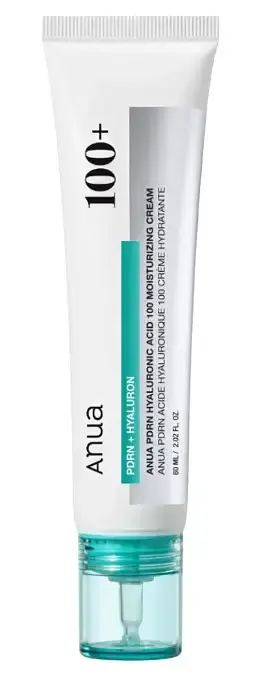
Anua PDRN Hyaluronic Acid 100 Moisturizing Cream by Anua
Anua

Anua PDRN Hyaluronic Acid 100 Moisturizing Cream

General Moisturizersmoisturisers

Safety score

Pregnancy-focused assessment

Low Risk79/100
Higher concernLower concern

One or more ingredients have a low-risk flag in MamaSkin's current assessment. Review the notes and your own circumstances.

Ingredient safety review updated 24 November 2025.

Check the current formula in MamaSkin

Copy the product name, download MamaSkin and search it for free. You can also scan the ingredient label on the product you own.

Download MamaSkin on the App StoreGet MamaSkin on Google Play

Ingredient breakdown

See how the listed formula falls across MamaSkin's pregnancy-focused risk bands.

45

No known risks

3

Low risk

0

Medium risk

0

High risk

Ingredients

Ingredients with a higher risk flag appear first, followed by the rest of the formula.

Sodium Dna

Low Risk

DNA-derived cosmetic ingredient/label term used in topical PDRN or polynucleotide-style skincare. Topical cosmetic use is not currently treated as a known pregnancy-restricted concern, but pregnancy-specific clinical data remain limited. MamaSkin scores this conservatively as low risk to reflect the evidence gap. This assessment applies to topical cosmetic products only and does not apply to injectable or in-clinic PDRN/polynucleotide treatments. Always review co-ingredients such as retinoids, hydroquinone, high-strength acids or other pregnancy-restricted actives separately.

Sources: EU/UK cosmetics regulatory framework; EU CosIng / INCI-style cosmetic ingredient references; cosmetic supplier information for Sodium DNA / PDRN / Polydeoxyribonucleotide; peer-reviewed reviews on topical/aesthetic PDRN and polynucleotides; brand pregnancy-safety statements where available.

Diphenylsiloxy Phenyl Trimethicone

Low Risk

A phenyl-substituted silicone used for shine, conditioning and film formation. Cosmetic safety reviewers concluded it is safe in current cosmetic use but found insufficient evidence for products that may be incidentally inhaled. MamaSkin classifies it as low risk because of that route-specific evidence gap, not because of a known pregnancy-specific concern from ordinary topical use.

Sources: CIR: Safety Assessment of Phenyl-Substituted Methicones (Final Report 2023) https://www.cir-safety.org/sites/default/files/QRT-Update-Dec2025.pdf

PCA Dimethicone

Low Risk

Silicone derivative with negligible systemic absorption in topical cosmetic use; treated as low risk in pregnancy and breastfeeding.

Sources: PubMed, U.S. National Library of Medicine (NLM)

Show all (48)

Water

No Known Risks

Squalane

No Known Risks

Lightweight emollient used to support the skin barrier. Not associated with pregnancy-specific concerns at cosmetic exposure levels.

Sources: Cosmetic Ingredient Review (US); Scientific Committee on Consumer Safety (EU)

Glycerin

No Known Risks

Glycerin is a widely used humectant that supports hydration and the skin barrier, with a long safety record and no known pregnancy or breastfeeding concerns in topical cosmetic use.

Sources: CIR; EU/UK Cosmetics Regulation

Niacinamide

No Known Risks

Niacinamide (vitamin B3) is widely used for barrier support and tone/texture benefits, and is generally considered safe in pregnancy and breastfeeding when used topically at cosmetic concentrations.

Sources: CIR; EU/UK Cosmetics Regulation

Pentylene Glycol

No Known Risks

Humectant and preservative booster. Considered safe for cosmetic use with low systemic exposure.

Sources: Cosmetic Ingredient Review (US); Scientific Committee on Consumer Safety (EU)

1,2-Hexanediol

No Known Risks

1,2-Hexanediol is commonly used as a solvent and preservative booster; topical exposure is low and it has no known pregnancy or breastfeeding concerns at cosmetic concentrations, though very sensitive skin may occasionally react.

Sources: CIR; EU/UK Cosmetics Regulation

Hydrolyzed Collagen

No Known Risks

Protein-derived skin- and hair-conditioning ingredient used to support feel and hydration at the surface. Reviewed cosmetic ingredient references do not identify a pregnancy- or breastfeeding-specific concern for normal topical use.

Sources: CIR cosmetic ingredient safety references for protein hydrolysates; EU CosIng / cosmetics regulatory inventory

Sodium Hyaluronate

No Known Risks

Sodium hyaluronate (hyaluronic acid salt) is used for hydration and cushioning, with very low systemic absorption from topical use and no known pregnancy or breastfeeding concerns at cosmetic concentrations.

Sources: CIR; EU/UK Cosmetics Regulation

Melia Azadirachta Leaf Extract

No Known Risks

Hydrolyzed Hyaluronic Acid

No Known Risks

Humectant and skin-conditioning ingredient in the hyaluronate family. Reviewed cosmetic safety sources support current cosmetic use, with no pregnancy- or breastfeeding-specific topical concern identified in the material reviewed.

Sources: CIR: Safety Assessment of Hyaluronates as Used in Cosmetics; EU CosIng / cosmetics regulatory inventory

Melia Azadirachta Flower Extract

No Known Risks

Coccinia Indica Fruit Extract

No Known Risks

Hyaluronic Acid

No Known Risks

High-water-binding humectant used to support hydration at the skin surface. Reviewed cosmetic safety sources support normal topical use, with no pregnancy- or breastfeeding-specific topical signal identified in the material reviewed.

Sources: CIR: Safety Assessment of Hyaluronates as Used in Cosmetics; EU CosIng / cosmetics regulatory inventory

Aloe Barbadensis Flower Extract

No Known Risks

An aloe flower extract used for skin conditioning. Cosmetic safety reviewers concluded that supported Aloe barbadensis-derived ingredients are safe in current practices, with anthraquinone impurities controlled to no more than 50 ppm. No pregnancy-specific concern was identified for normal topical cosmetic exposure.

Sources: CIR: December 2025 Quick Reference Table, Aloe Barbadensis Flower Extract conclusion https://cir-safety.org/sites/default/files/QRT-Update-Dec2025.pdf

Solanum Melongena Fruit Extract

No Known Risks

Ocimum Sanctum Leaf Extract

No Known Risks

Corallina Officinalis Extract

No Known Risks

A red-algae-derived extract used for skin conditioning, hydration or formula texture. Cosmetic safety reviewers concluded that the assessed red algae ingredients, including this extract, are safe in current practices of use and concentration. Cosmetic manufacturers should control naturally occurring contaminants such as heavy metals and arsenic.

Sources: CIR: Safety Assessment of Red Algae-Derived Ingredients as Used in Cosmetics https://cir-reports.cir-safety.org/view-attachment/?id=cef5b6e9-8c74-ec11-8943-0022482f06a6

Curcuma Longa Root Extract

No Known Risks

Centella Asiatica Leaf Extract

No Known Risks

A leaf extract used in soothing and skin-conditioning formulas. Cosmetic safety reviewers concluded that Centella asiatica leaf extract is safe at current cosmetic exposure when products are formulated to be non-sensitising. The assessment considered systemic and reproductive findings reported at substantially higher oral exposures; these did not establish a pregnancy-specific concern for ordinary topical cosmetic use. Centella constituents can still cause contact sensitivity in some people.

Sources: CIR: Safety Assessment of Centella asiatica-Derived Ingredients as Used in Cosmetics https://cir-safety.org/supplementaldoc/safety-assessment-centella-asiatica-derived-ingredients-used-cosmetics-1

Butylene Glycol

No Known Risks

Solvent and humectant commonly used in leave-on products. Not associated with pregnancy-specific concerns at cosmetic exposure levels.

Sources: Cosmetic Ingredient Review (US); Scientific Committee on Consumer Safety (EU)

Propanediol

No Known Risks

Solvent and humectant used to improve texture and ingredient solubility. Low systemic exposure expected from topical cosmetic use.

Sources: Cosmetic Ingredient Review (US); Scientific Committee on Consumer Safety (EU)

Ammonium Acryloyldimethyltaurate/Vp Copolymer

No Known Risks

Polymer thickener used to stabilise emulsions. Large-molecule ingredient with low systemic absorption.

Sources: Cosmetic Ingredient Review (US); Scientific Committee on Consumer Safety (EU)

Diglycerin

No Known Risks

A glycerin dimer used to attract moisture and improve skin feel. Cosmetic safety reviewers assessed diglycerin with related polyglycerins and concluded that they are safe in current practices of use and concentration. No pregnancy-specific concern was identified for normal topical cosmetic exposure.

Sources: CIR: Safety Assessment of Diglycerin and Polyglycerins as Used in Cosmetics https://www.cir-safety.org/panelbook/safety-assessment-diglycerin-and-polyglycerin-3-6-and-10-used-cosmetics

Hydroxyethyl Acrylate/Sodium Acryloyldimethyl Taurate Copolymer

No Known Risks

Large polymer thickener, stabilizer and texture ingredient used in gels, creams and sunscreens. Systemic exposure from topical cosmetic use is expected to be low, with no pregnancy- or breastfeeding-specific concern identified in reviewed cosmetic references.

Sources: CIR cosmetic ingredient safety references for acrylates copolymers; EU CosIng / cosmetics regulatory inventory

Acrylates/C10-30 Alkyl Acrylate Crosspolymer

No Known Risks

Polymer thickener and stabiliser used in creams and sunscreens. Low systemic exposure expected.

Sources: Cosmetic Ingredient Review (US); Scientific Committee on Consumer Safety (EU)

C12-20 Alkyl Glucoside

No Known Risks

A sugar-derived surfactant and emulsifier. Cosmetic safety reviewers concluded that alkyl glucosides, including C12-20 alkyl glucoside, are safe in current practices when formulated to be non-irritating.

Sources: CIR: Alkyl Glucosides conclusion, IJT 32(Suppl. 3), 2013; December 2025 Quick Reference Table https://cir-safety.org/sites/default/files/QRT-Update-Dec2025.pdf

Methylpropanediol

No Known Risks

Solvent and humectant used to improve texture and ingredient delivery in topical cosmetic formulas. Reviewed cosmetic ingredient references do not identify a pregnancy- or breastfeeding-specific concern for normal topical use.

Sources: CIR cosmetic ingredient safety references for alkane diols; EU CosIng / cosmetics regulatory inventory

Ethylhexylglycerin

No Known Risks

Preservative booster and skin-conditioning agent. Considered safe for cosmetic use with low systemic exposure when used as intended.

Sources: Scientific Committee on Consumer Safety (EU); Cosmetic Ingredient Review (US)

Adenosine

No Known Risks

Skin-conditioning ingredient commonly used in leave-on skincare. Reviewed cosmetic safety sources support normal topical use, with no pregnancy- or breastfeeding-specific topical signal identified in the material reviewed.

Sources: CIR: Safety Assessment of Adenosine Ingredients as Used in Cosmetics; EU CosIng / cosmetics regulatory inventory

Sodium Phytate

No Known Risks

Chelating agent used to improve formula stability. Used at low levels and not associated with pregnancy-specific concerns.

Sources: European cosmetics regulatory framework

Aminomethyl Propanediol

No Known Risks

Pvm/Ma Copolymer

No Known Risks

A high-molecular-weight film-forming copolymer used in hair, oral-care and skin products. Cosmetic safety reviewers concluded that PVM/MA copolymer is safe in current practices of use and concentration. Absorption of the intact polymer is expected to be limited.

Sources: CIR: Safety Assessment of PVM/MA Copolymer and Its Esters, IJT 30(Suppl. 2), 2011; December 2025 Quick Reference Table https://cir-safety.org/sites/default/files/QRT-Update-Dec2025.pdf

Madecassoside

No Known Risks

A triterpene glycoside associated with Centella asiatica and used in soothing and skin-conditioning formulas. Pregnancy-specific evidence for isolated topical madecassoside is limited. Cosmetic safety reviewers considered Centella-derived ingredients acceptable at current cosmetic exposure but noted that madecassoside and related triterpenes may contribute to sensitisation, so products should be formulated to avoid sensitising concentrations. No pregnancy-specific topical contraindication was identified in the reviewed material.

Sources: CIR: Safety Assessment of Centella asiatica-Derived Ingredients as Used in Cosmetics https://cir-safety.org/supplementaldoc/safety-assessment-centella-asiatica-derived-ingredients-used-cosmetics-1

C12-13 Alketh-9

No Known Risks

Dimethylsilanol Hyaluronate

No Known Risks

Hydrolyzed Sodium Hyaluronate

No Known Risks

Humectant and skin-conditioning ingredient in the hyaluronate family. Reviewed cosmetic safety sources support current cosmetic use, with no pregnancy- or breastfeeding-specific topical concern identified in the material reviewed.

Sources: CIR: Safety Assessment of Hyaluronates as Used in Cosmetics; EU CosIng / cosmetics regulatory inventory

Asiaticoside

No Known Risks

A triterpene glycoside associated with Centella asiatica and used in soothing and skin-conditioning formulas. Pregnancy-specific evidence for isolated topical asiaticoside is limited. Cosmetic safety reviewers considered Centella-derived ingredients acceptable at current cosmetic exposure but noted that asiaticoside and related triterpenes may contribute to sensitisation. No pregnancy-specific topical contraindication was identified in the reviewed material.

Sources: CIR: Safety Assessment of Centella asiatica-Derived Ingredients as Used in Cosmetics https://cir-safety.org/supplementaldoc/safety-assessment-centella-asiatica-derived-ingredients-used-cosmetics-1

Potassium Hyaluronate

No Known Risks

Potassium hyaluronate is a salt of hyaluronic acid used as a surface humectant and skin conditioner. The Cosmetic Ingredient Review concluded that reviewed hyaluronates are safe in current cosmetic use, with no pregnancy- or breastfeeding-specific concern identified for normal topical exposure.

Sources: CIR: Safety Assessment of Hyaluronates as Used in Cosmetics https://www.cir-safety.org/supplementaldoc/safety-assessment-hyaluronates-used-cosmetics

Hydroxypropyltrimonium Hyaluronate

No Known Risks

Cationic hyaluronate derivative used as a humectant and conditioning ingredient. Reviewed topical hyaluronate safety sources support cosmetic use, with no pregnancy- or breastfeeding-specific concern identified.

Sources: CIR: Safety Assessment of Hyaluronates as Used in Cosmetics; EU CosIng / cosmetics regulatory inventory

Sodium Hyaluronate Crosspolymer

No Known Risks

Crosslinked hyaluronate humectant used to support hydration at the skin surface. Reviewed cosmetic safety sources support normal topical use, with no pregnancy- or breastfeeding-specific topical signal identified.

Sources: CIR: Safety Assessment of Hyaluronates as Used in Cosmetics; EU CosIng / cosmetics regulatory inventory

Sodium Hyaluronate Dimethylsilanol

No Known Risks

Sodium Acetylated Hyaluronate

No Known Risks

Modified hyaluronate humectant and skin-conditioning ingredient. Reviewed cosmetic safety sources support topical hyaluronate ingredients, with no pregnancy- or breastfeeding-specific concern identified for normal cosmetic use.

Sources: CIR: Safety Assessment of Hyaluronates as Used in Cosmetics; EU CosIng / cosmetics regulatory inventory

Behenyl Alcohol

No Known Risks

Long-chain fatty alcohol used as an emollient and thickener. This is not the same concern profile as simple drying alcohols; reviewed cosmetic safety sources support normal topical use.

Sources: CIR: Final Report on the Safety Assessment of Cetearyl Alcohol, Cetyl Alcohol, Isostearyl Alcohol, Myristyl Alcohol, and Behenyl Alcohol; EU CosIng / cosmetics regulatory inventory

C14-22 Alcohols

No Known Risks

Carbomer

No Known Risks

Polymer thickener used to create gel textures. Large-molecule ingredient with negligible systemic absorption.

Sources: Cosmetic Ingredient Review (US); Scientific Committee on Consumer Safety (EU)

Formulations can change without notice. For the most accurate result, compare this list with your packaging and scan the exact ingredient label in MamaSkin when you repurchase.

How to use this assessment

The risk band is the primary conclusion. The score adds detail within that band and should not be used to compare products as if a one-point difference were clinically meaningful.

MamaSkin provides pregnancy-focused information, not medical advice. Your midwife, GP, pharmacist or dermatologist should take priority when your circumstances differ from typical cosmetic use.

Read the full methodology