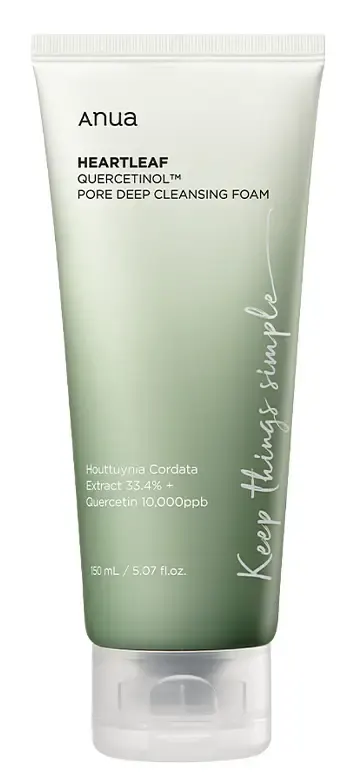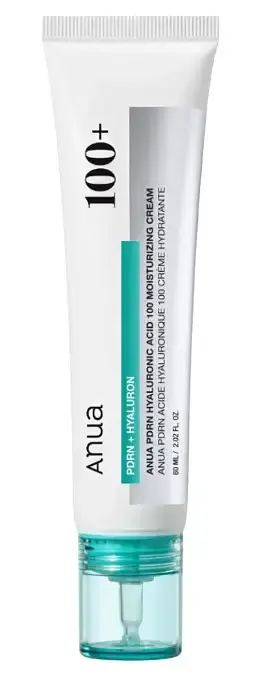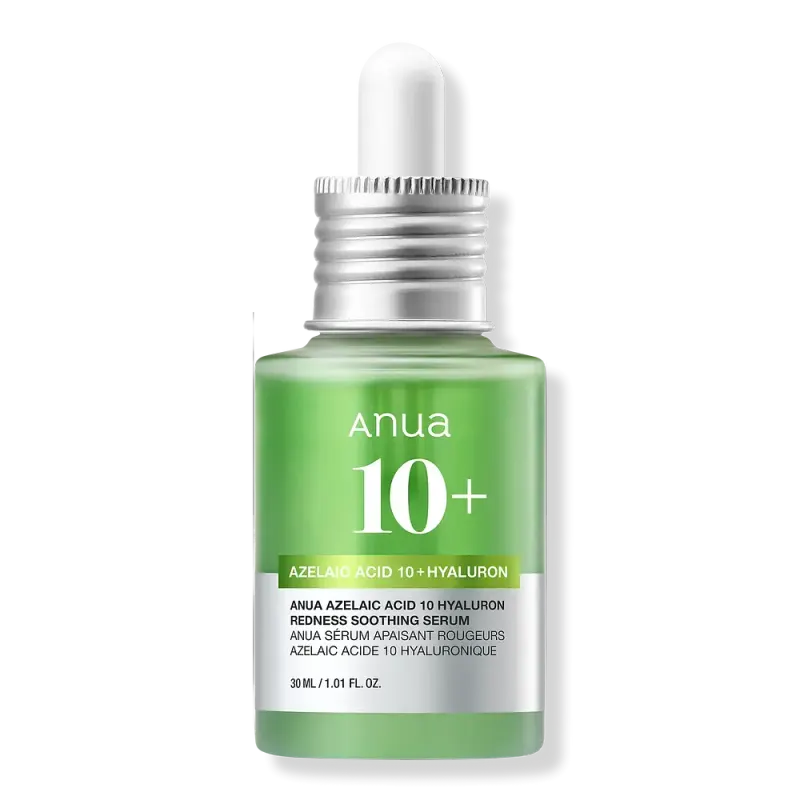
Anua
Anua Azelaic Acid 10 Hyaluron Redness Soothing Serum
Low risk78/100

Some ingredients carry a low-risk flag. Read the formulation context before deciding.
27 of 28 ingredients rated1 not assessed
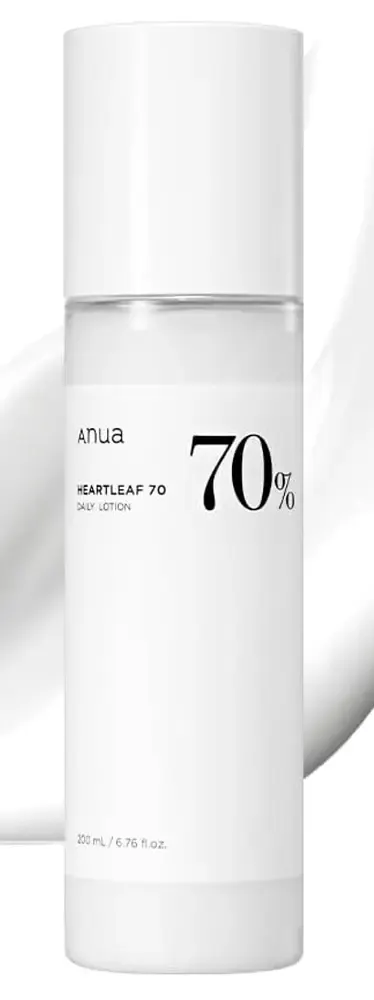
MamaSkin rates the recorded formula for Anua Heartleaf 70% Daily Lotion as Low risk (79/100). Review the ingredient context and any manual-review explanation before deciding.
Manual review 2026-07-11: The recorded formula was manually reviewed. This formula contains Methyl Trimethicone, classified as low risk for consistency with MamaSkin's silicone policy. This does not indicate a known pregnancy contraindication; see the highlighted ingredient entry for its rationale and sources.
27 of 28 ingredient entries on this page have a recorded score, evidence summary and source text. 1 entry does not have all of those fields. Unmatched or unrated entries are marked Not assessed in grey; missing evidence does not establish safety.
How we assess productsThe recorded formula, with evidence behind each rating. Unmatched ingredients are marked Not assessed in grey.
A lightweight volatile linear silicone used as a solvent and texture ingredient. Related linear methicone ingredients have reassuring cosmetic safety assessments, but an exact final Cosmetic Ingredient Review finding for Methyl Trimethicone was not located. MamaSkin classifies it as low risk because exact-ingredient pregnancy and inhalation data are limited, while no specific pregnancy contraindication has been identified for normal topical cosmetic use.
Sources: CIR: Safety Assessment of Dimethicone Methicone and Substituted-Methicone Polymers https://cir-safety.org/supplementaldoc/safety-assessment-dimethicone-methicone-and-substituted-methicone-polymers-used-cosm; CIR Quick Reference Table December 2025
No matched ingredient rating is available yet. Not assessed does not mean safe or unsafe.
A heartleaf extract used for skin conditioning and soothing. No pregnancy- or breastfeeding-specific hazard was identified for normal topical cosmetic exposure. Direct ingredient-specific pregnancy studies were not identified, so this assessment does not extend to oral supplements or medicinal use.
Sources: European Commission CosIng ingredient inventory; Cosmetic Ingredient Review botanical safety-assessment framework and relevant ingredient-family assessments. No ingredient-specific human pregnancy study of normal topical cosmetic use was identified.
Glycerin is a widely used humectant that supports hydration and the skin barrier, with a long safety record and no known pregnancy or breastfeeding concerns in topical cosmetic use.
Sources: CIR; EU/UK Cosmetics Regulation
1,2-Hexanediol is commonly used as a solvent and preservative booster; topical exposure is low and it has no known pregnancy or breastfeeding concerns at cosmetic concentrations, though very sensitive skin may occasionally react.
Sources: CIR; EU/UK Cosmetics Regulation
A fatty-acid ester used as an emollient and spreading agent. Cosmetic safety reviewers included ethylhexyl stearate in the alkyl ester group and concluded that the group is safe in current practices when formulated to be non-irritating. No pregnancy-specific concern was identified for normal topical use.
Sources: CIR: Safety Assessment of Alkyl Esters as Used in Cosmetics https://cir-reports.cir-safety.org/view-attachment/?id=b34bc38f-8e74-ec11-8943-0022482f06a6
Solvent and humectant commonly used in leave-on products. Not associated with pregnancy-specific concerns at cosmetic exposure levels.
Sources: Cosmetic Ingredient Review (US); Scientific Committee on Consumer Safety (EU)
A large hydrogenated hydrocarbon polymer used as an emollient and texture agent. Cosmetic safety reviewers assessed hydrogenated poly(C6-14 olefin) with cosmetic polyenes and concluded that the group is safe in current practices of use and concentration. Dermal absorption is expected to be limited by molecular size.
Sources: CIR: Safety Assessment of Polyene Group as Used in Cosmetics https://journals.sagepub.com/doi/10.1177/1091581820952385
A polyglycerin fatty-acid ester used as an emulsifier, dispersant or emollient. Cosmetic safety reviewers concluded that the assessed family of 274 polyglyceryl fatty acid esters is safe in current practices when formulated to be non-irritating. No pregnancy-specific concern was identified for normal topical cosmetic exposure.
Sources: CIR: Safety Assessment of Polyglyceryl Fatty Acid Esters as Used in Cosmetics https://www.cir-safety.org/supplementaldoc/safety-assessment-polyglyceryl-fatty-acid-esters-used-cosmetics-1
Basil flower, leaf and stem extract contains native phenolic acids and flavonoids, with differences between the organs. It can retain aromatic constituents; concentrated oils and some laboratory preparations have shown adverse activity. No pregnancy-specific harm has been identified from ordinary dilute topical use of the native extract, although direct pregnancy studies are limited. Fragrance allergy remains relevant; enriched aromatic fractions and medicinal use are not covered.
Sources: https://kcia.or.kr/cid/search/ingd_view.php?no=6024, https://pmc.ncbi.nlm.nih.gov/articles/PMC9222536/, https://pmc.ncbi.nlm.nih.gov/articles/PMC7020237/, https://pubmed.ncbi.nlm.nih.gov/26049245/, https://pubmed.ncbi.nlm.nih.gov/40741360/, https://www.scielo.br/j/babt/a/NnryWWHRYp5RV87gzpxQ9NB/?ilang=en&lang=en
A Japanese elm root extract used as a skin-conditioning botanical. No pregnancy- or breastfeeding-specific hazard was identified for normal topical cosmetic exposure. Direct ingredient-specific pregnancy studies were not identified, so this assessment does not extend to oral supplements or medicinal use.
Sources: European Commission CosIng ingredient inventory; Cosmetic Ingredient Review botanical safety-assessment framework and relevant ingredient-family assessments. No ingredient-specific human pregnancy study of normal topical cosmetic use was identified.
A cosmetic extract from an edible fruit, seed, grain, root or mushroom used for conditioning or antioxidant support. Normal topical cosmetic exposure is much lower than ordinary dietary exposure to the source material, and no pregnancy-specific hazard signal was identified. Exact extract composition varies, so source quality and individual food or plant allergy remain relevant.
Sources: European Commission CosIng ingredient inventory; CIR botanical safety framework and relevant plant-derived ingredient assessments; FDA food ingredient and GRAS inventories where applicable.
Hydrogenated emulsifier used to support skin barrier feel. Not associated with pregnancy-specific concerns.
Sources: Cosmetic Ingredient Review (US)
Sodium hyaluronate (hyaluronic acid salt) is used for hydration and cushioning, with very low systemic absorption from topical use and no known pregnancy or breastfeeding concerns at cosmetic concentrations.
Sources: CIR; EU/UK Cosmetics Regulation
A sugar-derived humectant or starch hydrolysate used to retain moisture and support formula texture. Cosmetic safety reviewers concluded that the assessed saccharide humectants and hydrogenated starch hydrolysate are safe in current practices. Dermal absorption of larger carbohydrate materials is expected to be limited.
Sources: CIR: Saccharide Humectants safety assessment; Hydrogenated Starch Hydrolysate final report, September 2015; CIR December 2025 Quick Reference Table https://cir-safety.org/sites/default/files/QRT-Update-Dec2025.pdf
Water (Aqua) is the standard purified water used as a cosmetic solvent. It has no pregnancy-specific risk in normal topical use.
Sources: https://pubchem.ncbi.nlm.nih.gov/compound/Water, https://single-market-economy.ec.europa.eu/sectors/cosmetics/cosmetic-ingredient-database/cosing-glossary-ingredients_en
Emulsifier and emollient used to stabilise creams and lotions. Not associated with pregnancy-specific concerns at cosmetic exposure.
Sources: Cosmetic Ingredient Review (US); Scientific Committee on Consumer Safety (EU)
Sugar-derived humectant used to help bind water and improve skin feel. Reviewed cosmetic ingredient references do not identify a pregnancy- or breastfeeding-specific concern for normal topical cosmetic use.
Sources: CIR: Safety Assessment of Monosaccharides, Disaccharides, and Related Ingredients as Used in Cosmetics; EU CosIng / cosmetics regulatory inventory
Amino acid used as a humectant, skin-conditioning agent, and pH-adjusting support ingredient. Reviewed cosmetic safety sources support normal topical use, with no pregnancy- or breastfeeding-specific topical signal identified in the material reviewed.
Sources: CIR: Safety Assessment of α-Amino Acids as Used in Cosmetics; EU CosIng / cosmetics regulatory inventory
Polymer thickener used to create gel textures. Large-molecule ingredient with negligible systemic absorption.
Sources: Cosmetic Ingredient Review (US); Scientific Committee on Consumer Safety (EU)
Emulsifier and emollient ester used to stabilise creams and improve skin feel. Reviewed cosmetic safety sources support topical cosmetic use; the relevant practical caveat is formulation irritation potential rather than a pregnancy-specific concern.
Sources: CIR: Safety Assessment of Glyceryl Diesters as Used in Cosmetics; CIR Quick Reference Table (Glyceryl Stearate Citrate); EU CosIng / cosmetics regulatory inventory
Amino-acid-derived emulsifier and skin-conditioning support ingredient. Reviewed cosmetic ingredient references do not identify a pregnancy- or breastfeeding-specific concern for normal topical use.
Sources: CIR cosmetic ingredient safety references for amino acid alkyl amides/salts; EU CosIng / cosmetics regulatory inventory
Simple sugar used as a humectant and skin-conditioning support ingredient. Reviewed cosmetic ingredient references do not identify a pregnancy- or breastfeeding-specific concern for normal topical cosmetic use.
Sources: CIR: Safety Assessment of Monosaccharides, Disaccharides, and Related Ingredients as Used in Cosmetics; EU CosIng / cosmetics regulatory inventory
Disodium EDTA is a chelating agent used to improve formula stability and performance; it is considered low concern in topical cosmetic use, with no known pregnancy or breastfeeding risks at typical concentrations.
Sources: CIR; EU/UK Cosmetics Regulation
Betaine is a humectant/osmolyte used to support hydration and reduce irritation potential in formulas; it is considered low concern with no known pregnancy or breastfeeding risks in topical cosmetic use.
Sources: CIR; EU/UK Cosmetics Regulation
Humectant and skin-conditioning ingredient in the hyaluronate family. Reviewed cosmetic safety sources support current cosmetic use, with no pregnancy- or breastfeeding-specific topical concern identified in the material reviewed.
Sources: CIR: Safety Assessment of Hyaluronates as Used in Cosmetics; EU CosIng / cosmetics regulatory inventory
Modified hyaluronate humectant and skin-conditioning ingredient. Reviewed cosmetic safety sources support topical hyaluronate ingredients, with no pregnancy- or breastfeeding-specific concern identified for normal cosmetic use.
Sources: CIR: Safety Assessment of Hyaluronates as Used in Cosmetics; EU CosIng / cosmetics regulatory inventory
Preservative booster and skin-conditioning agent. Considered safe for cosmetic use with low systemic exposure when used as intended.
Sources: Scientific Committee on Consumer Safety (EU); Cosmetic Ingredient Review (US)
Houttuynia Cordata Extract 70%, Glycerin, 1,2-Hexanediol, Methyl Trimethicone, Ethylhexyl Stearate, Butylene Glycol, Hydrogenated Poly(C6-14 Olefin), Polyglyceryl-3 Distearate, Fraxinus Rhynchophylla Extract, Ocimum Basilicum Flower/Leaf/Stem Extract, Ulmus Davidiana Root Extract, Amaranthus Caudatus Seed Extract, Hydrogenated Lecithin, Sodium Hyaluronate, Glyceryl Glucoside, Water, Glyceryl Stearate, Trehalose, Arginine, Carbomer, Glyceryl Stearate Citrate, Sodium Stearoyl Glutamate, Glucose, Disodium EDTA, Betaine, Hydrolyzed Hyaluronic Acid, Sodium Acetylated Hyaluronate, Ethylhexylglycerin
Ingredient ratings refreshed 15 October 2026. Formulas vary by market and can change. Always compare with your packaging.
Manual review 2026-07-11: The recorded formula was manually reviewed. This formula contains Methyl Trimethicone, classified as low risk for consistency with MamaSkin's silicone policy. This does not indicate a known pregnancy contraindication; see the highlighted ingredient entry for its rationale and sources. Incomplete ingredient documentation does not establish safety; see the coverage answer and grey entries below.
27 of 28 ingredient entries on this page have a recorded score, evidence summary and source text. 1 entry does not have all of those fields. Unmatched or unrated entries are marked Not assessed in grey; missing evidence does not establish safety.
Only if the ingredient list on your packaging matches the recorded formula shown here. Formulas can differ by market and change over time. Compare the full list, not just the product name; report a mismatch if it differs.
No. This page presents a pregnancy-focused product assessment. Do not infer a breastfeeding conclusion from its score or label; breastfeeding requires a separate assessment of the formula and how it is used.