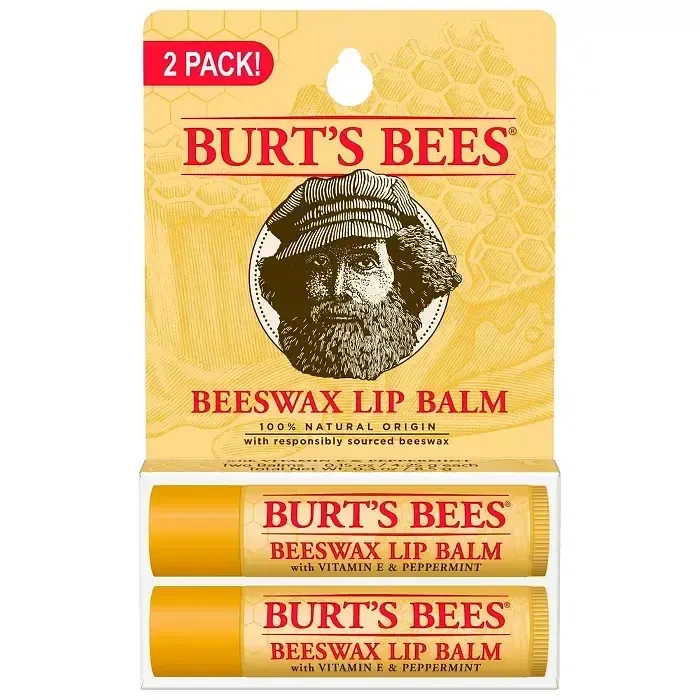
Burt's Bees Beeswax Lip Balm by Burt's Bees
Burt's Bees

Burt's Bees Beeswax Lip Balm

Lip Moisturizerslip care

Safety score

Pregnancy-focused assessment

No Known Risks99/100
Higher concernLower concern

No higher-risk ingredients were identified in MamaSkin's current assessment. Check the latest package before deciding.

Formula and assessment check

Ingredient safety review updated 23 November 2025. Product formulas can change, so compare the ingredients shown here with the packaging you have.

Report a formula mismatch

MamaSkin assessment · 23 November 2025

Is Burt's Bees Beeswax Lip Balm suitable during pregnancy?

MamaSkin currently classifies Burt's Bees Beeswax Lip Balm as No known risks, with a stored score of 99/100. This is MamaSkin’s screening classification for the recorded formula, not a guarantee that the finished product is safe for every pregnancy.

What does the ingredient evidence show?

No higher-risk ingredient flags are shown in this recorded breakdown. An ingredient without a matched assessment can still display the default No known risks label; that default is not evidence of a completed safety review.

10 of 10 ingredient entries on this page have a recorded score, evidence summary and source text. That describes documentation coverage, not proof that the finished formula has been clinically tested during pregnancy.

Ingredient breakdown

See how the listed formula falls across MamaSkin's pregnancy-focused risk bands.

10

No known risks

0

Low risk

0

Medium risk

0

High risk

Ingredients

Ingredients with a higher risk flag appear first, followed by the rest of the formula.

Cera Alba

No Known Risks

This wax is used as an emollient and structuring ingredient. Cosmetic Ingredient Review assessments support current cosmetic use, with no pregnancy- or breastfeeding-specific concern identified; uncommon contact allergy can occur, particularly with natural wax components.

Sources: CIR: Safety Assessment of Beeswax Carnauba Wax and Candelilla Wax https://www.cir-safety.org/sites/default/files/RR_Waxes.pdf
Cocos Nucifera Oil

No Known Risks

Coconut-derived emollient oil used to soften skin and support barrier feel. Normal topical cosmetic use has no known pregnancy- or breastfeeding-specific concern; very acne-prone or coconut-allergic users may prefer to avoid it for personal tolerance reasons.

Sources: CIR: Safety Assessment of Plant-Derived Fatty Acid Oils as Used in Cosmetics; EU CosIng / cosmetics regulatory inventory

Helianthus Annuus Seed Oil

No Known Risks

Helianthus annuus (sunflower) seed oil is a common emollient rich in fatty acids and is generally well tolerated, with no known pregnancy or breastfeeding concerns in topical cosmetic use.

Sources: CIR; EU/UK Cosmetics Regulation

Show all (10)

Mentha Piperita Oil

No Known Risks

Peppermint essential oil is used as a fragrance, flavouring and skin-conditioning ingredient. Cosmetic safety review supports current topical use when products are formulated to avoid irritation and sensitisation. Pulegone content and local sensitivity are formulation-quality considerations; no pregnancy- or developmental-toxicity signal was identified for normal topical use of a compliant finished cosmetic.

Sources: CIR: Amended Safety Assessment of Mentha piperita (Peppermint)-Derived Ingredients as Used in Cosmetics https://cir-safety.org/supplementaldoc/amended-safety-assessment-mentha-piperita-peppermint-derived-ingredients-used-cosm-1; European Commission CosIng ingredient inventory.

Lanolin

No Known Risks

Waxy emollient/occlusive derived from wool lipids. Commonly used to support skin barrier and relieve dryness; no pregnancy-specific contraindications are identified for topical cosmetic use.

Sources: CIR (Lanolin & lanolin-derived ingredients); LactMed (NCBI)

Tocopherol

No Known Risks

Vitamin E antioxidant used to protect oils and support the skin barrier. Not associated with pregnancy-specific concerns at cosmetic exposure.

Sources: Cosmetic Ingredient Review (US); Scientific Committee on Consumer Safety (EU)

Rosmarinus Officinalis Leaf Extract

No Known Risks

Plant extract used for antioxidant or soothing properties. Unlike essential oils, cosmetic extracts are not highly concentrated and are used at low levels. Safety concerns associated with essential oil use do not generally apply to cosmetic extracts.

Sources: General cosmetic safety references for botanical extracts and exposure route considerations; essential oil literature discusses concentrated volatile forms rather than dilute extracts.

Glycine Soja Oil

No Known Risks

Plant-derived emollient oil used to soften skin and support formula texture. Reviewed cosmetic safety sources support current cosmetic use, with no pregnancy- or breastfeeding-specific topical concern identified in the material reviewed.

Sources: CIR: Safety Assessment of Soy-Derived Ingredients as Used in Cosmetics; EU CosIng / cosmetics regulatory inventory

Canola Oil

No Known Risks

A plant-derived fatty oil or butter used mainly as an emollient, conditioning ingredient or texture agent. Cosmetic safety reviewers concluded that the assessed plant-derived fatty acid oils are safe in current practices of use and concentration. This conclusion applies to cosmetic-grade fixed oils rather than similarly named volatile essential oils. Seed or food allergy may still matter for a susceptible person.

Sources: CIR: Safety Assessment of Plant-Derived Fatty Acid Oils as Used in Cosmetics https://cir-reports.cir-safety.org/view-attachment/?id=ad62ac6b-8e74-ec11-8943-0022482f06a6

Limonene

No Known Risks

Limonene is a common fragrance component used at low levels in cosmetics; it is not a pregnancy-specific concern in topical use, but it is a recognised fragrance allergen and may trigger irritation or sensitisation in some people, especially if the product oxidises over time.

Sources: EU/UK cosmetics (fragrance allergen labelling); IFRA; toxicology reviews

Formulations can change without notice. For the most accurate result, compare this list with your packaging and scan the exact ingredient label in MamaSkin when you repurchase.

Questions about this assessment

Has every ingredient in Burt's Bees Beeswax Lip Balm been assessed?

10 of 10 ingredient entries on this page have a recorded score, evidence summary and source text. That describes documentation coverage, not proof that the finished formula has been clinically tested during pregnancy.

Does this assessment apply to the Burt's Bees Beeswax Lip Balm I have?

Only if the ingredient list on your packaging matches the recorded formula shown here. Formulas can differ by market and change over time. Compare the full list, not just the product name; report a mismatch if it differs.

Does this pregnancy assessment also establish breastfeeding suitability?

No. This page presents a pregnancy-focused product assessment. Do not infer a breastfeeding conclusion from its score or label; breastfeeding requires a separate assessment of the formula and how it is used.

How to use this assessment

The risk band is the primary conclusion. The score adds detail within that band and should not be used to compare products as if a one-point difference were clinically meaningful.

MamaSkin provides pregnancy-focused information, not medical advice. Your midwife, GP, pharmacist or dermatologist should take priority when your circumstances differ from typical cosmetic use.

Read the full methodology