Embryolisse
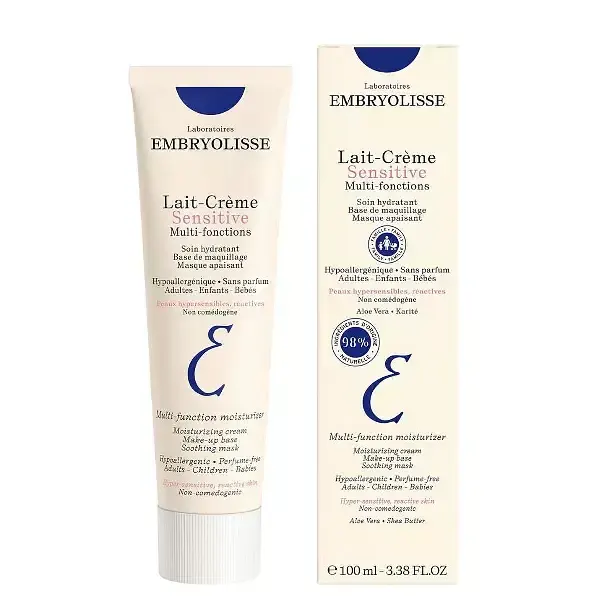
Embryolisse Lait Crème Sensitive
General Moisturizersmoisturisers
Safety score
Pregnancy-focused assessment
No Known Risks99/100
Higher concernLower concern
No higher-risk ingredients were identified in MamaSkin's current assessment. Check the latest package before deciding.
Formula and assessment check
Ingredient safety review updated 24 November 2025. Product formulas can change, so compare the ingredients shown here with the packaging you have.
Report a formula mismatchIngredient breakdown
See how the listed formula falls across MamaSkin's pregnancy-focused risk bands.
22
No known risks
0
Low risk
0
Medium risk
0
High risk
Ingredients
Ingredients with a higher risk flag appear first, followed by the rest of the formula.
Caprylic/Capric Triglyceride
No Known RisksCommon emollient derived from fatty acids and glycerin. Used to soften skin and improve texture without pregnancy-specific concerns.
Sources: Cosmetic Ingredient Review (US); Scientific Committee on Consumer Safety (EU)
Glycerin
No Known RisksGlycerin is a widely used humectant that supports hydration and the skin barrier, with a long safety record and no known pregnancy or breastfeeding concerns in topical cosmetic use.
Sources: CIR; EU/UK Cosmetics Regulation
Show all (22)
Octyldodecanol
No Known RisksFatty alcohol emollient used to improve spreadability and reduce drag. Reviewed cosmetic safety sources support normal topical use, with no pregnancy- or breastfeeding-specific topical signal identified in the material reviewed.
Sources: CIR ingredient status / report data sheet for Octyldodecanol; EU CosIng / cosmetics regulatory inventory
Polyglyceryl-3 Methylglucose Distearate
No Known RisksAn emulsifier built from polyglycerin, methyl glucose and stearic-acid components, used to stabilise creams and improve texture. Exact pregnancy-specific data are limited. Cosmetic safety reviewers concluded that related methyl glucose esters and polyglyceryl fatty-acid esters are safe in current cosmetic use when formulated to be non-irritating. No pregnancy-specific topical concern was identified by applying those related-group assessments to ordinary cosmetic exposure.
Sources: CIR: Safety Assessment of Methyl Glucose Polyethers and Esters https://www.cir-safety.org/supplementaldoc/safety-assessment-methyl-glucose-polyethers-and-esters-used-cosmetics; CIR: Safety Assessment of Polyglyceryl Fatty Acid Esters https://cir-safety.org/sites/default/files/PGlyFE092016FR.pdf
Butyrospermum Parkii Butter
No Known RisksButyrospermum parkii (shea) butter is an emollient/occlusive that supports the skin barrier; topical use is considered low concern with no known pregnancy or breastfeeding risks.
Sources: CIR; EU/UK Cosmetics Regulation
Cera Alba
No Known RisksThis wax is used as an emollient and structuring ingredient. Cosmetic Ingredient Review assessments support current cosmetic use, with no pregnancy- or breastfeeding-specific concern identified; uncommon contact allergy can occur, particularly with natural wax components.
Sources: CIR: Safety Assessment of Beeswax Carnauba Wax and Candelilla Wax https://www.cir-safety.org/sites/default/files/RR_Waxes.pdf
Jojoba Esters
No Known RisksJojoba-derived wax esters used as emollients, texture agents and skin-conditioning ingredients. Reviewed cosmetic ingredient references do not identify a pregnancy- or breastfeeding-specific concern for normal topical use.
Sources: CIR cosmetic ingredient safety references for jojoba-derived ingredients/wax esters; EU CosIng / cosmetics regulatory inventory
Helianthus Annuus Seed Wax
No Known RisksA sunflower-seed-derived wax used to structure and condition cosmetic formulas. Cosmetic safety reviewers concluded that sunflower seed- and flower-derived ingredients are safe as used; lipsticks containing this wax were not irritating or sensitising in reviewed tests. People with sunflower-seed allergy should still use caution.
Sources: CIR: Safety Assessment of Helianthus annuus-Derived Ingredients as Used in Cosmetics https://www.cir-safety.org/sites/default/files/Helianthus%20annuus.pdf
Glyceryl Stearate
No Known RisksEmulsifier and emollient used to stabilise creams and lotions. Not associated with pregnancy-specific concerns at cosmetic exposure.
Sources: Cosmetic Ingredient Review (US); Scientific Committee on Consumer Safety (EU)
Xanthan Gum
No Known RisksNatural polysaccharide thickener used for stability and texture. Not associated with pregnancy-specific concerns.
Sources: European cosmetics regulatory framework
1,2-Hexanediol
No Known Risks1,2-Hexanediol is commonly used as a solvent and preservative booster; topical exposure is low and it has no known pregnancy or breastfeeding concerns at cosmetic concentrations, though very sensitive skin may occasionally react.
Sources: CIR; EU/UK Cosmetics Regulation
Caprylyl Glycol
No Known RisksHumectant and preservative booster used to support product stability. Low systemic exposure expected from topical cosmetic use.
Sources: Scientific Committee on Consumer Safety (EU); Cosmetic Ingredient Review (US)
Sodium Hydroxide
No Known RiskspH adjuster used in very small quantities to balance formulations. Not associated with pregnancy-specific concerns.
Sources: Scientific Committee on Consumer Safety (EU); European cosmetics regulatory framework
Acrylates/C10-30 Alkyl Acrylate Crosspolymer
No Known RisksPolymer thickener and stabiliser used in creams and sunscreens. Low systemic exposure expected.
Sources: Cosmetic Ingredient Review (US); Scientific Committee on Consumer Safety (EU)
Polyglycerin-3
No Known RisksA small glycerin polymer used as a humectant and conditioning ingredient. Cosmetic safety reviewers assessed polyglycerin-3 with diglycerin and related polyglycerins and concluded that they are safe in current practices of use and concentration. No pregnancy-specific concern was identified for normal topical use.
Sources: CIR: Safety Assessment of Diglycerin and Polyglycerins as Used in Cosmetics https://www.cir-safety.org/panelbook/safety-assessment-diglycerin-and-polyglycerin-3-6-and-10-used-cosmetics
Acacia Decurrens Flower Wax
No Known RisksA plant-derived wax used as an emollient, structurant and film former. Systemic absorption is expected to be low and cosmetic safety concerns are primarily local irritation or source allergy. No pregnancy-specific hazard was identified for normal topical use.
Sources: CIR safety assessments of plant-derived oils and waxes; European Commission CosIng ingredient inventory.
Aloe Barbadensis Leaf Juice Powder
No Known RisksA concentrated, dried form of aloe leaf juice that is reconstituted in soothing and moisturising formulas. Cosmetic safety reviewers concluded that Aloe barbadensis leaf juice is safe in current cosmetic practices of use when anthraquinone levels do not exceed 50 ppm. Applying that conclusion to its dried cosmetic-grade powder requires the same impurity control. This assessment concerns topical cosmetic exposure rather than oral aloe latex, and no pregnancy-specific topical concern was identified.
Sources: CIR: Quick Reference Table conclusion for Aloe barbadensis leaf juice and related ingredients https://cir-safety.org/sites/default/files/sq-fix_2.pdf; CIR: Safety Assessment of Aloe-Derived Ingredients, International Journal of Toxicology 26(Suppl. 2):1-50, 2007
Tocopherol
No Known RisksVitamin E antioxidant used to protect oils and support the skin barrier. Not associated with pregnancy-specific concerns at cosmetic exposure.
Sources: Cosmetic Ingredient Review (US); Scientific Committee on Consumer Safety (EU)
Tropolone
No Known RisksTropolone is used as a preservative-supporting, chelating, or antimicrobial cosmetic ingredient. No pregnancy-specific reproductive or developmental hazard was identified for normal topical cosmetic exposure. Local irritation remains formulation-dependent.
Sources: European Commission CosIng ingredient inventory; ECHA substance information and cosmetic-use safety data. No ingredient-specific human pregnancy study of topical cosmetic use was identified.
Glycine Soja Oil
No Known RisksPlant-derived emollient oil used to soften skin and support formula texture. Reviewed cosmetic safety sources support current cosmetic use, with no pregnancy- or breastfeeding-specific topical concern identified in the material reviewed.
Sources: CIR: Safety Assessment of Soy-Derived Ingredients as Used in Cosmetics; EU CosIng / cosmetics regulatory inventory
Hydrolyzed Soy Protein
No Known RisksA mixture of smaller soy-protein peptides used for hair and skin conditioning. Cosmetic safety reviewers concluded that hydrolyzed soy protein is safe in current cosmetic practices. A person with sensitivity to residual soy proteins may still react, but no pregnancy-specific concern was identified for normal topical exposure.
Sources: CIR: Safety Assessment of Plant-Derived Proteins and Peptides as Used in Cosmetics https://www.cir-safety.org/sites/default/files/plant-derived_proteins.pdf
Formulations can change without notice. For the most accurate result, compare this list with your packaging and scan the exact ingredient label in MamaSkin when you repurchase.
How to use this assessment
The risk band is the primary conclusion. The score adds detail within that band and should not be used to compare products as if a one-point difference were clinically meaningful.
MamaSkin provides pregnancy-focused information, not medical advice. Your midwife, GP, pharmacist or dermatologist should take priority when your circumstances differ from typical cosmetic use.