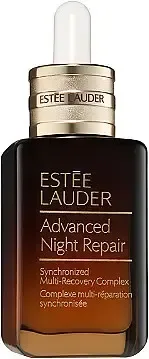
Estée Lauder Advanced Night Repair Synchronized Multi-Recovery Complex Serum by Estée Lauder
Estée Lauder

Estée Lauder Advanced Night Repair Synchronized Multi-Recovery Complex Serum

Serums

Safety score

Pregnancy-focused assessment

Medium Risk58/100
Higher concernLower concern

This formula contains an ingredient that needs extra caution in MamaSkin's pregnancy-focused assessment.

Formula and assessment check

Ingredient safety review updated 15 February 2026. Product formulas can change, so compare the ingredients shown here with the packaging you have.

Report a formula mismatch

Ingredient breakdown

See how the listed formula falls across MamaSkin's pregnancy-focused risk bands.

40

No known risks

2

Low risk

1

Medium risk

0

High risk

Ingredients

Ingredients with a higher risk flag appear first, followed by the rest of the formula.

BHT

Medium Risk

BHT (butylated hydroxytoluene) is a lipophilic antioxidant used to protect oils from oxidation. Animal studies at high (primarily oral) doses show liver enzyme induction and related biochemical changes; endocrine-screening lines of evidence have also been evaluated in regulatory reviews. Pregnancy-specific human outcome data for topical cosmetic exposure are limited; the key signal is systemic toxicology at higher exposures and uncertainty for pregnancy-specific outcomes.

Sources: EU SCCS Opinion on BHT (SCCS/1636/21; sccs_o_257.pdf, 2021); CIR: Safety Assessment of BHT as used in cosmetics.

Triethanolamine

Low Risk

Triethanolamine (TEA) is an alkanolamine used as a pH adjuster and surfactant in cosmetics. The main practical concerns are skin/eye irritation at higher concentrations and the potential formation of nitrosamines if formulated with nitrosating agents (a formulation/impurity-control issue). It is not a typical pregnancy-specific concern at cosmetic use levels; overall risk is primarily local irritation/sensitisation in susceptible users.

Sources: CIR: Safety Assessment of Triethanolamine (TEA) and TEA-containing ingredients as used in cosmetics (Fiume et al., 2013); CIR Resource Document: N-Nitrosation and cosmetic ingredient safety; EU CosIng (Triethanolamine).

Phenoxyethanol

Low Risk

Phenoxyethanol is a preservative permitted in EU cosmetics up to 1.0%. The SCCS concluded it is safe for cosmetic use at that level, including when considering higher cosmetic exposure scenarios in infants and young children. Main practical concern is irritation/stinging on very sensitive or compromised skin rather than a pregnancy- or breastfeeding-specific risk.

Sources: EU SCCS; EU Cosmetics Regulation (Annex V preservative limit), SCCS Opinion on Phenoxyethanol (SCCS/1575/16, 2016)

Show all (43)

Water

No Known Risks

Bifida Ferment Lysate

No Known Risks

A non-live bacterial fermentation lysate used for skin conditioning. It is not the same as applying live bacteria. Available cosmetic safety information and the nature of the processed material do not identify a pregnancy-specific concern for normal topical exposure.

Sources: CIR yeast and bacterial ferment strategy and safety assessments; European Commission CosIng ingredient inventory for Bifida Ferment Lysate.

PEG-8

No Known Risks

A small polyethylene glycol used as a humectant and solvent. Cosmetic safety reviewers concluded that PEG-8 is safe at current cosmetic concentrations, but PEG ingredients should not be used on damaged skin and manufacturing impurities must be controlled. No pregnancy-specific concern was identified for compliant topical use.

Sources: CIR: Final Report on the Safety Assessment of Polyethylene Glycols https://cir-reports.cir-safety.org/view-attachment/?id=0ca16b53-8e74-ec11-8943-0022482f06a6

Propanediol

No Known Risks

Solvent and humectant used to improve texture and ingredient solubility. Low systemic exposure expected from topical cosmetic use.

Sources: Cosmetic Ingredient Review (US); Scientific Committee on Consumer Safety (EU)

Bis-PEG-18 Methyl Ether Dimethyl Silane

No Known Risks

An ethoxylated silicone used as a humectant, emulsifier and skin-conditioning ingredient. Cosmetic safety assessments of PEG-modified silicones support current topical uses, with low expected absorption of the intact material and control of manufacturing impurities.

Sources: CIR: Safety Assessment of PEG/PPG-modified silicones, including methyl ether dimethicones; CIR December 2025 Quick Reference Table https://cir-safety.org/sites/default/files/QRT-Update-Dec2025.pdf

Methyl Gluceth-20

No Known Risks

A glucose-derived humectant and conditioning ingredient. Cosmetic safety reviewers concluded that methyl gluceth-20 is safe as used in cosmetics; reviewed skin testing did not indicate sensitisation. No pregnancy-specific concern was identified for normal topical cosmetic exposure.

Sources: CIR: Final Report on the Safety Assessment of Methyl Gluceth-10 and Methyl Gluceth-20 https://cir-reports.cir-safety.org/view-attachment?id=fb9dc889-8e74-ec11-8943-0022482f06a6

Glycereth-26

No Known Risks

An ethoxylated glycerin humectant used to retain moisture and improve product texture. The Cosmetic Ingredient Review assessed glycerin ethoxylates including Glycereth-26 for current cosmetic use; available evidence does not identify a pregnancy- or breastfeeding-specific concern from normal topical exposure.

Sources: CIR: Safety Assessment of Glycerin Ethoxylates https://cir-safety.org/supplementaldoc/safety-assessment-glycerin-ethoxylates-used-cosmetics

PEG-75

No Known Risks

Butylene Glycol

No Known Risks

Solvent and humectant commonly used in leave-on products. Not associated with pregnancy-specific concerns at cosmetic exposure levels.

Sources: Cosmetic Ingredient Review (US); Scientific Committee on Consumer Safety (EU)

Adansonia Digitata Seed Extract

No Known Risks

Tripeptide-32

No Known Risks

Sodium Hyaluronate

No Known Risks

Sodium hyaluronate (hyaluronic acid salt) is used for hydration and cushioning, with very low systemic absorption from topical use and no known pregnancy or breastfeeding concerns at cosmetic concentrations.

Sources: CIR; EU/UK Cosmetics Regulation

Yeast Extract

No Known Risks

A yeast-derived ferment, filtrate or extract used for skin conditioning. Cosmetic safety reviewers concluded that cosmetic ingredients derived from the reviewed yeast species are safe in current practices; this record applies to the standardized cosmetic INCI material, not an unspecified live culture.

Sources: CIR: Yeast-derived ingredients final assessment, June 2024; Galactomyces Ferment Filtrate conclusion; December 2025 Quick Reference Table https://cir-safety.org/sites/default/files/QRT-Update-Dec2025.pdf

Lactobacillus Ferment

No Known Risks

Ferment-derived skin-conditioning ingredient used in microbiome-support and soothing formulas. Reviewed cosmetic safety sources support current cosmetic use, with no pregnancy- or breastfeeding-specific topical concern identified in the material reviewed.

Sources: CIR: Safety Assessment of Lactobacillus Ferment Ingredients as Used in Cosmetics; EU CosIng / cosmetics regulatory inventory

Cola Acuminata Seed Extract

No Known Risks

Anthemis Nobilis Flower Extract

No Known Risks

A Roman chamomile flower extract or oil used for skin conditioning and fragrance. Cosmetic safety reviewers concluded that Anthemis nobilis-derived ingredients are safe in current practices when formulated to be non-sensitising. People allergic to plants in the daisy family may be more likely to react.

Sources: CIR: Safety Assessment of Anthemis nobilis-Derived Ingredients as Used in Cosmetics https://cir-safety.org/sites/default/files/anthem122013final.pdf

Hydrolyzed Algin

No Known Risks

An algae- or seaweed-derived ingredient used for skin conditioning, moisturising or texture support. Composition and trace mineral content vary by source. No pregnancy-specific hazard was identified for normal topical cosmetic exposure; this does not assess oral seaweed supplements.

Sources: CIR: Safety Assessment of Brown Algae-Derived Ingredients as Used in Cosmetics; European Commission CosIng ingredient inventory; relevant algal cosmetic-ingredient literature.

Pantethine

No Known Risks

Caffeine

No Known Risks

Methylxanthine used in cosmetics (e.g., de-puffing/firming and antioxidant support). No pregnancy-specific contraindications are identified for topical cosmetic use.

Sources: CIR (Methylxanthines); PubMed (NLM)

Lecithin

No Known Risks

Emulsifier and skin-conditioning ingredient composed of phospholipids. Not associated with pregnancy-specific concerns.

Sources: Cosmetic Ingredient Review (US)

Sodium Rna

No Known Risks

Bisabolol

No Known Risks

A terpene alcohol used for skin conditioning and soothing. Cosmetic safety reviewers reaffirmed bisabolol as safe at current cosmetic concentrations, and reproductive and developmental testing did not identify adverse effects. Bisabolol can increase skin penetration, so formulators should consider the safety of other ingredients in the same product.

Sources: CIR: Final Report on the Safety Assessment of Bisabolol https://cir-reports.cir-safety.org/view-attachment/?id=6fcf160b-8e74-ec11-8943-0022482f06a6; CIR re-review material https://www.cir-safety.org/sites/default/files/bisabolol.pdf

Squalane

No Known Risks

Lightweight emollient used to support the skin barrier. Not associated with pregnancy-specific concerns at cosmetic exposure levels.

Sources: Cosmetic Ingredient Review (US); Scientific Committee on Consumer Safety (EU)

Glycerin

No Known Risks

Glycerin is a widely used humectant that supports hydration and the skin barrier, with a long safety record and no known pregnancy or breastfeeding concerns in topical cosmetic use.

Sources: CIR; EU/UK Cosmetics Regulation

Oleth-3 Phosphate

No Known Risks

Caprylyl Glycol

No Known Risks

Humectant and preservative booster used to support product stability. Low systemic exposure expected from topical cosmetic use.

Sources: Scientific Committee on Consumer Safety (EU); Cosmetic Ingredient Review (US)

Oleth-3

No Known Risks

Oleth-5

No Known Risks

Choleth-24

No Known Risks

Hydrogenated Lecithin

No Known Risks

Hydrogenated emulsifier used to support skin barrier feel. Not associated with pregnancy-specific concerns.

Sources: Cosmetic Ingredient Review (US)

Jojoba Wax PEG-120 Esters

No Known Risks

Ceteth-24

No Known Risks

Tocopheryl Acetate

No Known Risks

Tocopheryl acetate (vitamin E derivative) is used as an antioxidant and skin-conditioning ingredient; it is considered low concern in topical use with no known pregnancy or breastfeeding risks at cosmetic concentrations.

Sources: CIR; EU/UK Cosmetics Regulation

Carbomer

No Known Risks

Polymer thickener used to create gel textures. Large-molecule ingredient with negligible systemic absorption.

Sources: Cosmetic Ingredient Review (US); Scientific Committee on Consumer Safety (EU)

Tetrasodium EDTA

No Known Risks

Chelating agent used to stabilise formulations; minimal dermal absorption and no known pregnancy or breastfeeding risks at typical cosmetic concentrations.

Sources: CIR; EU/UK Cosmetics Regulation

Xanthan Gum

No Known Risks

Natural polysaccharide thickener used for stability and texture. Not associated with pregnancy-specific concerns.

Sources: European cosmetics regulatory framework

Potassium Sorbate

No Known Risks

Preservative widely used in foods and cosmetics. Considered safe at regulated concentrations with low systemic exposure from topical use.

Sources: Scientific Committee on Consumer Safety (EU); European cosmetics regulatory framework

Disodium EDTA

No Known Risks

Disodium EDTA is a chelating agent used to improve formula stability and performance; it is considered low concern in topical cosmetic use, with no known pregnancy or breastfeeding risks at typical concentrations.

Sources: CIR; EU/UK Cosmetics Regulation

CI 14700

No Known Risks

A Colour Index or lake name for a regulated cosmetic colour additive. Permitted product areas differ by colour, and certified colours must meet applicable identity and purity specifications. No pregnancy-specific concern was identified for compliant topical cosmetic use.

Sources: FDA: Regulatory Status of Color Additives https://hfpappexternal.fda.gov/scripts/fdcc/index.cfm?set=ColorAdditives; FDA: Color Additives Permitted for Use in Cosmetics https://www.fda.gov/cosmetics/cosmetic-ingredient-names/color-additives-permitted-use-cosmetics; 21 CFR Parts 73, 74 and 82.

CI 19140

No Known Risks

Also known as FD&C Yellow No. 5 or tartrazine, this certified colour additive is used in cosmetics and other regulated products. FDA permits its use in cosmetics, including the eye area, when identity, purity, certification and use requirements are met. Rare allergy-like reactions can occur, but no pregnancy-specific concern is identified for normal use in a compliant finished cosmetic.

Sources: FDA: Regulatory Status of FD&C Yellow No. 5 / C.I. 19140 https://www.hfpappexternal.fda.gov/scripts/fdcc/index.cfm?id=FDCYellow5&set=ColorAdditives; FDA: Color Additives and Cosmetics Fact Sheet https://www.fda.gov/industry/color-additives/color-additives-and-cosmetics-fact-sheet

Formulations can change without notice. For the most accurate result, compare this list with your packaging and scan the exact ingredient label in MamaSkin when you repurchase.

How to use this assessment

The risk band is the primary conclusion. The score adds detail within that band and should not be used to compare products as if a one-point difference were clinically meaningful.

MamaSkin provides pregnancy-focused information, not medical advice. Your midwife, GP, pharmacist or dermatologist should take priority when your circumstances differ from typical cosmetic use.

Read the full methodology