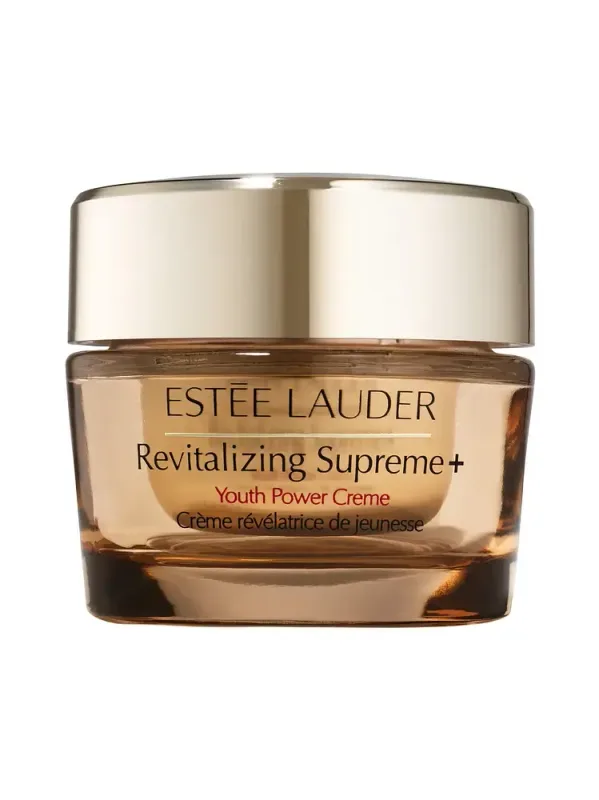
Estée Lauder Revitalizing Supreme+ Youth Power Creme by Estée Lauder
Estée Lauder

Estée Lauder Revitalizing Supreme+ Youth Power Creme

Day Moisturizersmoisturisers

Safety score

Pregnancy-focused assessment

Medium Risk58/100
Higher concernLower concern

This formula contains an ingredient that needs extra caution in MamaSkin's pregnancy-focused assessment.

Formula and assessment check

Ingredient safety review updated 15 February 2026. Product formulas can change, so compare the ingredients shown here with the packaging you have.

Report a formula mismatch

Ingredient breakdown

See how the listed formula falls across MamaSkin's pregnancy-focused risk bands.

51

No known risks

5

Low risk

1

Medium risk

0

High risk

Ingredients

Ingredients with a higher risk flag appear first, followed by the rest of the formula.

BHT

Medium Risk

BHT (butylated hydroxytoluene) is a lipophilic antioxidant used to protect oils from oxidation. Animal studies at high (primarily oral) doses show liver enzyme induction and related biochemical changes; endocrine-screening lines of evidence have also been evaluated in regulatory reviews. Pregnancy-specific human outcome data for topical cosmetic exposure are limited; the key signal is systemic toxicology at higher exposures and uncertainty for pregnancy-specific outcomes.

Sources: EU SCCS Opinion on BHT (SCCS/1636/21; sccs_o_257.pdf, 2021); CIR: Safety Assessment of BHT as used in cosmetics.

Parfum

Low Risk

Umbrella term for an undisclosed fragrance blend. It’s not usually a pregnancy-specific concern at normal cosmetic use levels, but the exact components and concentrations aren’t fully disclosed on the label, so we score it more conservatively. If you prefer maximum transparency (or you’re sensitive to fragrance compounds), choose fragrance-free/unscented products.

Sources: EU/UK cosmetics (fragrance allergen labelling); IFRA

Phenoxyethanol

Low Risk

Phenoxyethanol is a preservative permitted in EU cosmetics up to 1.0%. The SCCS concluded it is safe for cosmetic use at that level, including when considering higher cosmetic exposure scenarios in infants and young children. Main practical concern is irritation/stinging on very sensitive or compromised skin rather than a pregnancy- or breastfeeding-specific risk.

Sources: EU SCCS; EU Cosmetics Regulation (Annex V preservative limit), SCCS Opinion on Phenoxyethanol (SCCS/1575/16, 2016)

Show all (57)

Dimethicone

Low Risk

Dimethicone is a silicone polymer used as a skin protectant and slip/conditioning agent. It is considered inert with minimal dermal absorption; the main practical issues are cosmetic (feel) and occasional irritation in very sensitive users. It is not a pregnancy-specific concern in topical cosmetic use.

Sources: CIR: Safety Assessment of Dimethicone, Methicone, and related ingredients as used in cosmetics (Methicones report; 2019/2022 update); EU CosIng entry for Dimethicone.

PEG-10 Dimethicone

Low Risk

Silicone derivative with negligible systemic absorption in topical cosmetic use; treated as low risk in pregnancy and breastfeeding.

Sources: PubMed, U.S. National Library of Medicine (NLM)

Polysilicone-11

Low Risk

A crosslinked silicone elastomer used as a film former and texture ingredient. Cosmetic safety reviewers concluded that Polysilicone-11 is safe in current cosmetic use. MamaSkin classifies it as low risk for consistency with the existing silicone-polymer policy and because cosmetic-grade manufacturing should control residual starting materials, rather than because of a known pregnancy-specific contraindication.

Sources: CIR: Safety Assessment of Polysilicone-11 as Used in Cosmetics https://www.cir-safety.org/supplementaldoc/safety-assessment-polysilicone-11-used-cosmetics

Water

No Known Risks

Glycerin

No Known Risks

Glycerin is a widely used humectant that supports hydration and the skin barrier, with a long safety record and no known pregnancy or breastfeeding concerns in topical cosmetic use.

Sources: CIR; EU/UK Cosmetics Regulation

Isohexadecane

No Known Risks

Low-viscosity isoparaffin emollient used for slip and lightweight texture. Reviewed cosmetic safety sources support normal topical use, with no pregnancy- or breastfeeding-specific topical signal identified in the material reviewed.

Sources: CIR: Safety Assessment of Isoparaffins as Used in Cosmetics / CIR Quick Reference Table (Isohexadecane); EU CosIng / cosmetics regulatory inventory

Butylene Glycol

No Known Risks

Solvent and humectant commonly used in leave-on products. Not associated with pregnancy-specific concerns at cosmetic exposure levels.

Sources: Cosmetic Ingredient Review (US); Scientific Committee on Consumer Safety (EU)

Bis-PEG-18 Methyl Ether Dimethyl Silane

No Known Risks

An ethoxylated silicone used as a humectant, emulsifier and skin-conditioning ingredient. Cosmetic safety assessments of PEG-modified silicones support current topical uses, with low expected absorption of the intact material and control of manufacturing impurities.

Sources: CIR: Safety Assessment of PEG/PPG-modified silicones, including methyl ether dimethicones; CIR December 2025 Quick Reference Table https://cir-safety.org/sites/default/files/QRT-Update-Dec2025.pdf

Disteardimonium Hectorite

No Known Risks

Mineral-derived organoclay thickener and suspension agent used in creams, makeup and sunscreens. It is expected to have low systemic exposure from topical use, with no pregnancy- or breastfeeding-specific concern identified in reviewed cosmetic references.

Sources: CIR cosmetic ingredient safety references for hectorite/quaternium hectorite ingredients; EU CosIng / cosmetics regulatory inventory

Moringa Oleifera Seed Extract

No Known Risks

A moringa-seed extract used for skin conditioning and antioxidant support. No pregnancy- or breastfeeding-specific hazard was identified for normal topical cosmetic exposure. Direct ingredient-specific pregnancy studies were not identified, so this assessment does not extend to oral supplements or medicinal use.

Sources: European Commission CosIng ingredient inventory; Cosmetic Ingredient Review botanical safety-assessment framework and relevant ingredient-family assessments. No ingredient-specific human pregnancy study of normal topical cosmetic use was identified.

Hibiscus Sinensis Flower Extract

No Known Risks

Sodium Hyaluronate

No Known Risks

Sodium hyaluronate (hyaluronic acid salt) is used for hydration and cushioning, with very low systemic absorption from topical use and no known pregnancy or breastfeeding concerns at cosmetic concentrations.

Sources: CIR; EU/UK Cosmetics Regulation

Acetyl Hexapeptide-8

No Known Risks

Synthetic peptide used as a skin-conditioning ingredient. Reviewed cosmetic safety sources do not indicate a known pregnancy- or breastfeeding-specific concern in normal topical cosmetic use. The available cosmetic safety assessment concluded this ingredient is safe in cosmetics at concentrations up to 0.005%; safety above that concentration was not established in the reviewed report.

Sources: CIR Expert Panel, Safety Assessment of Acetyl Hexapeptide-8 Amide as Used in Cosmetics, final report, 2021

Laminaria Digitata Extract

No Known Risks

A brown-algae-derived extract used for skin conditioning and hydration. Cosmetic safety reviewers specifically included this ingredient in the small subset of brown algae extracts found safe in current practices of use and concentration. Manufacturers should control naturally occurring iodine, arsenic and heavy-metal impurities.

Sources: CIR: Safety Assessment of Brown Algae-Derived Ingredients as Used in Cosmetics https://cir-reports.cir-safety.org/view-attachment/?id=c6b5b3d7-8c74-ec11-8943-0022482f06a6

Lactis Proteinum

No Known Risks

Tuna Extract

No Known Risks

Acetyl Glucosamine

No Known Risks

An amino-sugar derivative used for skin conditioning and hydration. Cosmetic safety reviewers concluded that acetyl glucosamine is safe in current practices when formulated to be non-irritating. No pregnancy-specific concern was identified for normal topical cosmetic exposure.

Sources: CIR: Safety Assessment of Glucosamine Ingredients as Used in Cosmetics https://www.cir-safety.org/supplementaldoc/safety-assessment-glucosamine-ingredients-used-cosmetics-1

Tocopheryl Acetate

No Known Risks

Tocopheryl acetate (vitamin E derivative) is used as an antioxidant and skin-conditioning ingredient; it is considered low concern in topical use with no known pregnancy or breastfeeding risks at cosmetic concentrations.

Sources: CIR; EU/UK Cosmetics Regulation

Narcissus Tazetta Bulb Extract

No Known Risks

Squalane

No Known Risks

Lightweight emollient used to support the skin barrier. Not associated with pregnancy-specific concerns at cosmetic exposure levels.

Sources: Cosmetic Ingredient Review (US); Scientific Committee on Consumer Safety (EU)

Algae Extract

No Known Risks

A general algae-derived extract used for skin conditioning, hydration or texture. Normal topical cosmetic exposure has no identified pregnancy-specific concern. The generic name does not establish a specific species, so the assessment does not extend to concentrated oral seaweed supplements.

Sources: CIR assessments of brown and red algae-derived cosmetic ingredients; European Commission CosIng ingredient inventory.

Hypnea Musciformis Extract

No Known Risks

Pyrus Malus Fruit Extract

No Known Risks

An apple fruit extract used mainly for skin conditioning. Cosmetic safety reviewers concluded that Pyrus malus fruit extract and the other supported apple-derived ingredients are safe in current cosmetic practices of use and concentration. The conclusion does not extend to several separately identified root, stem, callus or oil ingredients for which evidence was insufficient. No pregnancy-specific concern was identified for normal topical use of the fruit extract.

Sources: CIR: Safety Assessment of Apple-Derived Ingredients as Used in Cosmetics https://cir-reports.cir-safety.org/view-attachment/?id=6376dcde-b1aa-f075-b67c-6f6773d065ce

Cucumis Sativus Fruit Extract

No Known Risks

A cucumber fruit extract used for skin conditioning. Cosmetic safety reviewers concluded that Cucumis sativus-derived ingredients are safe in current cosmetic practices of use and concentration when formulated to avoid sensitisation. No pregnancy-specific concern was identified for normal topical cosmetic exposure, although irritation or allergy to a botanical-containing formula remains possible.

Sources: CIR: Final Safety Assessment of Cucumis sativus (Cucumber)-Derived Ingredients https://cir-safety.org/supplementaldoc/final-safety-assessment-cucumis-sativus-cucumber-derived-ingredients

Lens Esculenta Fruit Extract

No Known Risks

Citrullus Lanatus Fruit Extract

No Known Risks

A fruit, seed or food-plant extract used for skin conditioning and antioxidant support. No pregnancy-specific signal was identified for the low topical exposure expected from a finished cosmetic. Direct pregnancy studies are generally unavailable, and botanical allergy remains possible.

Sources: European Commission CosIng ingredient inventory; CIR botanical safety framework and relevant fruit-derived ingredient assessments; peer-reviewed cosmetic and phytochemical literature for the named plants.

Silybum Marianum Extract

No Known Risks

Gelidiella Acerosa Extract

No Known Risks

Helianthus Annuus Seed Extract

No Known Risks

A sunflower seed extract used mainly for skin conditioning. Cosmetic safety reviewers concluded that the supported Helianthus annuus-derived ingredients are safe in current cosmetic practices of use and concentration. A person with sunflower allergy may still react, but no pregnancy-specific concern was identified for normal topical exposure.

Sources: CIR: Safety Assessment of Helianthus annuus-Derived Ingredients as Used in Cosmetics https://www.cir-safety.org/sites/default/files/Helianthus%20annuus.pdf

Sigesbeckia Orientalis Extract

No Known Risks

Caffeine

No Known Risks

Methylxanthine used in cosmetics (e.g., de-puffing/firming and antioxidant support). No pregnancy-specific contraindications are identified for topical cosmetic use.

Sources: CIR (Methylxanthines); PubMed (NLM)

Hordeum Vulgare Extract

No Known Risks

Sodium Lactate

No Known Risks

Humectant and buffer that also forms part of the skin's natural moisturising factor. Reviewed cosmetic safety sources support topical cosmetic use; irritation and sun-sensitivity considerations relate more to formula context than to pregnancy-specific risk.

Sources: CIR: Safety Assessment of Alpha Hydroxy Acids as Used in Cosmetics; CIR: PCA and Its Salts as Used in Cosmetics; EU CosIng / cosmetics regulatory inventory

Triticum Vulgare Germ Extract

No Known Risks

A botanical extract, juice or water used primarily for skin conditioning, moisturising, soothing or antioxidant support. Direct pregnancy studies of the named cosmetic material were not identified. No reproductive or developmental hazard was identified for normal topical exposure to a compliant finished cosmetic; oral herbal or medicinal use is outside this classification.

Sources: European Commission CosIng ingredient inventory; Cosmetic Ingredient Review botanical safety-assessment framework and relevant plant-family assessments. No ingredient-specific human pregnancy study of normal topical cosmetic use was identified.

Sorbitol

No Known Risks

Sugar alcohol humectant used to help maintain water content at the skin surface. Reviewed cosmetic safety sources support normal topical use, with no pregnancy- or breastfeeding-specific topical signal identified in the material reviewed.

Sources: CIR: Safety Assessment of Mannitol, Sorbitol, and Xylitol as Used in Cosmetics; EU CosIng / cosmetics regulatory inventory

Propylene Glycol Dicaprate

No Known Risks

Sucrose

No Known Risks

This sugar or sugar alcohol is used as a humectant and skin-conditioning ingredient. Cosmetic Ingredient Review assessments support these saccharides in current cosmetic use, with no pregnancy- or breastfeeding-specific concern identified for normal topical exposure.

Sources: CIR: Safety Assessment of Monosaccharides Disaccharides and Related Ingredients as Used in Cosmetics https://cir-safety.org/supplementaldoc/safety-assessment-monosaccharides-disaccharides-and-related-ingredients-used-cosmeti

Sodium PCA

No Known Risks

Natural-moisturising-factor humectant that helps bind water in the stratum corneum. Reviewed cosmetic safety sources support normal topical use, with no pregnancy- or breastfeeding-specific topical signal identified in the material reviewed.

Sources: CIR: Safety Assessment of PCA and Its Salts as Used in Cosmetics; EU CosIng / cosmetics regulatory inventory

Aminopropyl Ascorbyl Phosphate

No Known Risks

Pentylene Glycol

No Known Risks

Humectant and preservative booster. Considered safe for cosmetic use with low systemic exposure.

Sources: Cosmetic Ingredient Review (US); Scientific Committee on Consumer Safety (EU)

Caprylyl Glycol

No Known Risks

Humectant and preservative booster used to support product stability. Low systemic exposure expected from topical cosmetic use.

Sources: Scientific Committee on Consumer Safety (EU); Cosmetic Ingredient Review (US)

Propylene Carbonate

No Known Risks

Solvent and viscosity-control ingredient used in cosmetic formulas, often with clay thickeners. Reviewed cosmetic ingredient references do not identify a pregnancy- or breastfeeding-specific concern for normal topical use.

Sources: CIR cosmetic ingredient safety references for carbonate solvents; EU CosIng / cosmetics regulatory inventory

Polyethylene

No Known Risks

Inert polymer used as a film former, thickener or texture ingredient in cosmetics. Normal topical use is expected to have low systemic exposure, with no pregnancy- or breastfeeding-specific concern identified in reviewed cosmetic references.

Sources: CIR cosmetic ingredient safety references for polyethylene and related polymers; EU CosIng / cosmetics regulatory inventory

PEG-32

No Known Risks

A polyethylene glycol used as a humectant, solvent or texture aid. Cosmetic safety reviewers concluded that PEG-32 is safe in current practices of use and concentration. Manufacturing controls should limit residual ethylene oxide and 1,4-dioxane.

Sources: CIR: PEG-6, PEG-8, PEG-32, PEG-75, PEG-150 and PEG-14M conclusions, JACT 12(4), 1993 and final report June 2010; December 2025 Quick Reference Table https://cir-safety.org/sites/default/files/QRT-Update-Dec2025.pdf

PEG-6

No Known Risks

Disodium EDTA

No Known Risks

Disodium EDTA is a chelating agent used to improve formula stability and performance; it is considered low concern in topical cosmetic use, with no known pregnancy or breastfeeding risks at typical concentrations.

Sources: CIR; EU/UK Cosmetics Regulation

Isoceteth-20

No Known Risks

Isododecane

No Known Risks

Volatile emollient/solvent used for slip, quick-dry texture and makeup wear. Reviewed cosmetic ingredient references support normal topical use, with no pregnancy- or breastfeeding-specific topical concern identified.

Sources: CIR: Safety Assessment of Isoparaffins as Used in Cosmetics; EU CosIng / cosmetics regulatory inventory

Citric Acid

No Known Risks

pH adjuster used in small amounts to maintain product stability. Not associated with pregnancy-specific concerns.

Sources: Scientific Committee on Consumer Safety (EU); European cosmetics regulatory framework

Sodium Citrate

No Known Risks

Buffering and chelating ingredient used to control pH and formulation stability. Reviewed cosmetic safety sources support normal topical use, with no pregnancy- or breastfeeding-specific topical signal identified in the material reviewed.

Sources: CIR: Safety Assessment of Citric Acid, Inorganic Citrate Salts, and Alkyl Citrate Esters as Used in Cosmetics; EU CosIng / cosmetics regulatory inventory

Potassium Sorbate

No Known Risks

Preservative widely used in foods and cosmetics. Considered safe at regulated concentrations with low systemic exposure from topical use.

Sources: Scientific Committee on Consumer Safety (EU); European cosmetics regulatory framework

Sodium Dehydroacetate

No Known Risks

A preservative used at low concentrations to keep cosmetic formulas microbiologically stable. Cosmetic safety reviewers concluded that sodium dehydroacetate is safe in current cosmetic use and reaffirmed that conclusion in 2023 after reviewing updated exposure and safety information. Rare contact hypersensitivity has been reported, but no pregnancy-specific concern is identified for normal topical cosmetic exposure.

Sources: CIR: 2023 Re-Review Summary for Sodium Dehydroacetate and Dehydroacetic Acid https://www.cir-safety.org/sites/default/files/RRsum_SodiumDehydroacetate_122023.pdf

Sodium Benzoate

No Known Risks

Preservative widely used in foods and cosmetics. Considered safe at regulated concentrations with low systemic exposure from topical use.

Sources: Scientific Committee on Consumer Safety (EU); European cosmetics regulatory framework

CI 77491

No Known Risks

Colour Index for iron oxides (red). Used as an insoluble mineral pigment in makeup and tinted skincare. Very low dermal absorption in typical topical use and generally considered acceptable in pregnancy and breastfeeding. Avoid inhaling loose powders or sprays if you prefer a cautious approach.

Sources: General cosmetic ingredient safety references for insoluble mineral pigments; exposure route considerations for powders/sprays.

Formulations can change without notice. For the most accurate result, compare this list with your packaging and scan the exact ingredient label in MamaSkin when you repurchase.

How to use this assessment

The risk band is the primary conclusion. The score adds detail within that band and should not be used to compare products as if a one-point difference were clinically meaningful.

MamaSkin provides pregnancy-focused information, not medical advice. Your midwife, GP, pharmacist or dermatologist should take priority when your circumstances differ from typical cosmetic use.

Read the full methodology