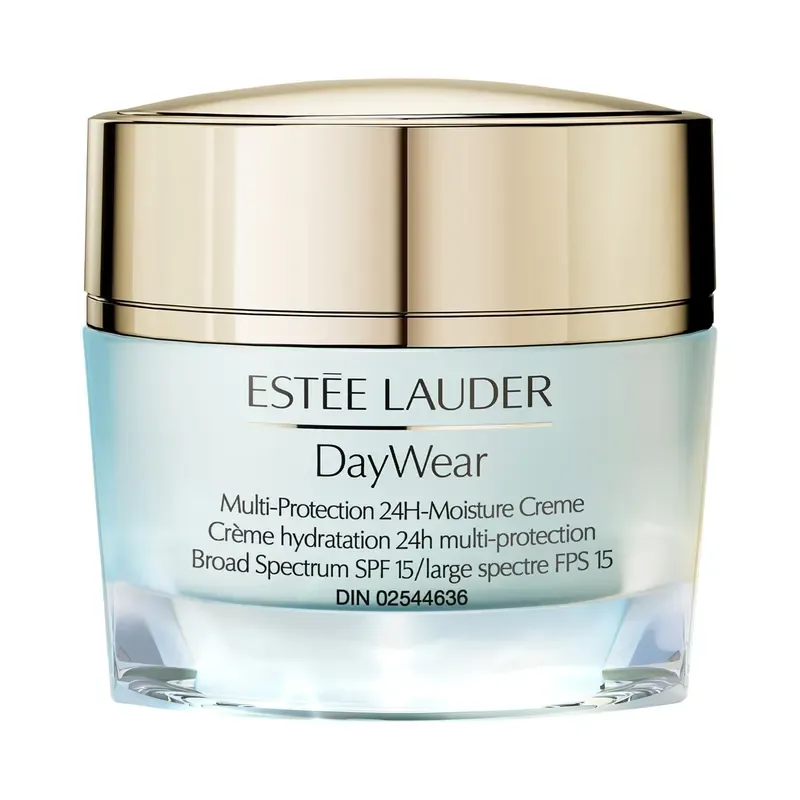
Estée Lauder DayWear Anti-Oxidant 24-Hour Moisturizer Cream SPF 15 for Normal/Combination Skin by Estée Lauder
Estée Lauder

Estée Lauder DayWear Anti-Oxidant 24-Hour Moisturizer Cream SPF 15 for Normal/Combination Skin

SunscreensSunscreen

Safety score

Pregnancy-focused assessment

Medium Risk53/100
Higher concernLower concern

This formula contains an ingredient that needs extra caution in MamaSkin's pregnancy-focused assessment.

Formula and assessment check

Ingredient safety review updated 19 May 2026. Product formulas can change, so compare the ingredients shown here with the packaging you have.

Report a formula mismatch

Ingredient breakdown

See how the listed formula falls across MamaSkin's pregnancy-focused risk bands.

65

No known risks

9

Low risk

2

Medium risk

0

High risk

Ingredients

Ingredients with a higher risk flag appear first, followed by the rest of the formula.

Butyl Methoxydibenzoylmethane

Medium Risk

Butyl methoxydibenzoylmethane (avobenzone) is a UVA filter used in sunscreens. Reviews note potential endocrine-related signals for several organic UV filters, but data are often not sufficient to establish endocrine disruption, and systemic exposure depends on formulation and use pattern. Pregnancy-specific human outcome data for topical exposure are limited; the key signal is uncertainty around systemic/endocrine effects rather than a well-defined pregnancy outcome dataset.

Sources: TGA: Safety Review of Seven Active Sunscreen Ingredients (July 2025) (includes butyl methoxydibenzoylmethane/avobenzone and endocrine discussion); Personal Care Products Council: Comprehensive review of avobenzone toxicology & human exposure (2025).

BHT

Medium Risk

BHT (butylated hydroxytoluene) is a lipophilic antioxidant used to protect oils from oxidation. Animal studies at high (primarily oral) doses show liver enzyme induction and related biochemical changes; endocrine-screening lines of evidence have also been evaluated in regulatory reviews. Pregnancy-specific human outcome data for topical cosmetic exposure are limited; the key signal is systemic toxicology at higher exposures and uncertainty for pregnancy-specific outcomes.

Sources: EU SCCS Opinion on BHT (SCCS/1636/21; sccs_o_257.pdf, 2021); CIR: Safety Assessment of BHT as used in cosmetics.

Ethylhexyl Salicylate

Low Risk

Ethylhexyl salicylate (octisalate) is a UV-B filter used in sunscreens and daily SPF products. As a salicylate ester, consumer-relevant concerns are usually local effects (stinging/irritation in sensitive skin) and rare allergic contact dermatitis/photoallergy reports. Broader endocrine-activity discussions for some UV filters exist, but signals for this ingredient are generally weak and not linked to clear pregnancy-specific outcomes from topical use. Overall, it is classed as low risk for pregnancy-focused use, with the main caution being local skin sensitivity.

Sources: CIR: Amended Safety Assessment of Salicylic Acid and Salicylates as used in cosmetics (2018/2019); EU CosIng entry; dermatology literature on salicylate UV-filter/fragrance allergy.

Show all (76)

Fragrance (Parfum)

Low Risk

An exact label variant for an undisclosed fragrance blend. Fragrance is not usually a pregnancy-specific concern at normal cosmetic levels, but the precise components and concentrations are not fully disclosed, so MamaSkin scores the umbrella term conservatively. People sensitive to fragrance may prefer fragrance-free products.

Sources: European Commission: Fragrance allergens labelling https://single-market-economy.ec.europa.eu/sectors/cosmetics/cosmetic-products-specific-topics/fragrance-allergens-labelling_en; IFRA Standards

Phenoxyethanol

Low Risk

Phenoxyethanol is a preservative permitted in EU cosmetics up to 1.0%. The SCCS concluded it is safe for cosmetic use at that level, including when considering higher cosmetic exposure scenarios in infants and young children. Main practical concern is irritation/stinging on very sensitive or compromised skin rather than a pregnancy- or breastfeeding-specific risk.

Sources: EU SCCS; EU Cosmetics Regulation (Annex V preservative limit), SCCS Opinion on Phenoxyethanol (SCCS/1575/16, 2016)

Dimethicone

Low Risk

Dimethicone is a silicone polymer used as a skin protectant and slip/conditioning agent. It is considered inert with minimal dermal absorption; the main practical issues are cosmetic (feel) and occasional irritation in very sensitive users. It is not a pregnancy-specific concern in topical cosmetic use.

Sources: CIR: Safety Assessment of Dimethicone, Methicone, and related ingredients as used in cosmetics (Methicones report; 2019/2022 update); EU CosIng entry for Dimethicone.

Polysilicone-11

Low Risk

A crosslinked silicone elastomer used as a film former and texture ingredient. Cosmetic safety reviewers concluded that Polysilicone-11 is safe in current cosmetic use. MamaSkin classifies it as low risk for consistency with the existing silicone-polymer policy and because cosmetic-grade manufacturing should control residual starting materials, rather than because of a known pregnancy-specific contraindication.

Sources: CIR: Safety Assessment of Polysilicone-11 as Used in Cosmetics https://www.cir-safety.org/supplementaldoc/safety-assessment-polysilicone-11-used-cosmetics

Polygonum Cuspidatum Root Extract

Low Risk

Polygonum cuspidatum root extract, also called Japanese knotweed root extract, is a botanical source of resveratrol, polydatin and related polyphenols. Extract composition and cosmetic concentration vary, and normal topical exposure is expected to be much lower than high-dose oral supplementation. MamaSkin applies a precautionary Low Risk classification for consistency with its existing topical resveratrol policy, not because cosmetic use is a known pregnancy contraindication.

Sources: PubMed: Polygonum cuspidatum root contains resveratrol, polydatin and emodin https://pubmed.ncbi.nlm.nih.gov/23075087/; PubMed: Polygonum cuspidatum as a concentrated resveratrol source https://pubmed.ncbi.nlm.nih.gov/29403824/; PubMed: cautionary pregnancy findings from high-dose oral resveratrol in nonhuman primates https://pubmed.ncbi.nlm.nih.gov/24563374/; PubMed: topical resveratrol delivery and skin disposition https://pubmed.ncbi.nlm.nih.gov/28389713/; existing MamaSkin resveratrol policy.

Lauryl PEG-9 Polydimethylsiloxyethyl Dimethicone

Low Risk

A high-molecular-weight silicone polyether used for emulsification, texture and conditioning. Cosmetic safety reviewers concluded that this ingredient is safe in current cosmetic use, and absorption of the intact polymer is expected to be limited. MamaSkin classifies it as low risk for consistency with its established dimethicone-family policy and because cosmetic-grade manufacturing should control residual starting materials, not because of a known pregnancy-specific contraindication.

Sources: CIR: Lauryl PEG-9 Polydimethylsiloxyethyl Dimethicone conclusion in the December 2025 Quick Reference Table https://cir-safety.org/sites/default/files/QRT-Update-Dec2025.pdf

Glycyrrhetinic Acid

Low Risk

Glycyrrhetinic Acid is a biologically active licorice-derived constituent used for soothing and skin conditioning. High oral licorice exposure is discouraged during pregnancy, but this does not establish equivalent risk from normal topical cosmetic exposure. MamaSkin applies a precautionary Low Risk classification for consistency with its existing licorice-root and glycyrrhizate policy.

Sources: CIR: Safety Assessment of Glycyrrhetinic Acid and Glycyrrhetinate ingredients https://cir-reports.cir-safety.org/view-attachment/?id=49a63435-8e74-ec11-8943-0022482f06a6; NIH ODS: Dietary Supplements and Life Stages - Pregnancy https://ods.od.nih.gov/factsheets/Pregnancy-HealthProfessional/; existing MamaSkin licorice-family policy.

Butyloctyl Salicylate

Low Risk

Butyloctyl salicylate is a salicylate ester that the CIR panel considered safe as used in cosmetics when formulated to be non-irritating. Available safety data support low dermal toxicity, and at typical cosmetic use levels the expected systemic salicylate exposure from topical application is far below oral salicylate exposure, which fits a low-risk classification.

Sources: CIR Amended Safety Assessment of Salicylic Acid and Salicylates (2019); Fiume et al., Int J Toxicol (2003).

Water/Aqua/Eau

No Known Risks

Butylene Glycol

No Known Risks

Solvent and humectant commonly used in leave-on products. Not associated with pregnancy-specific concerns at cosmetic exposure levels.

Sources: Cosmetic Ingredient Review (US); Scientific Committee on Consumer Safety (EU)

Polyester-8

No Known Risks

Cetyl Ricinoleate

No Known Risks

Steareth-21

No Known Risks

An ethoxylated fatty alcohol used mainly as an emulsifier, surfactant or solubiliser. Cosmetic safety reviewers concluded that alkyl PEG/PPG ethers are safe in current practices when formulated to be non-irritating. Manufacturing controls should limit residual ethylene oxide and 1,4-dioxane.

Sources: CIR: Safety Assessment of Alkyl PEG/PPG Ethers as Used in Cosmetics https://cir-safety.org/supplementaldoc/safety-assessment-alkyl-peg/ppg-ethers-used-cosmetics

Steareth-2

No Known Risks

An ethoxylated fatty alcohol used mainly as an emulsifier, surfactant or solubiliser. Cosmetic safety reviewers concluded that alkyl PEG/PPG ethers are safe in current practices when formulated to be non-irritating. Manufacturing controls should limit residual ethylene oxide and 1,4-dioxane.

Sources: CIR: Safety Assessment of Alkyl PEG/PPG Ethers as Used in Cosmetics https://cir-safety.org/supplementaldoc/safety-assessment-alkyl-peg/ppg-ethers-used-cosmetics

Di-C12-15 Alkyl Fumarate

No Known Risks

Caprylic/Capric/Myristic/Stearic Triglyceride

No Known Risks

Psidium Guajava (Guava) Fruit Extract

No Known Risks

Gentiana Lutea (Gentian) Root Extract

No Known Risks

Stearyl Alcohol

No Known Risks

Fatty alcohol used as an emollient and stabiliser. Not associated with pregnancy-specific concerns at cosmetic exposure.

Sources: Cosmetic Ingredient Review (US); Scientific Committee on Consumer Safety (EU)

Hordeum Vulgare (Barley) Extract/Extrait D'Orge

No Known Risks

Laminaria Ochroleuca Extract

No Known Risks

An algae- or seaweed-derived ingredient used for skin conditioning, moisturising or texture support. Composition and trace mineral content vary by source. No pregnancy-specific hazard was identified for normal topical cosmetic exposure; this does not assess oral seaweed supplements.

Sources: CIR: Safety Assessment of Brown Algae-Derived Ingredients as Used in Cosmetics; European Commission CosIng ingredient inventory; relevant algal cosmetic-ingredient literature.

Rosmarinus Officinalis (Rosemary) Leaf Extract

No Known Risks

A rosemary leaf extract used mainly for skin conditioning and antioxidant support. Cosmetic safety reviewers concluded that rosemary leaf extract is safe at the reviewed cosmetic use levels when formulated to be non-sensitising. It is distinct from concentrated rosemary essential oil, and botanical allergy remains possible.

Sources: CIR: Safety Assessment of Rosmarinus officinalis (Rosemary)-Derived Ingredients as Used in Cosmetics https://www.cir-safety.org/sites/default/files/rosmarinus_2.pdf

Triticum Vulgare (Wheat) Germ Extract

No Known Risks

Artemia Extract

No Known Risks

Fumaria Officinalis Flower/Leaf/Stem Extract

No Known Risks

Caffeine

No Known Risks

Methylxanthine used in cosmetics (e.g., de-puffing/firming and antioxidant support). No pregnancy-specific contraindications are identified for topical cosmetic use.

Sources: CIR (Methylxanthines); PubMed (NLM)

Pentylene Glycol

No Known Risks

Humectant and preservative booster. Considered safe for cosmetic use with low systemic exposure.

Sources: Cosmetic Ingredient Review (US); Scientific Committee on Consumer Safety (EU)

Citrus Medica Limonum (Lemon) Fruit Extract

No Known Risks

Hydrolyzed Rice Extract

No Known Risks

Vitis Vinifera (Grape) Seed Extract

No Known Risks

Hydrolyzed Rice Bran Extract

No Known Risks

Thermus Thermophillus Ferment

No Known Risks

Behenyl Alcohol

No Known Risks

Long-chain fatty alcohol used as an emollient and thickener. This is not the same concern profile as simple drying alcohols; reviewed cosmetic safety sources support normal topical use.

Sources: CIR: Final Report on the Safety Assessment of Cetearyl Alcohol, Cetyl Alcohol, Isostearyl Alcohol, Myristyl Alcohol, and Behenyl Alcohol; EU CosIng / cosmetics regulatory inventory

Acrylic Acid/VP Crosspolymer

No Known Risks

Triacontanyl PVP

No Known Risks

Glycerin

No Known Risks

Glycerin is a widely used humectant that supports hydration and the skin barrier, with a long safety record and no known pregnancy or breastfeeding concerns in topical cosmetic use.

Sources: CIR; EU/UK Cosmetics Regulation

C12-15 Alkyl Benzoate

No Known Risks

Alkyl benzoate emollient used in cosmetics; available cosmetic safety assessments do not indicate pregnancy-specific concerns with routine topical use.

Sources: CIR Safety Assessment of Alkyl Benzoates (2012); CIR alkyl benzoates dossier / C12-15 alkyl benzoate data.

Linoleic Acid

No Known Risks

This naturally occurring fatty acid is used for emolliency, cleansing support or texture. The Cosmetic Ingredient Review concluded that assessed fatty acids are safe in current cosmetic use when formulated to be non-irritating and non-sensitizing; some can increase penetration of other formula ingredients.

Sources: CIR: Safety Assessment of Fatty Acids and Fatty Acid Salts as Used in Cosmetics https://cir-safety.org/supplementaldoc/safety-assessment-fatty-acids-fatty-acid-salts-used-cosmetic

Cholesterol

No Known Risks

Skin-conditioning lipid used in barrier-support formulas, often alongside ceramides and fatty acids. Normal topical cosmetic use has no known pregnancy- or breastfeeding-specific concern identified in reviewed cosmetic references.

Sources: CIR cosmetic ingredient safety references for cholesterol and related sterols; EU CosIng / cosmetics regulatory inventory

Squalane

No Known Risks

Lightweight emollient used to support the skin barrier. Not associated with pregnancy-specific concerns at cosmetic exposure levels.

Sources: Cosmetic Ingredient Review (US); Scientific Committee on Consumer Safety (EU)

Sodium PCA

No Known Risks

Natural-moisturising-factor humectant that helps bind water in the stratum corneum. Reviewed cosmetic safety sources support normal topical use, with no pregnancy- or breastfeeding-specific topical signal identified in the material reviewed.

Sources: CIR: Safety Assessment of PCA and Its Salts as Used in Cosmetics; EU CosIng / cosmetics regulatory inventory

1,2-Hexanediol

No Known Risks

1,2-Hexanediol is commonly used as a solvent and preservative booster; topical exposure is low and it has no known pregnancy or breastfeeding concerns at cosmetic concentrations, though very sensitive skin may occasionally react.

Sources: CIR; EU/UK Cosmetics Regulation

Urea

No Known Risks

A naturally occurring component of skin moisturizing factors, used in cosmetics as a humectant and at higher concentrations as a keratolytic. Ordinary cosmetic use does not identify a pregnancy-specific concern. Higher-strength products may sting or irritate damaged skin. Urea itself is distinct from formaldehyde-releasing preservatives such as imidazolidinyl urea and diazolidinyl urea.

Sources: CIR ingredient record: Urea https://cir-safety.org/ingredient/urea; EU CosIng cosmetic ingredient inventory: Urea

Caprylic/Capric Triglyceride

No Known Risks

Common emollient derived from fatty acids and glycerin. Used to soften skin and improve texture without pregnancy-specific concerns.

Sources: Cosmetic Ingredient Review (US); Scientific Committee on Consumer Safety (EU)

Dipropylene Glycol Dibenzoate

No Known Risks

Tocopheryl Acetate

No Known Risks

Tocopheryl acetate (vitamin E derivative) is used as an antioxidant and skin-conditioning ingredient; it is considered low concern in topical use with no known pregnancy or breastfeeding risks at cosmetic concentrations.

Sources: CIR; EU/UK Cosmetics Regulation

Acrylamide/Sodium Acryloyldimethyltaurate Copolymer

No Known Risks

A high-molecular-weight polymer used to thicken and stabilise formulas. Cosmetic safety reviewers concluded that acryloyldimethyltaurate polymers are safe in current practices. Residual monomers should be controlled during manufacture.

Sources: CIR: Acryloyldimethyltaurate Polymers final assessment, April 2017; December 2025 Quick Reference Table https://cir-safety.org/sites/default/files/QRT-Update-Dec2025.pdf

Tetrahexyldecyl Ascorbate

No Known Risks

A lipid-soluble ester of vitamin C used as an antioxidant and skin-conditioning ingredient. The Cosmetic Ingredient Review concluded that tetrahexyldecyl ascorbate is safe in current cosmetic use, with no pregnancy- or breastfeeding-specific concern identified for normal topical exposure.

Sources: CIR: Safety Assessment of Ethers and Esters of Ascorbic Acid https://www.cir-safety.org/supplementaldoc/safety-assessment-ethers-and-esters-ascorbic-acid-used-cosmetics-0

Sodium Hyaluronate

No Known Risks

Sodium hyaluronate (hyaluronic acid salt) is used for hydration and cushioning, with very low systemic absorption from topical use and no known pregnancy or breastfeeding concerns at cosmetic concentrations.

Sources: CIR; EU/UK Cosmetics Regulation

Ergothioneine

No Known Risks

A naturally occurring small molecule used for antioxidant, conditioning or cellular-energy support in cosmetics. Creatine and ergothioneine occur in human or dietary biology, and no pregnancy-specific hazard signal was identified for the much smaller exposure expected from normal topical cosmetic use. This classification does not assess concentrated oral supplements.

Sources: European Commission CosIng ingredient inventory; PubMed literature on topical Creatine and Ergothioneine, dermal delivery and cosmetic use; ECHA substance information where available.

Isohexadecane

No Known Risks

Low-viscosity isoparaffin emollient used for slip and lightweight texture. Reviewed cosmetic safety sources support normal topical use, with no pregnancy- or breastfeeding-specific topical signal identified in the material reviewed.

Sources: CIR: Safety Assessment of Isoparaffins as Used in Cosmetics / CIR Quick Reference Table (Isohexadecane); EU CosIng / cosmetics regulatory inventory

PPG-15 Stearyl Ether Benzoate

No Known Risks

Trehalose

No Known Risks

Sugar-derived humectant used to help bind water and improve skin feel. Reviewed cosmetic ingredient references do not identify a pregnancy- or breastfeeding-specific concern for normal topical cosmetic use.

Sources: CIR: Safety Assessment of Monosaccharides, Disaccharides, and Related Ingredients as Used in Cosmetics; EU CosIng / cosmetics regulatory inventory

Polyquaternium-51

No Known Risks

A large phosphorylcholine-containing conditioning polymer. Cosmetic safety reviewers concluded that acryloyloxyethyl phosphorylcholine polymers, including polyquaternium-51, are safe in current practices. Available testing did not indicate sensitisation, and dermal absorption of the finished polymer is expected to be limited.

Sources: CIR: Safety Assessment of Acryloyloxyethyl Phosphorylcholine Polymers as Used in Cosmetics https://www.cir-safety.org/sites/default/files/FR_AcryloyloxyethylPhosphorylcholinePolymers_062022.pdf

Polysorbate 80

No Known Risks

Nonionic emulsifier and solubilizer used to disperse oils in cosmetic formulas. Reviewed cosmetic safety sources support normal topical use, with no pregnancy- or breastfeeding-specific topical signal identified.

Sources: CIR: Safety Assessment of Polysorbates as Used in Cosmetics; EU CosIng / cosmetics regulatory inventory

Lecithin

No Known Risks

Emulsifier and skin-conditioning ingredient composed of phospholipids. Not associated with pregnancy-specific concerns.

Sources: Cosmetic Ingredient Review (US)

Hydrogenated Lecithin

No Known Risks

Hydrogenated emulsifier used to support skin barrier feel. Not associated with pregnancy-specific concerns.

Sources: Cosmetic Ingredient Review (US)

Fumaric Acid

No Known Risks

Palmitoyl Hydroxypropyltrimonium Amylopectin/Glycerin Crosspolymer

No Known Risks

Caprylyl Glycol

No Known Risks

Humectant and preservative booster used to support product stability. Low systemic exposure expected from topical cosmetic use.

Sources: Scientific Committee on Consumer Safety (EU); Cosmetic Ingredient Review (US)

Cyclodextrin

No Known Risks

A plant-derived carbohydrate polymer or modified starch used to thicken, stabilise or condition a formula. Cosmetic safety reviewers concluded that the supported plant polysaccharide gums and derivatives are safe in current practices of use and concentration. Loose powders should still be used without deliberately inhaling airborne particles.

Sources: CIR: Safety Assessment of Plant Polysaccharide Gums as Used in Cosmetics https://www.cir-safety.org/panelbook/safety-assessment-plant-polysaccharide-gums-used-cosmetics

Sodium Hydroxide

No Known Risks

pH adjuster used in very small quantities to balance formulations. Not associated with pregnancy-specific concerns.

Sources: Scientific Committee on Consumer Safety (EU); European cosmetics regulatory framework

Nordihydroguaiaretic Acid

No Known Risks

Sodium Chloride

No Known Risks

Sodium chloride is used to adjust viscosity and texture in formulations; topical cosmetic use is considered low concern with no known pregnancy or breastfeeding risks.

Sources: CIR; EU/UK Cosmetics Regulation

Ascorbyl Tocopheryl Maleate

No Known Risks

Citric Acid

No Known Risks

pH adjuster used in small amounts to maintain product stability. Not associated with pregnancy-specific concerns.

Sources: Scientific Committee on Consumer Safety (EU); European cosmetics regulatory framework

Ethylbisiminomethylguaiacol Manganese Chloride

No Known Risks

Pentaerythrityl Tetra-Di-T-Butyl Hydroxyhydrocinnamate

No Known Risks

Antioxidant and stabilizer used to protect cosmetic formulas from oxidation. Reviewed cosmetic ingredient references do not identify a pregnancy- or breastfeeding-specific concern for normal topical cosmetic use.

Sources: CIR cosmetic ingredient safety references for hindered phenolic antioxidants; EU CosIng / cosmetics regulatory inventory

Disodium EDTA

No Known Risks

Disodium EDTA is a chelating agent used to improve formula stability and performance; it is considered low concern in topical cosmetic use, with no known pregnancy or breastfeeding risks at typical concentrations.

Sources: CIR; EU/UK Cosmetics Regulation

Sodium Dehydroacetate

No Known Risks

A preservative used at low concentrations to keep cosmetic formulas microbiologically stable. Cosmetic safety reviewers concluded that sodium dehydroacetate is safe in current cosmetic use and reaffirmed that conclusion in 2023 after reviewing updated exposure and safety information. Rare contact hypersensitivity has been reported, but no pregnancy-specific concern is identified for normal topical cosmetic exposure.

Sources: CIR: 2023 Re-Review Summary for Sodium Dehydroacetate and Dehydroacetic Acid https://www.cir-safety.org/sites/default/files/RRsum_SodiumDehydroacetate_122023.pdf

Blue 1 (CI 42090)

No Known Risks

Yellow 5 (CI 19140)

No Known Risks

A Colour Index or lake name for a regulated cosmetic colour additive. Permitted product areas differ by colour, and certified colours must meet applicable identity, purity, batch-certification and use requirements. No pregnancy-specific concern was identified for compliant topical cosmetic use.

Sources: FDA: Regulatory Status of Color Additives https://hfpappexternal.fda.gov/scripts/fdcc/index.cfm?set=ColorAdditives; FDA: Color Additives Permitted for Use in Cosmetics https://www.fda.gov/cosmetics/cosmetic-ingredient-names/color-additives-permitted-use-cosmetics; 21 CFR Parts 73, 74 and 82.

Chromium Hydroxide Green (CI 77289).

No Known Risks

Formulations can change without notice. For the most accurate result, compare this list with your packaging and scan the exact ingredient label in MamaSkin when you repurchase.

How to use this assessment

The risk band is the primary conclusion. The score adds detail within that band and should not be used to compare products as if a one-point difference were clinically meaningful.

MamaSkin provides pregnancy-focused information, not medical advice. Your midwife, GP, pharmacist or dermatologist should take priority when your circumstances differ from typical cosmetic use.

Read the full methodology