Glow Recipe
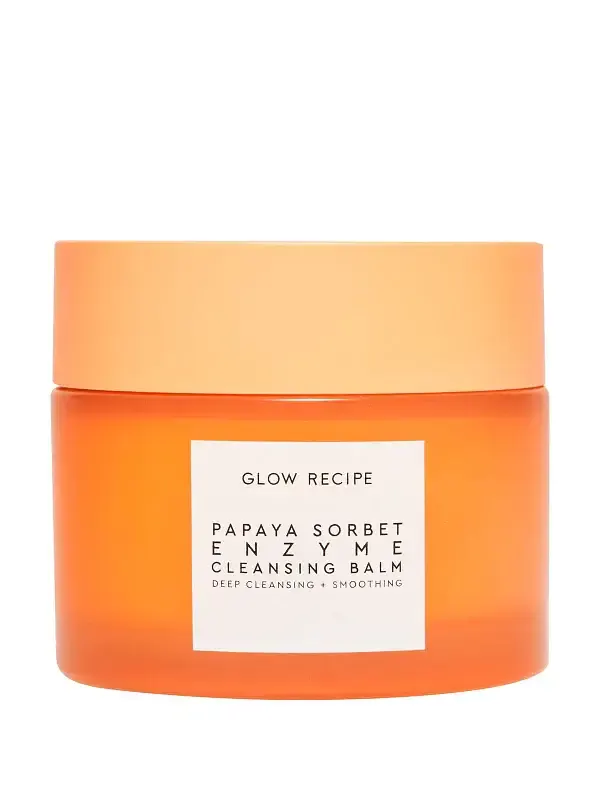
Glow Recipe Papaya Sorbet Smoothing Enzyme Cleansing Balm
No known risks99/100

Toners
Some ingredients carry a low-risk flag. Read the formulation context before deciding.
21 of 22 ingredients rated1 not assessed
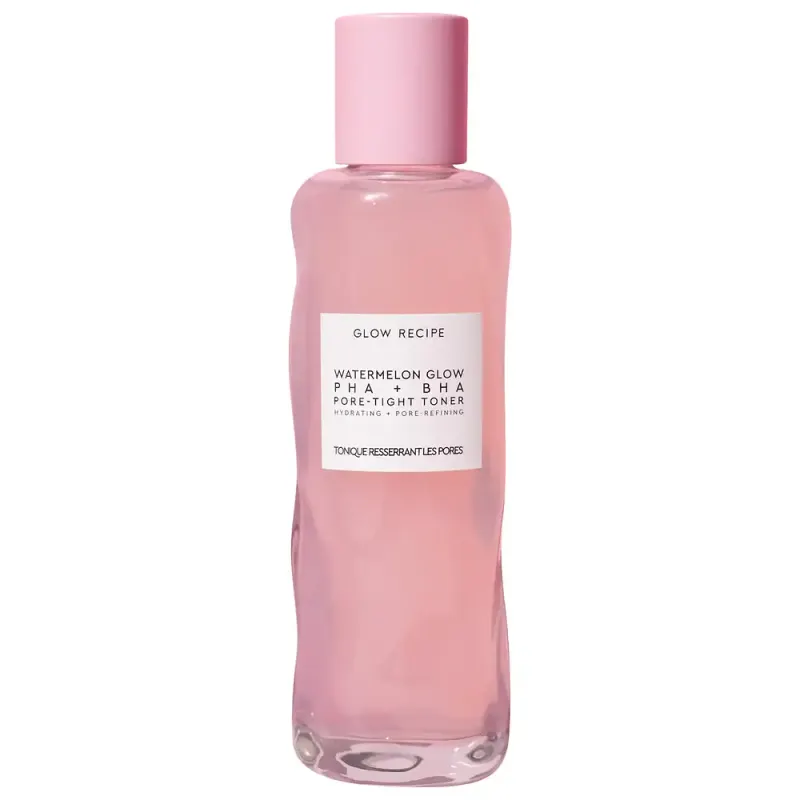
MamaSkin rates the recorded formula for Glow Recipe Watermelon Glow PHA +BHA Pore-Tight Toner as Low risk (71/100). Review the ingredient context and any manual-review explanation before deciding.
The recorded formula includes 5 ingredient entries with risk flags: Gluconolactone (Low risk), Betaine Salicylate (Low risk), Salix Alba Bark Extract (Low risk), plus others listed in the breakdown. These are ingredient-level flags; they do not replace the stored product assessment or account for every formulation detail.
21 of 22 ingredient entries on this page have a recorded score, evidence summary and source text. 1 entry does not have all of those fields. Unmatched or unrated entries are marked Not assessed in grey; missing evidence does not establish safety.
How we assess productsThe recorded formula, with evidence behind each rating. Unmatched ingredients are marked Not assessed in grey.
Umbrella term for an undisclosed fragrance blend. It’s not usually a pregnancy-specific concern at normal cosmetic use levels, but the exact components and concentrations aren’t fully disclosed on the label, so we score it more conservatively. If you prefer maximum transparency (or you’re sensitive to fragrance compounds), choose fragrance-free/unscented products.
Sources: SCCS: Fragrance allergens in cosmetic products https://health.ec.europa.eu/latest-updates/sccs-new-opinion-fragrance-allergens-cosmetic-products-2012-07-31_en
Polyhydroxy acid (PHA) used as a gentle exfoliant/humectant; generally less irritating than AHAs due to lower penetration. Considered safe as used in cosmetics, with no pregnancy-specific contraindications identified at topical cosmetic concentrations.
Sources: MotherToBaby: Topical acne treatments in pregnancy and breastfeeding https://www.ncbi.nlm.nih.gov/books/NBK582985/
Ester form of salicylic acid; hydrolyses to SA, low-strength topical use shows negligible systemic absorption - chemical peels ≥30 % should be avoided.
Sources: MotherToBaby: Topical acne treatments including salicylic acid https://www.ncbi.nlm.nih.gov/books/NBK582985/
Willow bark is a salicin-containing botanical material. Its composition and delivered salicylate exposure vary by species, plant part, extraction method and concentration, so a cosmetic extract should not be treated as dose-equivalent to a stated concentration of salicylic acid. MamaSkin retains Low Risk as a conservative family policy for ordinary topical cosmetic use; this does not cover oral willow-bark medicines, concentrated preparations, large-area use or salicylate allergy.
Sources: EMA/HMPC: Salicis cortex assessment and monograph materials https://www.ema.europa.eu/en/medicines/herbal/salicis-cortex; CIR 2026 review materials for Salix alba-derived cosmetic ingredients https://www.cir-safety.org/panelbook/safety-assessment-salix-alba-willow-derived-ingredients-used-cosmetics
Pregnancy concerns around licorice are based mainly on high oral glycyrrhizin intake, which has been linked to shorter gestation and cortisol-related effects in offspring; by contrast, licorice root extracts have been assessed as safe as used in cosmetics, so routine topical skincare exposure fits a cautious low-risk classification.
Sources: CIR: Cosmetic safety assessment covering Glycyrrhiza glabra-derived ingredients https://cir-reports.cir-safety.org/view-attachment/?id=49a63435-8e74-ec11-8943-0022482f06a6
No matched ingredient rating is available yet. Not assessed does not mean safe or unsafe.
opuntia ficus-indica extract is a botanical-derived cosmetic conditioning ingredient. The reviewed identity is not a concentrated essential oil or an oral herbal preparation. Available cosmetic evidence and expected topical exposure did not identify a pregnancy-specific contraindication, although botanical irritation or allergy remains possible.
Sources: CIR ingredient-specific and botanical-family safety assessments; CIR Quick Reference Table https://www.cir-safety.org/supplementaldoc/quick-reference-table-december-2025; European Commission CosIng
A fruit, seed or food-plant extract used for skin conditioning and antioxidant support. No pregnancy-specific signal was identified for the low topical exposure expected from a finished cosmetic. Direct pregnancy studies are generally unavailable, and botanical allergy remains possible.
Sources: European Commission CosIng ingredient inventory; CIR botanical safety framework and relevant fruit-derived ingredient assessments; peer-reviewed cosmetic and phytochemical literature for the named plants.
Glycerin is a widely used humectant that supports hydration and the skin barrier, with a long safety record and no known pregnancy or breastfeeding concerns in topical cosmetic use.
Sources: CIR; EU/UK Cosmetics Regulation
High-water-binding humectant used to support hydration at the skin surface. Reviewed cosmetic safety sources support normal topical use, with no pregnancy- or breastfeeding-specific topical signal identified in the material reviewed.
Sources: CIR: Safety Assessment of Hyaluronates as Used in Cosmetics; EU CosIng / cosmetics regulatory inventory
A high-molecular-weight glutamic-acid polymer salt used as a humectant and skin conditioner. Its molecular size limits meaningful skin penetration. No reproductive or developmental concern was identified for normal topical cosmetic exposure.
Sources: European Commission CosIng ingredient inventory; peer-reviewed cosmetic literature on polyglutamic acid and sodium polyglutamate.
A tea-tree leaf extract used for skin conditioning and antimicrobial support. Cosmetic safety reviewers concluded that the assessed Melaleuca alternifolia-derived ingredients are safe in current practices when formulated to be non-sensitising. This leaf extract is distinct from concentrated tea-tree essential oil, although botanical allergy remains possible.
Sources: CIR: Safety Assessment of Melaleuca alternifolia-Derived Ingredients as Used in Cosmetics https://cir-reports.cir-safety.org/view-attachment/?id=e1f5b6e9-8c74-ec11-8943-0022482f06a6
A plant-part extract used for skin conditioning, soothing, fragrance or antioxidant support. No pregnancy-specific systemic signal was identified for normal topical cosmetic exposure. This assessment does not extend to essential oils, oral herbal products or medicinal doses, and botanical sensitivity remains possible.
Sources: European Commission CosIng ingredient inventory; CIR botanical safety framework and relevant plant-derived ingredient assessments; peer-reviewed cosmetic-use literature.
A cucumber fruit extract used for skin conditioning. Cosmetic safety reviewers concluded that Cucumis sativus-derived ingredients are safe in current cosmetic practices of use and concentration when formulated to avoid sensitisation. No pregnancy-specific concern was identified for normal topical cosmetic exposure, although irritation or allergy to a botanical-containing formula remains possible.
Sources: CIR: Final Safety Assessment of Cucumis sativus (Cucumber)-Derived Ingredients https://cir-safety.org/supplementaldoc/final-safety-assessment-cucumis-sativus-cucumber-derived-ingredients
A sugarcane extract used for skin conditioning and moisturising. Cosmetic safety reviewers concluded that Saccharum officinarum extract is safe in current cosmetic practices of use and concentration. It is not the same as a formulated high-strength alpha-hydroxy-acid peel, and no pregnancy-specific concern was identified for normal topical cosmetic exposure.
Sources: CIR: Safety Assessment of Saccharum officinarum (Sugarcane)-Derived Ingredients as Used in Cosmetics https://www.cir-safety.org/supplementaldoc/safety-assessment-saccharum-officinarum-sugarcane-derived-ingredients-used-cosmetics
A Chinese skullcap root extract used for skin conditioning and antioxidant effects. Cosmetic safety reviewers concluded that the root extract is safe in current practices of use and concentration; this conclusion does not extend to the generic whole-plant or sprout extracts, for which evidence was insufficient. No pregnancy-specific concern was identified for normal topical cosmetic exposure.
Sources: CIR: Safety Assessment of Scutellaria baicalensis-Derived Ingredients as Used in Cosmetics https://cir-reports.cir-safety.org/view-attachment/?id=12155820-bce2-80f8-bd06-353ba20e5877
A tree-peony root extract used for skin conditioning and antioxidant support. No pregnancy- or breastfeeding-specific hazard was identified for normal topical cosmetic exposure. Direct ingredient-specific pregnancy studies were not identified, so this assessment does not extend to oral supplements or medicinal use.
Sources: European Commission CosIng ingredient inventory; Cosmetic Ingredient Review botanical safety-assessment framework and relevant ingredient-family assessments. No ingredient-specific human pregnancy study of normal topical cosmetic use was identified.
A botanical extract, plant water or plant juice used for conditioning, soothing or antioxidant support. Direct pregnancy studies of this exact cosmetic material were not identified, but no reproductive or developmental hazard was identified for normal topical exposure. Oral herbal or medicinal use is outside this classification.
Sources: European Commission CosIng ingredient inventory; CIR botanical safety framework and relevant plant-derived ingredient assessments; no ingredient-specific human pregnancy study of normal topical cosmetic use was identified.
ipomoea batatas root extract is a defined, non-essential-oil botanical cosmetic ingredient. The reviewed identity and expected topical exposure did not identify a pregnancy-specific contraindication. Cosmetic-grade purity remains important, and botanical irritation or allergy is still possible.
Sources: CIR ingredient-specific and botanical-family assessments; CIR Quick Reference Table https://www.cir-safety.org/supplementaldoc/quick-reference-table-december-2025; European Commission CosIng ingredient inventory.
This sorbitan fatty-acid ester is an emulsifier that helps oil and water phases remain mixed. The Cosmetic Ingredient Review concluded that sorbitan esters are safe in current cosmetic use; occasional contact reactions remain possible in sensitive users.
Sources: CIR: Safety Assessment of Sorbitan Esters as Used in Cosmetics https://www.cir-safety.org/supplementaldoc/safety-assessment-sorbitan-esters-used-cosmetics
An organic acid used for pH adjustment, fragrance or preservative support. Cosmetic safety reviewers concluded that levulinic acid and its salts are safe in current cosmetic practices.
Sources: CIR: Levulinic Acid and salts conclusion, IJT 44(Suppl. 3), 2025; December 2025 Quick Reference Table https://cir-safety.org/sites/default/files/QRT-Update-Dec2025.pdf
The sodium salt of levulinic acid, used for skin conditioning and formulation support and often as part of a preservation system. Cosmetic safety reviewers concluded that sodium levulinate is safe in current cosmetic use when formulated to be non-irritating. Cosmetic exposure is low compared with established food-related exposure, and no pregnancy-specific concern is identified for normal topical use.
Sources: CIR: September 2021 Final Report announcement for Levulinic Acid and Sodium Levulinate https://cir-safety.org/sites/default/files/PMA_Sep2021_final.pdf
Opuntia Ficus-Indica Extract, Citrullus Lanatus Fruit Extract, Glycerin, Hyaluronic Acid, Gluconolactone, Sodium Polyglutamate, Betaine Salicylate, Salix Alba Bark Extract, Melaleuca Alternifolia Leaf Extract, Hibiscus Sabdariffa Flower Extract, Lactobacillus/Watermelon Fruit Ferment Extract, Cucumis Sativus Fruit Extract, Saccharum Officinarum Extract, Glycyrrhiza Glabra Root Extract, Scutellaria Baicalensis Root Extract, Paeonia Suffruticosa Root Extract, Brassica Oleracea Capitata Leaf Extract, Ipomoea Batatas Root Extract, Sorbitan Oleate, Levulinic Acid, Sodium Levulinate, Parfum
Ingredient ratings refreshed 1 October 2026. Formulas vary by market and can change. Always compare with your packaging.
The recorded formula includes 5 ingredient entries with risk flags: Gluconolactone (Low risk), Betaine Salicylate (Low risk), Salix Alba Bark Extract (Low risk), plus others listed in the breakdown. These are ingredient-level flags; they do not replace the stored product assessment or account for every formulation detail. Incomplete ingredient documentation does not establish safety; see the coverage answer and grey entries below.
21 of 22 ingredient entries on this page have a recorded score, evidence summary and source text. 1 entry does not have all of those fields. Unmatched or unrated entries are marked Not assessed in grey; missing evidence does not establish safety.
Only if the ingredient list on your packaging matches the recorded formula shown here. Formulas can differ by market and change over time. Compare the full list, not just the product name; report a mismatch if it differs.
No. This page presents a pregnancy-focused product assessment. Do not infer a breastfeeding conclusion from its score or label; breastfeeding requires a separate assessment of the formula and how it is used.