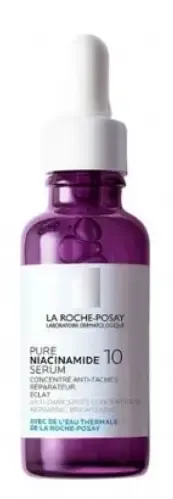
La Roche-Posay 10% Pure Niacinamide Serum by La Roche-Posay
La Roche-Posay

La Roche-Posay 10% Pure Niacinamide Serum

Serums

Safety score

Pregnancy-focused assessment

Low Risk74/100
Higher concernLower concern

One or more ingredients have a low-risk flag in MamaSkin's current assessment. Review the notes and your own circumstances.

Formula and assessment check

Ingredient safety review updated 24 November 2025. Product formulas can change, so compare the ingredients shown here with the packaging you have.

Report a formula mismatch

Ingredient breakdown

See how the listed formula falls across MamaSkin's pregnancy-focused risk bands.

26

No known risks

3

Low risk

0

Medium risk

0

High risk

Ingredients

Ingredients with a higher risk flag appear first, followed by the rest of the formula.

Phenoxyethanol

Low Risk

Phenoxyethanol is a preservative permitted in EU cosmetics up to 1.0%. The SCCS concluded it is safe for cosmetic use at that level, including when considering higher cosmetic exposure scenarios in infants and young children. Main practical concern is irritation/stinging on very sensitive or compromised skin rather than a pregnancy- or breastfeeding-specific risk.

Sources: SCCS/1575/16: Phenoxyethanol opinion https://health.ec.europa.eu/publications/phenoxyethanol_en
Parfum

Low Risk

Umbrella term for an undisclosed fragrance blend. It’s not usually a pregnancy-specific concern at normal cosmetic use levels, but the exact components and concentrations aren’t fully disclosed on the label, so we score it more conservatively. If you prefer maximum transparency (or you’re sensitive to fragrance compounds), choose fragrance-free/unscented products.

Sources: SCCS: Fragrance allergens in cosmetic products https://health.ec.europa.eu/latest-updates/sccs-new-opinion-fragrance-allergens-cosmetic-products-2012-07-31_en

Dimethicone

Low Risk

Dimethicone is a silicone polymer used as a skin protectant and slip/conditioning agent. It is considered inert with minimal dermal absorption; the main practical issues are cosmetic (feel) and occasional irritation in very sensitive users. It is not a pregnancy-specific concern in topical cosmetic use.

Sources: CIR: Amended Safety Assessment of Dimethicone, Methicone, and Substituted-Methicone Polymers as Used in Cosmetics https://cir-safety.org/supplementaldoc/amended-safety-assessment-dimethicone-methicone-and-substituted-methicone-polymers-2

Show all (29)

Water

No Known Risks

Niacinamide

No Known Risks

Niacinamide (vitamin B3) is widely used for barrier support and tone/texture benefits, and is generally considered safe in pregnancy and breastfeeding when used topically at cosmetic concentrations.

Sources: CIR; EU/UK Cosmetics Regulation

Glycerin

No Known Risks

Glycerin is a widely used humectant that supports hydration and the skin barrier, with a long safety record and no known pregnancy or breastfeeding concerns in topical cosmetic use.

Sources: CIR; EU/UK Cosmetics Regulation

Alcohol Denat.

No Known Risks

Volatile solvent used to improve texture, drying time, and penetration in some formulas. Reviewed cosmetic safety sources support current cosmetic use, with no pregnancy- or breastfeeding-specific topical concern identified in the material reviewed; the main practical issue is dryness, stinging, or barrier disruption in some users.

Sources: CIR: Safety Assessment of SD Alcohol 40, Benzyl Alcohol, and Denatured Alcohol in Cosmetic Products; EU CosIng / cosmetics regulatory inventory

Hydroxyethylpiperazine Ethane Sulfonic Acid

No Known Risks

HEPES is a zwitterionic pH buffer. Its function and expected topical exposure do not indicate a reproductive or developmental concern in normal cosmetic use.

Sources: European Commission CosIng; peer-reviewed biochemical literature on HEPES.

Isopropyl Lauroyl Sarcosinate

No Known Risks

A cosmetic functional ingredient used for conditioning, texture or formula support. Available cosmetic-use information did not identify a reproductive or developmental hazard from normal topical exposure.

Sources: European Commission CosIng ingredient inventory; relevant CIR cosmetic safety assessments and peer-reviewed cosmetic-use literature.

Octyldodecanol

No Known Risks

Fatty alcohol emollient used to improve spreadability and reduce drag. Reviewed cosmetic safety sources support normal topical use, with no pregnancy- or breastfeeding-specific topical signal identified in the material reviewed.

Sources: CIR ingredient status / report data sheet for Octyldodecanol; EU CosIng / cosmetics regulatory inventory

PEG-20 Methyl Glucose Sesquistearate

No Known Risks

peg-20 methyl glucose sesquistearate is used as a cosmetic surfactant, emulsifier or conditioning agent. Relevant cosmetic-safety assessments support use when formulated to be non-irritating and with appropriate impurity controls. Local skin or eye irritation is possible at higher concentrations, but no pregnancy-specific concern was identified for normal topical or rinse-off use.

Sources: CIR safety assessments of alkyl PEG ethers, N-acyl taurates, fatty amidopropyl amines and related cosmetic surfactants https://www.cir-safety.org/sites/default/files/taurat122015FR.pdf; CIR Quick Reference Table https://cir-safety.org/sites/default/files/QRT-Update-Dec2025.pdf

Tin Oxide

No Known Risks

Mineral ingredient used in some cosmetics to enhance shimmer/opacity. For typical topical use, dermal absorption is very low and it is generally considered acceptable in pregnancy and breastfeeding. If you prefer a cautious approach, avoid inhaling loose powders or sprays.

Sources: General cosmetic ingredient safety references for inert minerals; exposure route considerations for powders/sprays.

Sorbitan Oleate

No Known Risks

This sorbitan fatty-acid ester is an emulsifier that helps oil and water phases remain mixed. The Cosmetic Ingredient Review concluded that sorbitan esters are safe in current cosmetic use; occasional contact reactions remain possible in sensitive users.

Sources: CIR: Safety Assessment of Sorbitan Esters as Used in Cosmetics https://www.cir-safety.org/supplementaldoc/safety-assessment-sorbitan-esters-used-cosmetics

Dimethiconol

No Known Risks

A high-molecular-weight silicone polymer used for film forming, smoothing and skin or hair conditioning. The Cosmetic Ingredient Review concluded that Dimethiconol and its assessed derivatives are safe in current cosmetic use. Its polymeric nature limits skin penetration, and available evidence does not identify a pregnancy- or breastfeeding-specific concern for normal topical exposure.

Sources: CIR: Safety Assessment of Dimethiconol and its Esters and Reaction Products; International Journal of Toxicology 36(Suppl. 3):31-50 (2017) https://cir-safety.org/ingredient/dimethiconol

Cetearyl Ethylhexanoate

No Known Risks

A branched fatty-acid ester used as a lightweight emollient and texture agent. Cosmetic safety reviewers concluded that alkyl ethylhexanoates, including cetearyl ethylhexanoate, are safe in current practices when formulated to be non-irritating. No pregnancy-specific concern was identified for normal topical use.

Sources: CIR: Amended Safety Assessment of Alkyl Ethylhexanoates as Used in Cosmetics https://www.cir-safety.org/supplementaldoc/amended-safety-assessment-alkyl-ethylhexanoates-used-cosmetics

Isohexadecane

No Known Risks

Low-viscosity isoparaffin emollient used for slip and lightweight texture. Reviewed cosmetic safety sources support normal topical use, with no pregnancy- or breastfeeding-specific topical signal identified in the material reviewed.

Sources: CIR: Safety Assessment of Isoparaffins as Used in Cosmetics / CIR Quick Reference Table (Isohexadecane); EU CosIng / cosmetics regulatory inventory

Sodium Hyaluronate

No Known Risks

Sodium hyaluronate (hyaluronic acid salt) is used for hydration and cushioning, with very low systemic absorption from topical use and no known pregnancy or breastfeeding concerns at cosmetic concentrations.

Sources: CIR; EU/UK Cosmetics Regulation

Phenylethyl Resorcinol

No Known Risks

Phenylethyl resorcinol is a synthetic antioxidant and skin-brightening ingredient. Direct pregnancy studies of normal topical cosmetic use were not identified, but the reviewed cosmetic and toxicological literature did not establish a reproductive or developmental hazard at normal topical exposure. Irritation or sensitisation remains a general individual possibility.

Sources: European Commission CosIng; published cosmetic efficacy and toxicology literature for phenylethyl resorcinol; no ingredient-specific human pregnancy study of normal topical cosmetic use was identified.

Poloxamer 338

No Known Risks

poloxamer 338 is a cosmetic polymer or polymeric formulation aid. The reviewed material is distinct from any free reactive monomers; systemic dermal absorption is expected to be limited by molecular size when manufactured with appropriate impurity controls. No pregnancy-specific concern was identified for normal cosmetic use, although products should be formulated to avoid irritation.

Sources: CIR polymer safety assessments and Quick Reference Table https://cir-safety.org/sites/default/files/QRT-Update-Dec2025.pdf; European Commission CosIng ingredient inventory

Ammonium Polyacryloyldimethyl Taurate

No Known Risks

A high-molecular-weight polymer used to thicken and stabilise formulas. Cosmetic safety reviewers concluded that acryloyldimethyltaurate polymers are safe in current cosmetic practices. Absorption of the finished polymer is expected to be limited, with residual monomers controlled during manufacture.

Sources: CIR: Safety Assessment of Acryloyldimethyltaurate Polymers as Used in Cosmetics; final report April 2017 https://cir-safety.org/sites/default/files/QRT-Update-Dec2025.pdf

Disodium EDTA

No Known Risks

Disodium EDTA is a chelating agent used to improve formula stability and performance; it is considered low concern in topical cosmetic use, with no known pregnancy or breastfeeding risks at typical concentrations.

Sources: CIR; EU/UK Cosmetics Regulation

Isopropyl Myristate

No Known Risks

This emollient ester improves slip and skin feel. Cosmetic Ingredient Review assessments support use in current cosmetic concentrations when formulated to be non-irritating; topical use is not identified as a pregnancy- or breastfeeding-specific concern. Some alkyl esters can increase penetration of other formula ingredients.

Sources: CIR: Safety Assessment of Alkyl Esters as Used in Cosmetics https://cir-safety.org/supplementaldoc/safety-assessment-alkyl-esters-used-cosmetics

Citric Acid

No Known Risks

pH adjuster used in small amounts to maintain product stability. Not associated with pregnancy-specific concerns.

Sources: Scientific Committee on Consumer Safety (EU); European cosmetics regulatory framework

Xanthan Gum

No Known Risks

Natural polysaccharide thickener used for stability and texture. Not associated with pregnancy-specific concerns.

Sources: European cosmetics regulatory framework

Polysorbate 80

No Known Risks

Nonionic emulsifier and solubilizer used to disperse oils in cosmetic formulas. Reviewed cosmetic safety sources support normal topical use, with no pregnancy- or breastfeeding-specific topical signal identified.

Sources: CIR: Safety Assessment of Polysorbates as Used in Cosmetics; EU CosIng / cosmetics regulatory inventory

Acrylamide/Sodium Acryloyldimethyltaurate Copolymer

No Known Risks

A high-molecular-weight polymer used to thicken and stabilise formulas. Cosmetic safety reviewers concluded that acryloyldimethyltaurate polymers are safe in current practices. Residual monomers should be controlled during manufacture.

Sources: CIR: Acryloyldimethyltaurate Polymers final assessment, April 2017; December 2025 Quick Reference Table https://cir-safety.org/sites/default/files/QRT-Update-Dec2025.pdf

Tocopherol

No Known Risks

Vitamin E antioxidant used to protect oils and support the skin barrier. Not associated with pregnancy-specific concerns at cosmetic exposure.

Sources: Cosmetic Ingredient Review (US); Scientific Committee on Consumer Safety (EU)

Mica

No Known Risks

Mineral platelet used to add shimmer and improve texture in makeup and skincare. Very low dermal absorption in typical topical use and generally considered acceptable in pregnancy and breastfeeding. If you prefer a cautious approach, avoid inhaling loose powders or sprays.

Sources: General cosmetic ingredient safety references for inert minerals/pigments; exposure route considerations for powders/sprays.

CI 77891

No Known Risks

Colour Index name for titanium dioxide. Used as a pigment and (in some products) a mineral UV filter. For typical topical use in creams, lotions and makeup, systemic absorption is expected to be very low. Most concerns discussed in the literature relate to ingestion (E171) or inhalation from fine powders/sprays, and to nanoparticle characterisation. For routine topical cosmetic use, it is generally considered acceptable in pregnancy and breastfeeding; if you prefer a cautious approach, avoid inhaling loose powders or sprays.

Sources: EFSA opinion on titanium dioxide (E171) ingestion context; SCCS cosmetic opinions (incl. inhalation/nano considerations); general dermatology guidance on mineral sunscreens in pregnancy.

Formulations can change without notice. For the most accurate result, compare this list with your packaging and scan the exact ingredient label in MamaSkin when you repurchase.

How to use this assessment

The risk band is the primary conclusion. The score adds detail within that band and should not be used to compare products as if a one-point difference were clinically meaningful.

MamaSkin provides pregnancy-focused information, not medical advice. Your midwife, GP, pharmacist or dermatologist should take priority when your circumstances differ from typical cosmetic use.

Read the full methodology