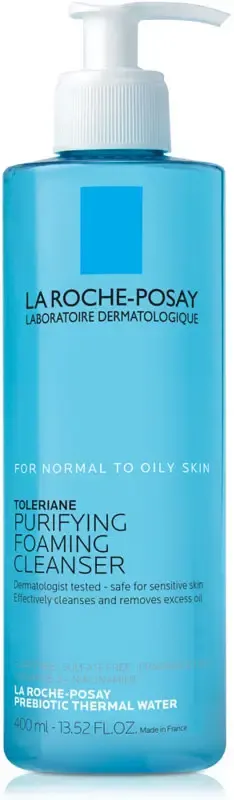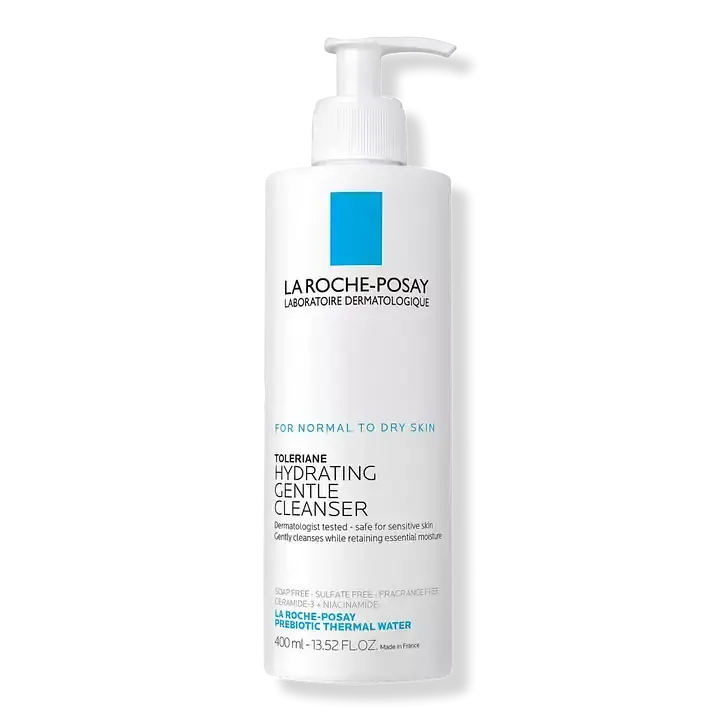
La Roche-Posay
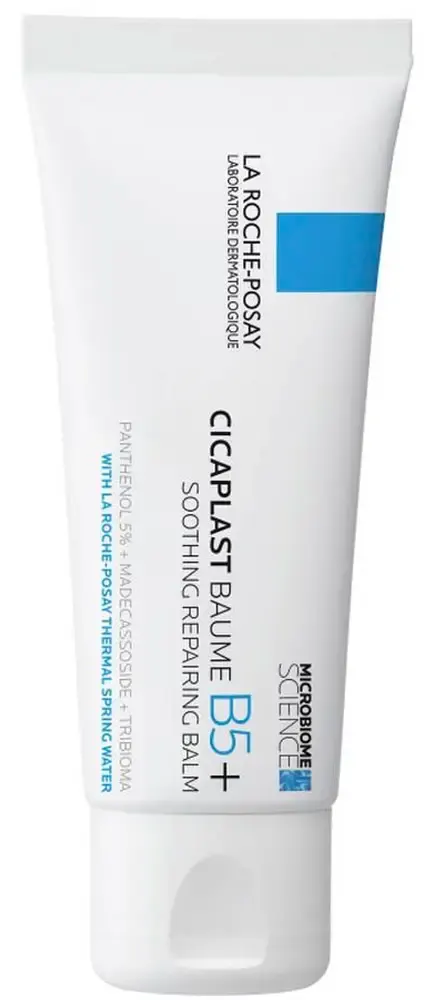
La Roche-Posay Cicaplast Baume B5+
Low risk75/100

Some ingredients carry a low-risk flag. Read the formulation context before deciding.
23 of 23 ingredients rated
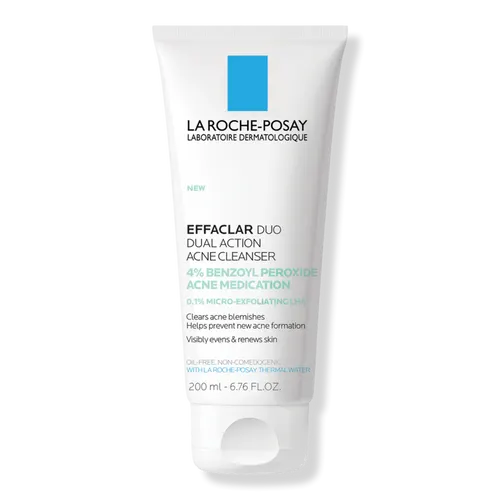
MamaSkin rates the recorded formula for La Roche-Posay Effaclar Acne Face Wash with 4% Benzoyl Peroxide as Low risk (77/100). Review the ingredient context and any manual-review explanation before deciding.
The recorded formula includes 3 ingredient entries with risk flags: Benzoyl Peroxide 4% (Low risk), Capryloyl Salicylic Acid (Low risk), Glycolic Acid (Low risk). These are ingredient-level flags; they do not replace the stored product assessment or account for every formulation detail.
23 of 23 ingredient entries on this page have a recorded score, evidence summary and source text. That describes documentation coverage, not proof that the finished formula has been clinically tested during pregnancy.
How we assess productsThe recorded formula, with evidence behind each rating. Unmatched ingredients are marked Not assessed in grey.
Benzoyl peroxide is an OTC topical acne ingredient. MotherToBaby reports that ACOG includes benzoyl peroxide among ingredients that may be used during pregnancy if needed; only a small amount is expected to be absorbed through the skin. Direct controlled pregnancy data remain limited. MamaSkin retains Low Risk for normal topical use rather than describing the ingredient as proven pregnancy-safe.
Sources: MotherToBaby: Topical Acne Treatments https://www.ncbi.nlm.nih.gov/books/NBK582985/
Capryloyl Salicylic Acid is a salicylic-acid derivative, not salicylic acid itself. CIR reassessed its corrected ketone identity separately and found the evidence insufficient because impurity and phototoxicity questions remained. Low Risk is precautionary; these data gaps do not demonstrate pregnancy harm. Avoid irritated or damaged skin and use sun protection. There is no validated pregnancy-safe percentage for this derivative.
Sources: https://www.cir-safety.org/sites/default/files/capryl122019FAR.pdf
Alpha-hydroxy acid exfoliant. Listed by MotherToBaby as a common OTC topical acne ingredient used during pregnancy; when used as directed, OTC topical acne treatments are not expected to increase pregnancy complications. For consumer cosmetics, safety guidance commonly frames AHAs as safe at ≤10% (with appropriate pH and daily sun protection). Avoid high-strength/professional peels during pregnancy.
Sources: MotherToBaby: Topical acne treatments in pregnancy and breastfeeding https://www.ncbi.nlm.nih.gov/books/NBK582985/
Water (Aqua) is the standard purified water used as a cosmetic solvent. It has no pregnancy-specific risk in normal topical use.
Sources: https://pubchem.ncbi.nlm.nih.gov/compound/Water, https://single-market-economy.ec.europa.eu/sectors/cosmetics/cosmetic-ingredient-database/cosing-glossary-ingredients_en
Glycerin is a widely used humectant that supports hydration and the skin barrier, with a long safety record and no known pregnancy or breastfeeding concerns in topical cosmetic use.
Sources: CIR; EU/UK Cosmetics Regulation
Propylene glycol is a common solvent and humectant with a long history of use; it is not considered a pregnancy or breastfeeding concern in topical cosmetics, though some individuals may experience irritation in leave-on products.
Sources: CIR; EU/UK Cosmetics Regulation
An amphoteric cleansing and foam-supporting surfactant. Cosmetic safety reviewers concluded that sultaines, including cocamidopropyl hydroxysultaine, are safe in current practices when formulas are non-irritating and impurities and nitrosamine formation are controlled. Rare contact allergy remains possible.
Sources: CIR: Safety Assessment of Sultaines as Used in Cosmetics https://www.cir-safety.org/sites/default/files/sultaines_0.pdf
An anionic surfactant used mainly to cleanse and create foam in shampoos, washes and facial cleansers. Cosmetic safety reviewers concluded that sodium alpha-olefin sulfonates are safe as used in rinse-off products and safe at low concentrations in leave-on products when formulated to be non-irritating. Concentrated surfactant can irritate skin or eyes, but no pregnancy-specific concern was identified for normal use of a correctly formulated finished cosmetic.
Sources: CIR: Final Report on the Safety Assessment of Sodium Alpha-Olefin Sulfonates https://cir-reports.cir-safety.org/view-attachment/?id=7c154447-8e74-ec11-8943-0022482f06a6
Natural polysaccharide thickener used for stability and texture. Not associated with pregnancy-specific concerns.
Sources: European cosmetics regulatory framework
A strongly alkaline raw material used mainly in small amounts to adjust pH or during soap manufacture. Concentrated potassium hydroxide is corrosive, but that raw-material hazard is not representative of a correctly formulated finished cosmetic. Cosmetic safety reviewers concluded that inorganic hydroxides are safe in current cosmetic uses when products are formulated to be non-irritating, with special handling conditions for depilatories and hair straighteners. No pregnancy-specific concern is identified for normal use of a compliant finished product.
Sources: CIR: Safety Assessment of Inorganic Hydroxides as Used in Cosmetics https://www.cir-safety.org/supplementaldoc/safety-assessment-inorganic-hydroxides-used-cosmetics-0
Sodium chloride is used to adjust viscosity and texture in formulations; topical cosmetic use is considered low concern with no known pregnancy or breastfeeding risks.
Sources: CIR; EU/UK Cosmetics Regulation
Buffering and chelating ingredient used to control pH and formulation stability. Reviewed cosmetic safety sources support normal topical use, with no pregnancy- or breastfeeding-specific topical signal identified in the material reviewed.
Sources: CIR: Safety Assessment of Citric Acid, Inorganic Citrate Salts, and Alkyl Citrate Esters as Used in Cosmetics; EU CosIng / cosmetics regulatory inventory
Niacinamide (vitamin B3) is widely used for barrier support and tone/texture benefits, and is generally considered safe in pregnancy and breastfeeding when used topically at cosmetic concentrations.
Sources: CIR; EU/UK Cosmetics Regulation
Sodium hyaluronate (hyaluronic acid salt) is used for hydration and cushioning, with very low systemic absorption from topical use and no known pregnancy or breastfeeding concerns at cosmetic concentrations.
Sources: CIR; EU/UK Cosmetics Regulation
Solvent and humectant used to improve texture and ingredient solubility. Low systemic exposure expected from topical cosmetic use.
Sources: Cosmetic Ingredient Review (US); Scientific Committee on Consumer Safety (EU)
diethylhexyl sodium sulfosuccinate is a cosmetic surfactant, emulsifier or conditioning agent. Relevant cosmetic-safety assessments support use when formulated to be non-irritating and with appropriate impurity controls. Local skin or eye irritation is possible, but no pregnancy-specific concern was identified for normal topical or rinse-off use.
Sources: CIR assessments of alkyl PEG/PPG ethers, amino-acid surfactants, sulfosuccinates and related conditioning agents; CIR Quick Reference Table https://www.cir-safety.org/supplementaldoc/quick-reference-table-december-2025
Polymer thickener used to create gel textures. Large-molecule ingredient with negligible systemic absorption.
Sources: Cosmetic Ingredient Review (US); Scientific Committee on Consumer Safety (EU)
Preservative acid used to help control microbial growth and support formula stability. Reviewed cosmetic safety sources support current cosmetic use, with no pregnancy- or breastfeeding-specific topical concern identified in the material reviewed; some users may still notice local irritation or stinging, especially on compromised skin.
Sources: CIR: Safety Assessment of Benzoic Acid and Sodium Benzoate as Used in Cosmetics; EU CosIng / cosmetics regulatory inventory
Humectant and preservative booster. Considered safe for cosmetic use with low systemic exposure.
Sources: Cosmetic Ingredient Review (US); Scientific Committee on Consumer Safety (EU)
pH adjuster used in very small quantities to balance formulations. Not associated with pregnancy-specific concerns.
Sources: Scientific Committee on Consumer Safety (EU); European cosmetics regulatory framework
Chelating agent used to stabilise formulations; minimal dermal absorption and no known pregnancy or breastfeeding risks at typical cosmetic concentrations.
Sources: CIR; EU/UK Cosmetics Regulation
Chelating ingredient used to improve formula stability by binding trace metals. Reviewed cosmetic ingredient references do not identify a pregnancy- or breastfeeding-specific concern for normal topical use.
Sources: CIR cosmetic ingredient safety references for chelating agents; EU CosIng / cosmetics regulatory inventory
pH adjuster used in small amounts to maintain product stability. Not associated with pregnancy-specific concerns.
Sources: Scientific Committee on Consumer Safety (EU); European cosmetics regulatory framework
Benzoyl Peroxide 4%, Water, Glycerin, Propylene Glycol, Cocamidopropyl Hydroxysultaine, Sodium C14-16 Olefin Sulfonate, Xanthan Gum, Potassium Hydroxide, Sodium Chloride, Sodium Citrate, Niacinamide, Sodium Hyaluronate, Capryloyl Salicylic Acid, Propanediol, Diethylhexyl Sodium Sulfosuccinate, Carbomer, Benzoic Acid, Pentylene Glycol, Sodium Hydroxide, Glycolic Acid, Tetrasodium Edta, Trisodium Ethylenediamine Disuccinate, Citric Acid.
Ingredient ratings refreshed 1 October 2026. Formulas vary by market and can change. Always compare with your packaging.
The recorded formula includes 3 ingredient entries with risk flags: Benzoyl Peroxide 4% (Low risk), Capryloyl Salicylic Acid (Low risk), Glycolic Acid (Low risk). These are ingredient-level flags; they do not replace the stored product assessment or account for every formulation detail. The product score is a stored assessment, not a clinical safety guarantee.
No. Glycolic Acid appears in this recorded cosmetic formula. The score does not establish suitability for a stronger peel, a different concentration or a professional treatment. Concentration, formulation and how a product is used matter; compare your packaging with this full ingredient list and read the recorded Glycolic Acid evidence below.
23 of 23 ingredient entries on this page have a recorded score, evidence summary and source text. That describes documentation coverage, not proof that the finished formula has been clinically tested during pregnancy.
Only if the ingredient list on your packaging matches the recorded formula shown here. Formulas can differ by market and change over time. Compare the full list, not just the product name; report a mismatch if it differs.
No. This page presents a pregnancy-focused product assessment. Do not infer a breastfeeding conclusion from its score or label; breastfeeding requires a separate assessment of the formula and how it is used.