SkinCeuticals
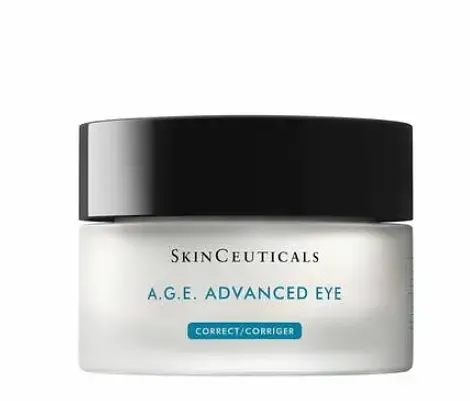
SkinCeuticals A.G.E. Advanced Eye
Low risk75/100

Some ingredients carry a low-risk flag. Read the formulation context before deciding.
19 of 19 ingredients rated
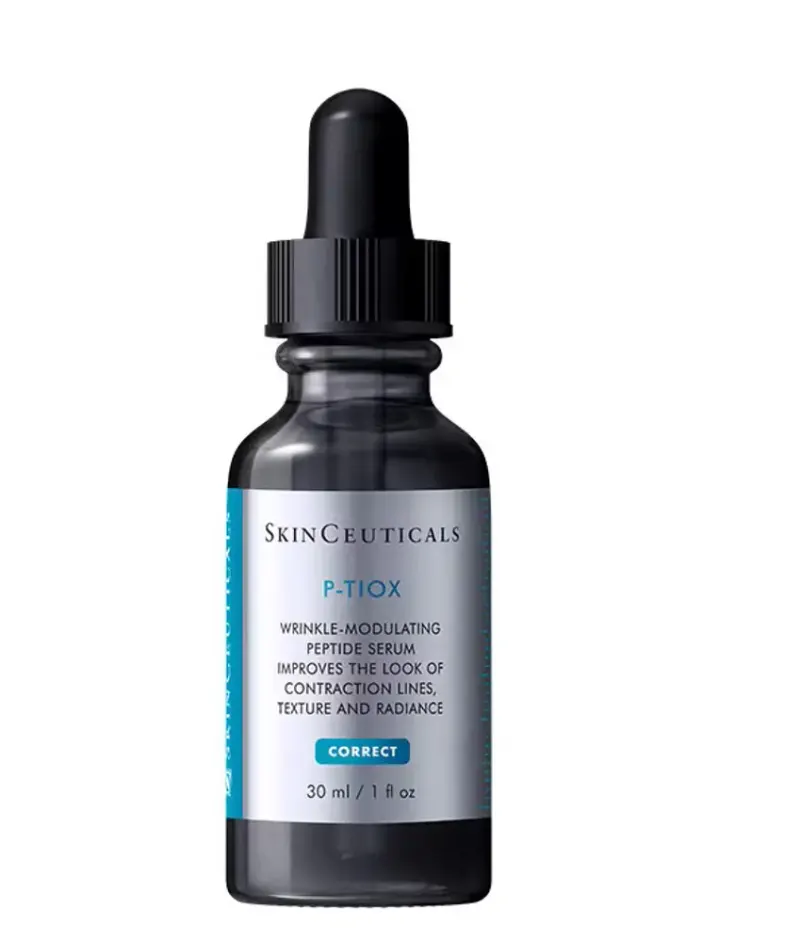
MamaSkin rates the recorded formula for SkinCeuticals P-Tiox Wrinkle Modulating Peptide Serum as Low risk (77/100). Review the ingredient context and any manual-review explanation before deciding.
The recorded formula includes 3 ingredient entries with risk flags: Gluconolactone (Low risk), Salicylic Acid (Low risk), Phytic Acid (Low risk). These are ingredient-level flags; they do not replace the stored product assessment or account for every formulation detail.
19 of 19 ingredient entries on this page have a recorded score, evidence summary and source text. That describes documentation coverage, not proof that the finished formula has been clinically tested during pregnancy.
How we assess productsThe recorded formula, with evidence behind each rating. Unmatched ingredients are marked Not assessed in grey.
Polyhydroxy acid (PHA) used as a gentle exfoliant/humectant; generally less irritating than AHAs due to lower penetration. Considered safe as used in cosmetics, with no pregnancy-specific contraindications identified at topical cosmetic concentrations.
Sources: MotherToBaby: Topical acne treatments in pregnancy and breastfeeding https://www.ncbi.nlm.nih.gov/books/NBK582985/
Salicylic acid is a beta-hydroxy acid (BHA) used for acne, exfoliation and preservation. Common over-the-counter acne strengths are 0.5-2%, including 0.5%, 1% and 2%; the FDA lists this acne-treatment range. Pregnancy guidance distinguishes these topical products from oral salicylates and strong peels. MotherToBaby reports that ACOG allows over-the-counter topical salicylic acid during pregnancy when needed. Only a small amount of topical acne treatment usually reaches the bloodstream through intact skin; exposure can increase with damaged skin, frequent use or treatment of large areas. Direct salicylic-acid-specific pregnancy data remain limited. MamaSkin's Low Risk rating is a dose-and-use precaution, not evidence that ordinary low-strength skincare causes fetal harm or a recommendation to avoid every BHA product. Use as directed on limited areas of intact skin. Discuss strengths above 2%, chemical peels, wart/corn removers, large-area treatment or use under occlusion with your clinician before use during pregnancy. The American Academy of Dermatology specifically advises discussing and limiting higher-strength salicylic acid above 2%. Percentage alone does not establish safety: formulation, area, frequency and skin condition also matter. General cosmetic-use limits are not pregnancy-specific safety thresholds.
Sources: https://mothertobaby.org/fact-sheets/topical-acne-treatments-pregnancy/; https://www.aad.org/public/everyday-care/skin-care-secrets/routine/pregnancy-skin-care; https://www.accessdata.fda.gov/drugsatfda_docs/omuf/monographs/OTC%20Monograph_M006-Topical%20Acne%20drug%20products%20for%20OTC%20Human%20Use%2011.23.2021.pdf; https://health.ec.europa.eu/publications/salicylic-acid-cas-no-69-72-7-ec-no-200-712-3_en; https://www.ncbi.nlm.nih.gov/books/NBK500675/
Plant-derived chelating antioxidant and mild exfoliant, often used at 1–2% in brightening and resurfacing formulas. Available data and expert reviews do not show reproductive toxicity at topical cosmetic doses; main issue is potential irritation in over-exfoliating routines. Frequently included among chemical exfoliants considered acceptable in pregnancy when used in moderation.
Sources: CIR: Phytic acid ingredient safety information https://www.cir-safety.org/ingredient/phytic-acid
Water (Aqua) is the standard purified water used as a cosmetic solvent. It has no pregnancy-specific risk in normal topical use.
Sources: https://pubchem.ncbi.nlm.nih.gov/compound/Water, https://single-market-economy.ec.europa.eu/sectors/cosmetics/cosmetic-ingredient-database/cosing-glossary-ingredients_en
Niacinamide (vitamin B3) is widely used for barrier support and tone/texture benefits, and is generally considered safe in pregnancy and breastfeeding when used topically at cosmetic concentrations.
Sources: CIR; EU/UK Cosmetics Regulation
Solvent and humectant commonly used in leave-on products. Not associated with pregnancy-specific concerns at cosmetic exposure levels.
Sources: Cosmetic Ingredient Review (US); Scientific Committee on Consumer Safety (EU)
peg/ppg/polybutylene glycol-8/5/3 glycerin is a high-molecular-weight cosmetic polymer or film former. Dermal absorption is expected to be limited when manufactured with appropriate residual-monomer and impurity controls. Relevant CIR polymer assessments did not identify a pregnancy-specific concern for normal topical use; airborne powder or spray droplets should not be inhaled.
Sources: CIR Amended Safety Assessment of Acrylates Copolymers https://cir-safety.org/ingredient/acrylates-copolymer; CIR vinylpyrrolidone-polymer assessment.
Volatile solvent used to improve texture, drying time, and penetration in some formulas. Reviewed cosmetic safety sources support current cosmetic use, with no pregnancy- or breastfeeding-specific topical concern identified in the material reviewed; the main practical issue is dryness, stinging, or barrier disruption in some users.
Sources: CIR: Safety Assessment of SD Alcohol 40, Benzyl Alcohol, and Denatured Alcohol in Cosmetic Products; EU CosIng / cosmetics regulatory inventory
Humectant and preservative booster. Considered safe for cosmetic use with low systemic exposure.
Sources: Cosmetic Ingredient Review (US); Scientific Committee on Consumer Safety (EU)
A glucose-derived humectant and conditioning ingredient. Cosmetic safety reviewers concluded that methyl gluceth-20 is safe as used in cosmetics; reviewed skin testing did not indicate sensitisation. No pregnancy-specific concern was identified for normal topical cosmetic exposure.
Sources: CIR: Final Report on the Safety Assessment of Methyl Gluceth-10 and Methyl Gluceth-20 https://cir-reports.cir-safety.org/view-attachment?id=fb9dc889-8e74-ec11-8943-0022482f06a6
Glycerin is a widely used humectant that supports hydration and the skin barrier, with a long safety record and no known pregnancy or breastfeeding concerns in topical cosmetic use.
Sources: CIR; EU/UK Cosmetics Regulation
A strongly alkaline raw material used mainly in small amounts to adjust pH or during soap manufacture. Concentrated potassium hydroxide is corrosive, but that raw-material hazard is not representative of a correctly formulated finished cosmetic. Cosmetic safety reviewers concluded that inorganic hydroxides are safe in current cosmetic uses when products are formulated to be non-irritating, with special handling conditions for depilatories and hair straighteners. No pregnancy-specific concern is identified for normal use of a compliant finished product.
Sources: CIR: Safety Assessment of Inorganic Hydroxides as Used in Cosmetics https://www.cir-safety.org/supplementaldoc/safety-assessment-inorganic-hydroxides-used-cosmetics-0
Cellulose-derived thickener used to build viscosity and improve texture. Reviewed cosmetic safety sources support normal topical use, with no pregnancy- or breastfeeding-specific topical signal identified in the material reviewed.
Sources: CIR Quick Reference Table / ingredient status (Hydroxyethylcellulose, Final Report 03/2009); EU CosIng / cosmetics regulatory inventory
Preservative used to help protect formulas from microbial growth. Reviewed cosmetic safety sources support present cosmetic use; no pregnancy- or breastfeeding-specific topical concern was identified in the material reviewed, although some users may still notice local irritation or sensitivity.
Sources: CIR: Safety Assessment of Chlorphenesin as Used in Cosmetics; EU CosIng / cosmetics regulatory inventory
Skin-conditioning ingredient commonly used in leave-on skincare. Reviewed cosmetic safety sources support normal topical use, with no pregnancy- or breastfeeding-specific topical signal identified in the material reviewed.
Sources: CIR: Safety Assessment of Adenosine Ingredients as Used in Cosmetics; EU CosIng / cosmetics regulatory inventory
Preservative widely used in foods and cosmetics. Considered safe at regulated concentrations with low systemic exposure from topical use.
Sources: Scientific Committee on Consumer Safety (EU); European cosmetics regulatory framework
A brown-algae-derived extract used for skin conditioning and hydration. Cosmetic safety reviewers specifically included this ingredient in the small subset of brown algae extracts found safe in current practices of use and concentration. Manufacturers should control naturally occurring iodine, arsenic and heavy-metal impurities.
Sources: CIR: Safety Assessment of Brown Algae-Derived Ingredients as Used in Cosmetics https://cir-reports.cir-safety.org/view-attachment/?id=c6b5b3d7-8c74-ec11-8943-0022482f06a6
Synthetic peptide mimetic used in topical cosmetic anti-aging formulas, often described as a neurotransmitter-inhibiting or expression-line peptide. Available cosmetic ingredient references do not identify a pregnancy- or breastfeeding-specific concern for normal topical cosmetic use.
Sources: Schagen SK. Topical Peptide Treatments with Effective Anti-Aging Results. Cosmetics. 2017;4(2):16. doi:10.3390/cosmetics4020016; EU CosIng / INCI cosmetic ingredient references.
Synthetic peptide used as a skin-conditioning ingredient. Reviewed cosmetic safety sources do not indicate a known pregnancy- or breastfeeding-specific concern in normal topical cosmetic use. The available cosmetic safety assessment concluded this ingredient is safe in cosmetics at concentrations up to 0.005%; safety above that concentration was not established in the reviewed report.
Sources: CIR Expert Panel, Safety Assessment of Acetyl Hexapeptide-8 Amide as Used in Cosmetics, final report, 2021
Water, Niacinamide, Gluconolactone, Butylene Glycol, PEG/PPG/Polybutylene Glycol-8/5/3 Glycerin, Alcohol Denat., Pentylene Glycol, Methyl Gluceth-20, Glycerin, Potassium Hydroxide, Hydroxyethylcellulose, Salicylic Acid, Chlorphenesin, Phytic Acid, Adenosine, Sodium Benzoate, Laminaria Digitata Extract, Dipeptide Diaminobutyroyl Benzylamide Diacetate, Acetyl Hexapeptide-8
Ingredient ratings refreshed 1 October 2026. Formulas vary by market and can change. Always compare with your packaging.
The recorded formula includes 3 ingredient entries with risk flags: Gluconolactone (Low risk), Salicylic Acid (Low risk), Phytic Acid (Low risk). These are ingredient-level flags; they do not replace the stored product assessment or account for every formulation detail. The product score is a stored assessment, not a clinical safety guarantee.
No. Niacinamide appears in the recorded formula, but its individual rating applies to that ingredient, not automatically to the whole product. Check the other ingredient ratings, any grey Not assessed entries and the stored product assessment. A niacinamide percentage or a product name is not a substitute for checking the full list.
19 of 19 ingredient entries on this page have a recorded score, evidence summary and source text. That describes documentation coverage, not proof that the finished formula has been clinically tested during pregnancy.
Only if the ingredient list on your packaging matches the recorded formula shown here. Formulas can differ by market and change over time. Compare the full list, not just the product name; report a mismatch if it differs.
No. This page presents a pregnancy-focused product assessment. Do not infer a breastfeeding conclusion from its score or label; breastfeeding requires a separate assessment of the formula and how it is used.