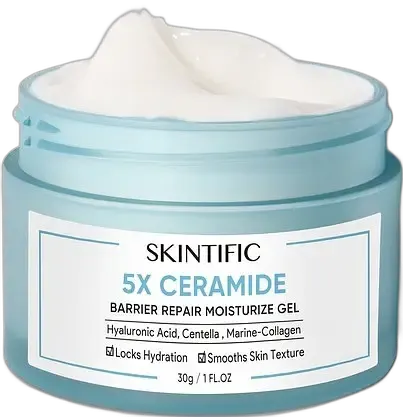
Skintific 5x Ceramide Barrier Repair Moisturize Gel by Skintific
Skintific

Skintific 5x Ceramide Barrier Repair Moisturize Gel

General Moisturizersmoisturisers

Safety score

Pregnancy-focused assessment

Low Risk79/100
Higher concernLower concern

One or more ingredients have a low-risk flag in MamaSkin's current assessment. Review the notes and your own circumstances.

Formula and assessment check

Ingredient safety review updated 15 February 2026. Product formulas can change, so compare the ingredients shown here with the packaging you have.

Report a formula mismatch

Ingredient breakdown

See how the listed formula falls across MamaSkin's pregnancy-focused risk bands.

40

No known risks

1

Low risk

0

Medium risk

0

High risk

Ingredients

Ingredients with a higher risk flag appear first, followed by the rest of the formula.

Dimethicone

Low Risk

Dimethicone is a silicone polymer used as a skin protectant and slip/conditioning agent. It is considered inert with minimal dermal absorption; the main practical issues are cosmetic (feel) and occasional irritation in very sensitive users. It is not a pregnancy-specific concern in topical cosmetic use.

Sources: CIR: Amended Safety Assessment of Dimethicone, Methicone, and Substituted-Methicone Polymers as Used in Cosmetics https://cir-safety.org/supplementaldoc/amended-safety-assessment-dimethicone-methicone-and-substituted-methicone-polymers-2
Allantoin

No Known Risks

Allantoin is a soothing skin protectant commonly used to help reduce irritation and support comfort, with no known pregnancy or breastfeeding concerns in topical cosmetic use.

Sources: CIR; EU/UK Cosmetics Regulation

Ammonium Acryloyldimethyltaurate/Vp Copolymer

No Known Risks

Polymer thickener used to stabilise emulsions. Large-molecule ingredient with low systemic absorption.

Sources: Cosmetic Ingredient Review (US); Scientific Committee on Consumer Safety (EU)

Show all (41)

Butylene Glycol

No Known Risks

Solvent and humectant commonly used in leave-on products. Not associated with pregnancy-specific concerns at cosmetic exposure levels.

Sources: Cosmetic Ingredient Review (US); Scientific Committee on Consumer Safety (EU)

Carbomer

No Known Risks

Polymer thickener used to create gel textures. Large-molecule ingredient with negligible systemic absorption.

Sources: Cosmetic Ingredient Review (US); Scientific Committee on Consumer Safety (EU)

Centella Asiatica Extract

No Known Risks

Botanical skin-conditioning ingredient used in soothing and barrier-support formulas. Reviewed cosmetic safety sources support current cosmetic use when formulated to be non-sensitising, with no pregnancy- or breastfeeding-specific topical concern identified in the material reviewed.

Sources: CIR: Safety Assessment of Centella asiatica-derived Ingredients as Used in Cosmetics; EU CosIng / cosmetics regulatory inventory

Ceramide Ap

No Known Risks

Skin-identical barrier lipid used to support barrier function and reduce dryness. Reviewed cosmetic safety sources support normal topical use, with no pregnancy- or breastfeeding-specific topical signal identified in the material reviewed.

Sources: CIR: Safety Assessment of Ceramides as Used in Cosmetics; EU CosIng / cosmetics regulatory inventory

Ceramide As

No Known Risks

A skin-identical barrier lipid used for skin and hair conditioning. Cosmetic safety reviewers concluded that Ceramide AS is safe in current cosmetic use, noting limited skin absorption and reassuring toxicity data. Cosmetic-grade material should not be sourced from bovine central nervous system tissue.

Sources: CIR: Safety Assessment of Ceramides https://www.cir-safety.org/supplementaldoc/safety-assessment-ceramides-used-cosmetics-0

Ceramide Eop

No Known Risks

Skin-identical barrier lipid used to support barrier structure and reduce dryness. Reviewed cosmetic safety sources support normal topical use, with no pregnancy- or breastfeeding-specific topical signal identified in the material reviewed.

Sources: CIR: Safety Assessment of Ceramides as Used in Cosmetics; EU CosIng / cosmetics regulatory inventory

Ceramide Np

No Known Risks

Skin-identical barrier lipid used to support the stratum corneum and reduce dryness. Reviewed cosmetic safety sources support normal topical use, with no pregnancy- or breastfeeding-specific topical signal identified in the material reviewed.

Sources: CIR: Safety Assessment of Ceramides as Used in Cosmetics; EU CosIng / cosmetics regulatory inventory

Ceramide Ns

No Known Risks

A skin-identical barrier lipid used for skin and hair conditioning. Cosmetic safety reviewers concluded that Ceramide NS is safe in current cosmetic use, noting limited skin absorption and reassuring toxicity data. Cosmetic-grade material should not be sourced from bovine central nervous system tissue.

Sources: CIR: Safety Assessment of Ceramides https://cir-safety.org/sites/default/files/cerami122014tent.pdf

Citrus Aurantium Amara Flower Oil

No Known Risks

A volatile botanical material used mainly for fragrance or skin conditioning. Irritation, sensitisation, constituent quality and, for some citrus materials, phototoxicity are the relevant cosmetic concerns. No pregnancy-specific systemic hazard was identified for normal topical use of a compliant finished cosmetic.

Sources: European Commission CosIng ingredient inventory; IFRA fragrance-safety resources; relevant CIR botanical and essential-oil safety assessments.

Citrus Aurantium Bergamia Fruit Oil

No Known Risks

Bergamot essential oil used mainly for fragrance. No pregnancy-specific hazard is established for normal topical cosmetic exposure. Expressed bergamot oil can be phototoxic unless furocoumarins are controlled, so sun-exposed use should follow the finished product directions and applicable fragrance standards.

Sources: CIR: Safety Assessment of Citrus-Derived Peel Oils as Used in Cosmetics; IFRA Standard for phototoxicity of bergamot oil

Citrus Medica Peel Oil

No Known Risks

Disodium Edta

No Known Risks

Disodium EDTA is a chelating agent used to improve formula stability and performance; it is considered low concern in topical cosmetic use, with no known pregnancy or breastfeeding risks at typical concentrations.

Sources: CIR; EU/UK Cosmetics Regulation

Ectoin

No Known Risks

A small natural osmolyte used to support hydration and the skin barrier. A systematic review of topical ectoin formulations in adults and children reported very good tolerability. Pregnancy-specific topical studies were not identified, but no reproductive or pregnancy-specific signal was found for normal cosmetic exposure.

Sources: PubMed: Topical Ectoine Application in Children and Adults, systematic review https://pubmed.ncbi.nlm.nih.gov/35038127/

Glycerin

No Known Risks

Glycerin is a widely used humectant that supports hydration and the skin barrier, with a long safety record and no known pregnancy or breastfeeding concerns in topical cosmetic use.

Sources: CIR; EU/UK Cosmetics Regulation

Hamamelis Virginiana Extract

No Known Risks

A witch-hazel extract or distillate used as a skin-conditioning and astringent ingredient. Cosmetic safety reviewers concluded that the assessed Hamamelis virginiana-derived ingredients are safe in current practices when formulated to be non-irritating and non-sensitising. Some witch-hazel products contain alcohol, which may irritate sensitive skin.

Sources: CIR: Safety Assessment of Hamamelis virginiana (Witch Hazel)-Derived Ingredients as Used in Cosmetics https://cir-safety.org/supplementaldoc/safety-assessment-hamamelis-virginiana-witch-hazel-derived-ingredients-used-cosmet-0

Hydrogenated Lecithin

No Known Risks

Hydrogenated emulsifier used to support skin barrier feel. Not associated with pregnancy-specific concerns.

Sources: Cosmetic Ingredient Review (US)

Hydrogenated Polyisobutene

No Known Risks

Inert synthetic emollient used as a glossing and occlusive agent. Reviewed cosmetic safety sources support normal topical use, with no pregnancy- or breastfeeding-specific topical signal identified in the material reviewed.

Sources: CIR: Safety Assessment of Polyene Group as Used in Cosmetics; EU CosIng / cosmetics regulatory inventory

Hydrolyzed Collagen

No Known Risks

Protein-derived skin- and hair-conditioning ingredient used to support feel and hydration at the surface. Reviewed cosmetic ingredient references do not identify a pregnancy- or breastfeeding-specific concern for normal topical use.

Sources: CIR cosmetic ingredient safety references for protein hydrolysates; EU CosIng / cosmetics regulatory inventory

Hydroxyacetophenone

No Known Risks

Hydroxyacetophenone is used as an antioxidant and preservative-support ingredient; it is generally considered low concern in topical cosmetic use with no known pregnancy or breastfeeding risks at typical concentrations.

Sources: CIR; EU/UK Cosmetics Regulation

Hydroxyethyl Acrylate/Sodium Acryloyldimethyl Taurate Copolymer

No Known Risks

Large polymer thickener, stabilizer and texture ingredient used in gels, creams and sunscreens. Systemic exposure from topical cosmetic use is expected to be low, with no pregnancy- or breastfeeding-specific concern identified in reviewed cosmetic references.

Sources: CIR cosmetic ingredient safety references for acrylates copolymers; EU CosIng / cosmetics regulatory inventory

Ophiopogon Japonicus Root Extract

No Known Risks

A botanical extract or plant water used for conditioning, soothing or antioxidant support. Direct pregnancy studies of this exact cosmetic material were not identified, but no reproductive or developmental hazard was identified for normal topical exposure. Oral herbal or medicinal use is outside this classification.

Sources: European Commission CosIng; CIR botanical safety framework and relevant plant-family assessments; no ingredient-specific human pregnancy study of normal topical cosmetic use was identified.

Opuntia Ficus-Indica Stem Extract

No Known Risks

A cosmetic extract from an edible fruit, seed, grain, root or mushroom used for conditioning or antioxidant support. Normal topical cosmetic exposure is much lower than ordinary dietary exposure to the source material, and no pregnancy-specific hazard signal was identified. Exact extract composition varies, so source quality and individual food or plant allergy remain relevant.

Sources: European Commission CosIng ingredient inventory; CIR botanical safety framework and relevant plant-derived ingredient assessments; FDA food ingredient and GRAS inventories where applicable.

Panthenol

No Known Risks

Panthenol (pro-vitamin B5) is used for soothing and barrier support and is generally well tolerated, with no known pregnancy or breastfeeding concerns in topical cosmetic use.

Sources: CIR; EU/UK Cosmetics Regulation

Pca

No Known Risks

Pyrrolidone carboxylic acid, a natural-moisturising-factor component used as a humectant. Cosmetic safety reviewers concluded that PCA and its salts are safe in current practices, but they should not be used in formulations where N-nitroso compounds can form. No pregnancy-specific concern was identified for compliant topical use.

Sources: CIR: Safety Assessment of PCA and Its Salts as Used in Cosmetics https://www.cir-safety.org/supplementaldoc/safety-assessment-pca-2-pyrrolidone-5-carboxylic-acid-and-its-salts-used-cosmetics-0

Peg-400

No Known Risks

peg-400 is a cosmetic polymer or polymeric formulation aid. The reviewed material is distinct from any free reactive monomers; systemic dermal absorption is expected to be limited by molecular size when manufactured with appropriate impurity controls. No pregnancy-specific concern was identified for normal cosmetic use, although products should be formulated to avoid irritation.

Sources: CIR polymer safety assessments and Quick Reference Table https://cir-safety.org/sites/default/files/QRT-Update-Dec2025.pdf; European Commission CosIng ingredient inventory

Pentylene Glycol

No Known Risks

Humectant and preservative booster. Considered safe for cosmetic use with low systemic exposure.

Sources: Cosmetic Ingredient Review (US); Scientific Committee on Consumer Safety (EU)

Phytosteryl/Octyldodecyl Lauroyl Glutamate

No Known Risks

An amino-acid-derived emollient and conditioning ingredient. Cosmetic safety reviewers concluded that the assessed amino acid alkyl amides are safe in current practices when formulated to be non-irritating.

Sources: CIR: Amino Acid Alkyl Amides final assessment, June 2023; December 2025 Quick Reference Table https://cir-safety.org/sites/default/files/QRT-Update-Dec2025.pdf

Poly 1,2-Butanediol-6 Propylene Glycol

No Known Risks

Polysorbate 60

No Known Risks

Nonionic emulsifier and solubilizer used to help oil and water phases mix. Reviewed cosmetic safety sources support normal topical use, with no pregnancy- or breastfeeding-specific topical signal identified.

Sources: CIR: Safety Assessment of Polysorbates as Used in Cosmetics; EU CosIng / cosmetics regulatory inventory

Sodium Hyaluronate

No Known Risks

Sodium hyaluronate (hyaluronic acid salt) is used for hydration and cushioning, with very low systemic absorption from topical use and no known pregnancy or breastfeeding concerns at cosmetic concentrations.

Sources: CIR; EU/UK Cosmetics Regulation

Sodium Hydroxide

No Known Risks

pH adjuster used in very small quantities to balance formulations. Not associated with pregnancy-specific concerns.

Sources: Scientific Committee on Consumer Safety (EU); European cosmetics regulatory framework

Sophora Flavescens Root Extract

No Known Risks

Sophora flavescens root extract contains variable botanical alkaloids and is used for skin conditioning. Pharmacological and toxicity findings from oral extracts or isolated constituents do not establish a reproductive hazard from normal topical cosmetic exposure.

Sources: European Commission CosIng ingredient inventory; PubMed phytochemical and toxicology literature on Sophora flavescens and matrine-family alkaloids. No human pregnancy study of topical cosmetic use was identified.

Sorbitan Isostearate

No Known Risks

Emulsifier used to help oil and water phases remain mixed. Reviewed cosmetic safety sources support topical use in cosmetics; the main practical issue is irritation potential in some formulas rather than a pregnancy-specific concern.

Sources: CIR: Safety Assessment of Sorbitan Esters as Used in Cosmetics; EU CosIng / cosmetics regulatory inventory

Squalane

No Known Risks

Lightweight emollient used to support the skin barrier. Not associated with pregnancy-specific concerns at cosmetic exposure levels.

Sources: Cosmetic Ingredient Review (US); Scientific Committee on Consumer Safety (EU)

T-Butyl Alcohol

No Known Risks

A volatile solvent and denaturant used in small amounts in cosmetics. Cosmetic safety reviewers concluded that t-butyl alcohol is safe in current practices of use and concentration; their assessment included reproductive and developmental data and found a large exposure margin at cosmetic use levels. It may irritate eyes or skin in concentrated form.

Sources: CIR: Amended Safety Assessment of t-Butyl Alcohol as Used in Cosmetics https://cir-safety.org/sites/default/files/FAR_t-ButylAlcohol_092024.pdf

Trehalose

No Known Risks

Sugar-derived humectant used to help bind water and improve skin feel. Reviewed cosmetic ingredient references do not identify a pregnancy- or breastfeeding-specific concern for normal topical cosmetic use.

Sources: CIR: Safety Assessment of Monosaccharides, Disaccharides, and Related Ingredients as Used in Cosmetics; EU CosIng / cosmetics regulatory inventory

Water

No Known Risks

Yeast Polysaccharides

No Known Risks

Formulations can change without notice. For the most accurate result, compare this list with your packaging and scan the exact ingredient label in MamaSkin when you repurchase.

How to use this assessment

The risk band is the primary conclusion. The score adds detail within that band and should not be used to compare products as if a one-point difference were clinically meaningful.

MamaSkin provides pregnancy-focused information, not medical advice. Your midwife, GP, pharmacist or dermatologist should take priority when your circumstances differ from typical cosmetic use.

Read the full methodology